










BiblioTech
CTech's Book Review: The gap between where consumers are and where the infrastructure is
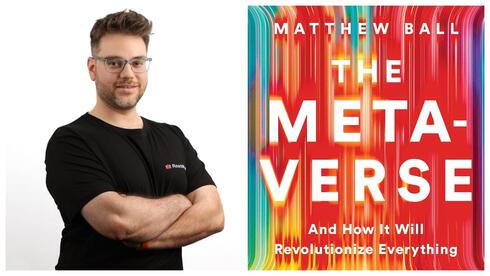
Michael Anav, Co-Founder and CEO at ReachPlayers, shares insights after reading “The Metaverse: And How It Will Revolutionize Everything” by Matthew Ball.
Michael Anav is the Co-Founder and CEO at ReachPlayers, an in-game advertising and marketing platform. He has joined CTech to share a review of “The Metaverse: And How It Will Revolutionize Everything” by Matthew Ball.
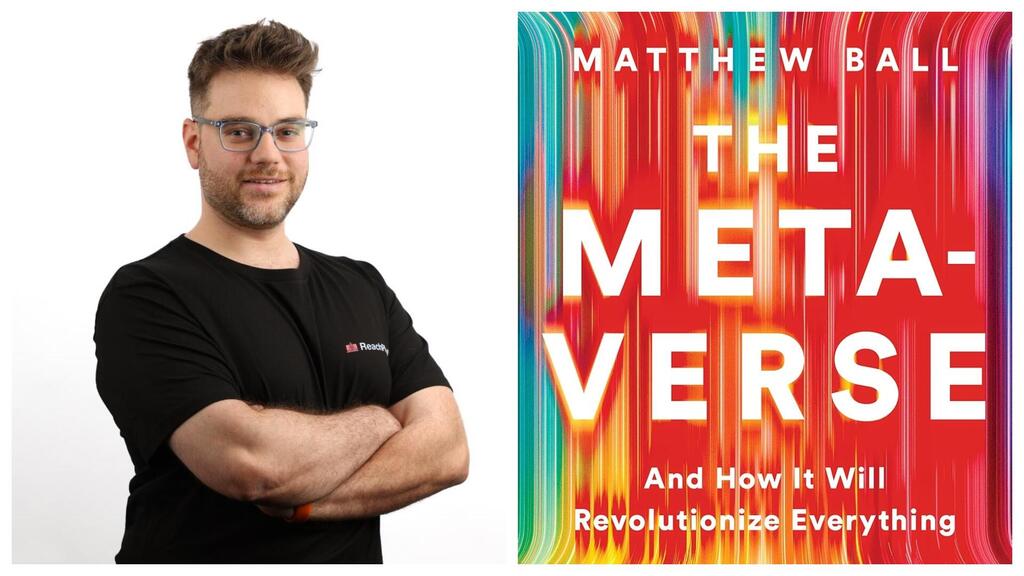
Title: The Metaverse: And How It Will Revolutionize Everything
Author: Matthew Ball
Format: Tablet
Where: Commute
Summary:
What I like about Matthew Ball’s The Metaverse is that it gets past a lot of the hype that has surrounded the word.
This isn’t really a book about VR headsets or everyone suddenly living in one giant virtual world. Ball’s argument is much bigger than that: He sees the Metaverse as an evolution of the internet itself, where more of what we do online happens inside persistent, interactive, real-time environments. And importantly, he spends a lot of time explaining what still needs to happen to make that possible. Compute, latency, payments, interoperability, standards: none of these are particularly glamorous topics, but they are the infrastructure that determines how far these environments can actually go.
What makes the book particularly relevant today is that consumer behavior is already moving faster than much of that infrastructure. Young people are already spending enormous amounts of time inside gaming environments. They are socializing, creating, discovering things, expressing themselves and making decisions there. So the interesting question is no longer whether people will spend meaningful time inside virtual worlds. They already do. The bigger question is what happens as the technology, infrastructure and commercial models catch up with that behavior.
Important Themes:
One of the strongest ideas in the book is the gap between where consumers are and where the infrastructure is.
Platforms like Roblox, Fortnite and Minecraft already have huge audiences, particularly among Gen Z and Gen Alpha. But there are still significant technical limitations around things like concurrency, latency, computing power and interoperability. In other words, the audience arrived before the infrastructure was finished.
Ball also spends a lot of time on standards. The internet became what it is today partly because common protocols allowed completely different companies, websites and technologies to operate within the same ecosystem. Virtual worlds are nowhere near that point yet. They are largely separate environments with their own economies, identities, currencies and rules. Ball argues that greater interoperability will eventually be necessary if these environments are going to reach their full economic potential.
But the theme I found most interesting is the shift from attention to participation. On most digital media, we consume. We watch, scroll, click and move on. Inside games, we participate. We make decisions, we complete challenges, we interact with other people, we explore environments, we spend time. That distinction matters enormously for brands.
A brand inside a game doesn’t have to sit beside the experience and compete for attention. It can become part of what the player is actually doing. That is a fundamentally different relationship between a brand and an audience.
What I’ve Learned:
The biggest takeaway for me is that new media channels really scale when they become easier to understand, buy and measure. The early internet had to go through exactly the same process. Advertising formats became standardized, measurement improved, and buying became easier. Agencies understood how to plan it; brands understood what they were paying for. Gaming is going through its own version of that transition now.
Brands shouldn’t need to understand game development or bet millions on building their own virtual world just to reach people inside games. They need predictable ways to buy gaming as media, understand the audience they are reaching, measure what happened and compare that investment with everything else in their media plan. That is when budgets start moving seriously.
The book also reinforced something I think marketers still underestimate: not all attention is equal. There is a huge difference between someone scrolling past something for a few seconds and someone actively spending several minutes interacting inside an environment. We tend to put both into the broad bucket of “digital attention,” but they are completely different experiences. Gaming makes that difference very obvious.
If someone is actively navigating an environment, completing a mission, interacting with a product or making choices involving a brand, that is not simply an impression, it is participation. And I think the advertising industry is still figuring out how to properly value that.
Critiques:
Where I differ slightly from Ball is on how much needs to happen before the commercial opportunity becomes meaningful.
The book understandably puts enormous weight on interoperability, computing infrastructure and common standards. Those things will matter enormously over the long term, but brands don’t need to wait for a perfectly interconnected Metaverse before there is a serious opportunity. The environments already exist; the audiences are already there. And the commercial infrastructure around them is developing quickly. Roblox does not need to seamlessly connect with Fortnite for a brand to create something valuable inside either environment today.
So while the technological vision may still be years away, the shift in consumer attention that underpins it is already happening. You don’t need to believe in some distant version of “the Metaverse” to believe in gaming as a media channel. You just need to look at where people are already spending their time.
Who Should Read This Book:
I’d recommend this to CMOs, CEOs, investors and anyone responsible for thinking about where consumer behavior is heading over the next decade. It is particularly useful if your understanding of the Metaverse still comes from the hype cycle of a few years ago.
Forget the headsets and the science-fiction version for a moment. The more important shift is already much easier to see: people are spending more of their digital lives inside interactive environments rather than simply consuming content on pages and feeds.
For brands, understanding what that change means for attention, media and commerce is far more important than deciding whether we ultimately call it “the Metaverse.”



