










BiblioTech
CTech’s Book Review: Relevance is rented, not owned
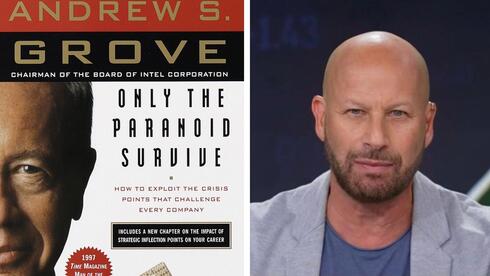
Eitan Singer, CEO at Cibus Pluxee, shares insights after reading “Only the Paranoid Survive” by Andrew S. Grove.
Eitan Singer is the CEO at Cibus Pluxee, a digital employee benefit platform company. He has joined CTech to share a review of “Only the Paranoid Survive” by Andrew S. Grove.
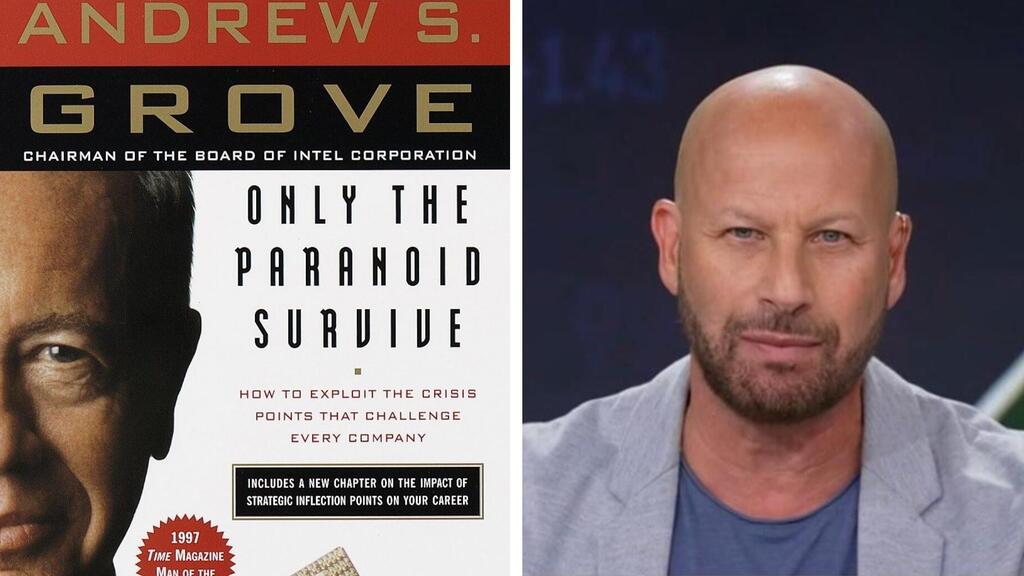
Title: Only the Paranoid Survive
Author: Andrew S. Grove
Format: Book, Tablet, Audiobook
Where: Vacation
Summary:
The book argues that enduring success comes from relentless vigilance and the courage to reinvent before crisis forces it. Grove introduces ‘Strategic Inflection Points’, moments when technology, competition, regulation, or customer behavior fundamentally shifts the rules of the game. Leaders who deny these signals fail; those who confront them early can transform threats into opportunity.
The book blends Intel’s hard lessons with practical guidance: listen obsessively to weak signals, debate brutally, decentralize insight, and act decisively even when data is incomplete. Paranoia, Grove insists, isn’t fear. It’s disciplined alertness that keeps organizations alive and ahead.
Important Themes:
At the heart of the book is the concept of ‘Strategic Inflection Points’, moments when the fundamental forces shaping a business change. These shifts can come from technology, competition, regulation, or customer behavior, and they redefine what success looks like. Companies rarely fail suddenly; they fail because they misread or ignore these turning points.
A second theme is ‘productive paranoia’. Grove reframes paranoia not as fear, but as disciplined vigilance. Great leaders constantly ask, “What could kill us?” and treat weak signals seriously, even when they are ambiguous or uncomfortable.
The book emphasizes organizational listening. Insight rarely comes only from the top; frontline employees, customers, and partners often see change first. Leaders must create cultures where bad news travels fast and debate is encouraged.
Another central theme is decisive leadership under uncertainty. Waiting for perfect data is fatal. Grove argues that leaders must act with incomplete information, adjust quickly, and commit once a direction is chosen.
Finally, the book highlights reinvention over legacy. Past success is often the biggest enemy. Survival depends on the willingness to abandon old models, even ones that built the company, and rebuild before competitors force the change.
What I’ve Learned:
I read this unique title in my early twenties, at an age when ambition is loud and experience is still quiet. I didn’t know it then, but that book planted a permanent operating system in my head, one that has been running in the background of every managerial, leadership, and entrepreneurial decision I’ve made since.
Grove gave me alertness. A deep, almost instinctive understanding that success is temporary, fragile, and often misleading. He taught me that the most dangerous sentence in business is: “Things are going well.” From that moment on, comfort started to make me uneasy, and that unease became one of my greatest assets.
As a young manager, the book rewired how I listen. I learned to pay attention to more than dashboards and KPIs, but to weak signals as well: a complaint repeated twice, a competitor dismissed too quickly, a frontline employee who sounds uneasy but can’t fully articulate why. Grove taught me that reality whispers before it screams, and that leaders who wait for screams are already late.
As a leader, it shaped my relationship with conflict. I stopped seeing disagreement as a threat and started seeing it as oxygen. I learned to invite friction, challenge consensus, and sit comfortably in rooms where the truth is uncomfortable. Paranoia, in Grove’s framing, is a responsibility. It’s caring enough about the future to question the present relentlessly.
Entrepreneurially, the book saved me from falling in love with my own ideas. It drilled into me a brutal but liberating principle: legacy is a liability. The willingness to abandon what once worked, sometimes what made you successful, is part of evolution. Many of my hardest calls over the years, killing projects, pivoting strategy, reallocating bets, were survivable because I had already made peace with one truth early on: relevance is rented, not owned.
Fast forward to today, as CEO of Cibus Pluxee, operating in a market defined by regulation, aggression, speed, and noise. Grove’s voice is still there. It shows up when competition intensifies, when new players distort economics, when technology shifts behavior faster than strategy decks can keep up. I constantly ask myself and my team: What has changed that we haven’t fully internalized yet? What assumption are we protecting because it’s comfortable? Where could the real threat come from, not the obvious one?
Looking back, this book shaped my career by training my instincts. Only the Paranoid Survive taught me how to keep winning without becoming arrogant, blind, or slow. And decades later, those instincts are still doing exactly what Grove promised.
What I respect most about Grove is his refusal to romanticize leadership. He reminds us that leadership is not about protecting the organization from discomfort, it’s about exposing it to the right discomfort early enough to adapt.
Critiques:
The title Only the Paranoid Survive is deliberately provocative, but that provocation is also the source of its main critiques.
First, critics argue that it appears to legitimize fear-based leadership. Read at face value, “paranoid” suggests mistrust and a constant sense of danger. Some leaders worry that this framing can encourage overcontrol, defensiveness, or a culture where people feel watched rather than empowered.
Second, the title seems to downplay the role of trust and vision. Many successful organizations are built on confidence, long-term belief, and psychological safety. From this perspective, survival comes from clarity and conviction, qualities the title does not immediately convey.
Third, there is concern that the mindset implied by the title promotes short-term reactions over long-term strategy. Paranoia can push leaders to chase every market movement or competitor action, confusing noise with real change and leading to strategic whiplash.
Another critique is cultural. Outside Silicon Valley and American business culture, the word “paranoid” carries a much harsher, even pathological meaning. In many environments it reads as unhealthy or extreme, making the message harder to accept or apply globally.
Finally, critics point out that the title oversimplifies and slightly distorts Grove’s true argument. The book itself advocates alertness, debate, and timely decision-making, not fear. The title is memorable and effective as marketing, but misleading in substance.
Who Should Read This Book:
In business, experience teaches you many things. One of the hardest is this: success is a terrible teacher. It rewards yesterday’s decisions and can blind you to tomorrow’s reality. That is why, after decades of managing, leading, building, and defending a large business in Israel, I still return, mentally and philosophically, to this one book I read in my early twenties.
Despite its provocative title, Grove is preaching humility, the kind of humility that accepts a simple truth: markets don’t care about your past, your brand, or your intentions. They only care about what works now, and what will work next. Grove’s concept of Strategic Inflection Points explains why great companies rarely suddenly fall apart. They slowly erode, while leadership is busy celebrating what used to work.
For leaders in Israel, this book is especially relevant. We operate in a reality where regulation shifts quickly, global competitors arrive uninvited, technology rewrites categories overnight, and uncertainty is a constant. In such an environment, execution excellence is table stakes. What differentiates enduring leaders is alertness: the ability to sense change early, debate it honestly, and act before clarity is complete.
I recommend this book to leaders who are looking for longevity. Those who understand that staying in the game is the real achievement.



