










Boarding Pass
How NanoTherma plans to capture the untapped energy hiding inside data centers
As AI drives unprecedented power consumption, the pre-seed startup is leveraging nanomaterials to convert low-grade waste heat into usable electricity at the point of generation.
“We built chips at Intel and NVIDIA and watched every generation get faster and hotter,” explains Dr. Nimrod Gazit, Co-Founder and CEO of NanoTherma. “The industry’s answer was always the same: move the heat somewhere else.”
Backed by a recent $300,000 pre-seed round from the ICI Fund and Starbust, the recently launched startup develops advanced thermoelectric panels that convert low-grade waste heat into usable electricity. NanoTherma is initially targeting data centers, where rising power density and cooling demands create significant amounts of untapped thermal energy.
According to Gazit, the AI boom has made electricity a “binding constraint” in computing. “We realized that every data center is essentially a machine that converts electricity into heat,” he continued. “At some point we stopped asking how to get rid of it and started asking what it was worth.”
You can learn more about the company below.
Company Name: NanoTherma
Sector: Energy
Product/Service description:
NanoTherma develops advanced thermoelectric panels that convert low-grade waste heat into usable electricity. The product consists of thin, modular, and lightweight units based on novel nanomaterials, designed to operate efficiently at temperature differences typically considered too low for conventional energy recovery technologies.
The panels integrate directly into existing thermal and cooling infrastructures, such as data center racks, without requiring fluids, moving parts, or major system modifications. This enables a simple, scalable, and low-maintenance deployment, turning previously wasted heat into a distributed energy source at the point of generation.
NanoTherma’s initial focus is on data centers, where increasing power density and cooling demands create significant amounts of untapped thermal energy. By converting this heat into electricity, the system improves overall energy efficiency, reduces operational costs, and contributes to sustainability goals.
Built using semiconductor-compatible processes, NanoTherma’s technology is designed for scalable manufacturing and cost reduction over time. Beyond data centers, the platform can be extended to a wide range of industrial applications, including semiconductor fabs, telecom infrastructure, and other environments where low-grade heat is abundant.
Founder Bios:
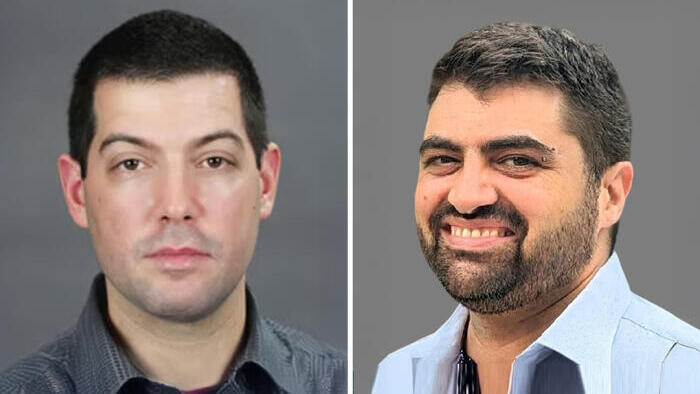
Dr. Nimrod Gazit (Co-Founder and CEO) is an entrepreneur, materials scientist, and technology leader with more than a decade of experience spanning semiconductors, photonics, and advanced materials. He holds a Ph.D. in Materials Science and Engineering from the Technion – Israel Institute of Technology.
He began his professional journey at Intel, where he worked on advanced semiconductor manufacturing processes, process integration, statistical process control, and yield optimization for leading-edge technology nodes. He later joined NVIDIA’s Silicon Photonics group, contributing to the development of next-generation optical interconnect technologies for high-performance computing and AI infrastructure.
Following his work in the semiconductor industry, Nimrod joined Raicol Crystals. During this period, he was involved in technology strategy, grant acquisition, and the commercialization of advanced photonic technologies.
In addition to his industrial experience, Nimrod has been actively involved in the global innovation ecosystem through mentoring, startup programs, international technology collaborations, and industry conferences.
Dr. Roi Levi (Co-Founder and CTO) is a scientist, inventor, and technology entrepreneur specializing in advanced materials, device physics, and energy conversion technologies. He holds a Ph.D. in Materials Science and Engineering and has dedicated his career to developing innovative materials-based solutions for real-world engineering challenges.
Throughout his research and professional career, Roi has worked on the design, characterization, and optimization of advanced functional materials and devices. His expertise spans material synthesis, device engineering, experimental characterization, and the translation of laboratory innovations into practical technologies.
As a founder and technology leader, Roi is committed to advancing next-generation energy technologies and building solutions that enable a more efficient and sustainable future.
Year of Founding: 2026
Last Investment Round: $300,000
Last Investment Stage: Pre-Seed
Date of Last Investment: 01/07/2026
Total investment to date: $900,000
Investors: ICI, Starburst
Current number of employees: 4
Website: www.nanotherma.com
Social Media: LinkedIn
How was the idea born?
We built chips at Intel and NVIDIA and watched every generation get faster and hotter. The industry’s answer was always the same: move the heat somewhere else. At some point we stopped asking how to get rid of it and started asking what it was worth. We realized that every data center is essentially a machine that converts electricity into heat. We wanted to recover part of that energy instead of throwing it away.
What is the need for the product?
AI has made electricity the binding constraint on computing. Operators pay for the electricity they consume and then spend even more money removing the heat it creates. Yet that heat leaves the building too cool for existing recovery technologies to use economically, making it a largely untapped energy resource. NanoTherma converts part of that wasted heat back into electricity inside the rack, without requiring operators to redesign their facilities.
How is it changing the market?
Waste heat has always been treated as a cost. We are turning it into a source of value. Conventional recovery technologies require either high temperatures or external infrastructure such as district heating networks. Our solution works at data center temperatures, directly inside the rack, as a modular system that integrates with existing infrastructure. That creates a new category: in-rack energy recovery.
How big is the market for the product and who are its main customers?
Global data center electricity demand is projected to more than double by 2030 as AI continues to scale. Our first customers are hyperscale, colocation, and enterprise data center operators, followed by OEMs and infrastructure providers. While data centers are our initial market, the same technology can later be applied across industrial facilities, automotive, aerospace, defense, and many other sectors where low-grade waste heat is available.
Does the product exist already?
We are currently developing the technology in close collaboration with design partners and potential customers. The market response has been very encouraging, with several companies expressing strong interest in evaluating the solution once it is ready. Our next milestone is to begin pilot deployments as we move toward commercialization.
Who are the main competitors in this sector and how big are they?
The waste heat recovery market includes established technologies such as heat pumps and Organic Rankine Cycle (ORC) systems, alongside a growing number of startups developing alternative approaches. While these solutions are effective in many industrial applications, they are generally optimized for higher-temperature heat sources or require additional infrastructure, making them economically unattractive for the low-temperature waste heat found in data centers. NanoTherma was designed specifically for this environment, enabling cost-effective electricity generation from low-grade waste heat directly inside the data center.
What is the added value that the founders bring to the company and the product?
NanoTherma was founded by two engineers with complementary expertise in advanced materials, semiconductors, and product development. CEO Dr. Nimrod Gazit previously held engineering and R&D roles at Intel, NVIDIA, and Raicol Crystals, bringing experience in semiconductors, photonics, and commercializing deep-tech innovations. CTO Dr. Roi Levi specializes in advanced materials and manufacturing scale-up. Together, the founders combine technical expertise with hands-on experience in bringing complex hardware technologies from research to real-world applications, supported by strong relationships across the data center and deep-tech ecosystems.
What will the money coming in from the round be used for?
The funding will primarily support technology development, team expansion, and technical validation. Most of the investment will go toward R&D, prototype development, and building and validating pilot systems with design partners. We are also expanding our engineering and materials science teams while investing in manufacturing readiness, supply chain development, and intellectual property. The objective of this round is to validate the technology in real operating environments and prepare the company for commercial scale-up.
In the "Startup Boarding Pass" section, CTech will cover the (relatively) small investments made in companies during the early stages of their existence - and the entrepreneurs and startups who have not yet had the opportunity to reveal their stories to the world. Please use the linked form and fill it out according to the guidelines. This form is intended for startups raising between $500,000 and $3 million from venture capital funds, angels, or official grants from Israeli and foreign institutions. If relevant, someone at CTech will be in touch for follow-up questions.



