










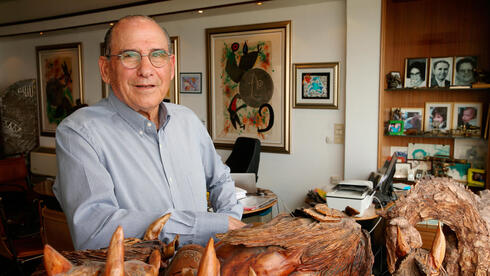
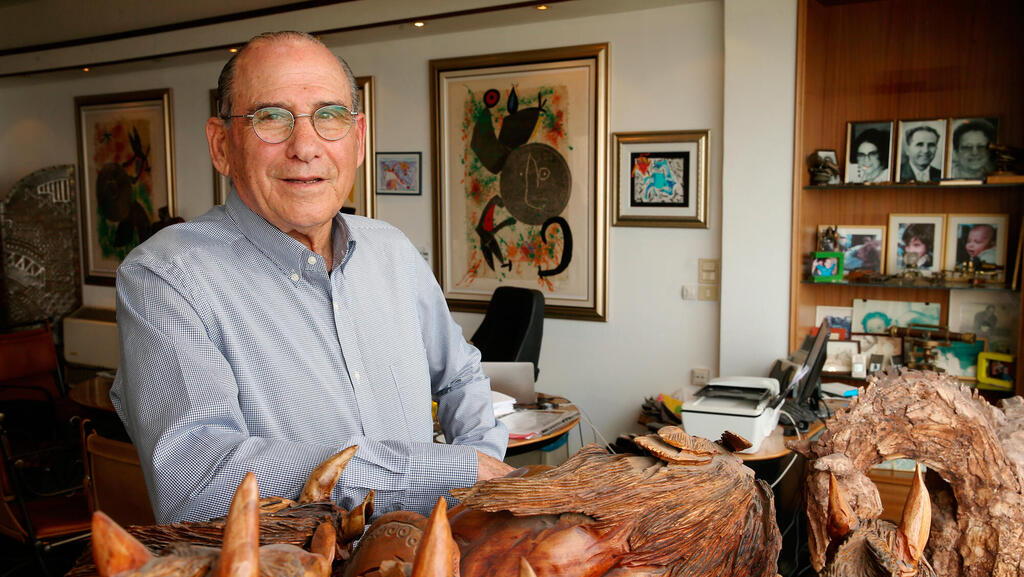
Gad Zeevi seeks a comeback with $550 million bid for Gadot Group
Twenty-seven years after losing control of the company, the Haifa businessman is leading a consortium seeking to acquire the Haifa Port partner from Tene and Value Base.
Twenty-seven years after selling his stake in the company, Haifa businessman Gad Zeevi is once again seeking to take control of Gadot Group, a partner in the privatized Haifa Port. Calcalist has learned that Zeevi is leading an investor group negotiating to acquire the company at a valuation of approximately $550 million.
About ten days ago, a memorandum of understanding was signed for the acquisition of Gadot from the Tene Fund, which owns 60% of the company, and from a group of investors led by Value Base (Value LBH), which owns the remaining 40%. Negotiations are underway to acquire 100% of the company’s shares. The sale process is being managed by investment bank Jefferies, which apparently also helped connect Zeevi with the additional investors in the consortium. Zeevi declined to comment.
Gadot’s main asset is its 30% stake in Haifa Port, where its partner is India’s Adani Group, which owns the remaining 70%. Beyond the port, Gadot operates in shipping, chemicals, energy and storage solutions, with subsidiaries in the Netherlands, Belgium, the United States and Germany.
Tene Fund has been seeking an exit from Gadot for years, having held the investment for approximately 12 years, an unusually long period for a private equity fund. Managed by Ariel Halperin, Tene acquired the company, then known as Gadot Tankers, in 2014 for $73.5 million from receivers, beating FIMI Fund in the bidding process.
At the time, Gadot was controlled by Yossi Maiman’s Ampal Group, which collapsed financially. Discount Bank exercised its lien over Ampal’s shares after the group entered insolvency proceedings.
In 2020, Tene attempted to take Gadot public at a valuation of $300 million, but abandoned the plan after investors demanded a lower valuation. A year later, it sold a 40% stake in Gadot to the LBH fund, led by Shimon Ben Hamo and Opher Linchevsky, who is currently Gadot’s CEO, at a company valuation of $280 million. The investor group also included David Fattal, Chen Lamdan of Orian, Eyal Waldman, Gadi Aviram and Achishai Fox.
Under the current ownership structure, Gadot partnered with Adani in 2022, and together they won the tender to privatize Haifa Port for NIS 4.2 billion, approximately NIS 1.5 billion more than the second-highest bid. The price was considered unusually high at the time, although it included approximately NIS 2.6 billion in cash reserves held by the port.
The state prohibited the owners from withdrawing those funds until the construction of a deep-water dock, designed to enable the port to accommodate larger container ships and compete more effectively with nearby Haifa Bayport, owned by China’s SIPG. Bayport has continued to increase its market share in container traffic, putting pressure on Haifa Port.
In 2025, 636,000 containers passed through Bayport, compared with 563,000 in 2024, while Haifa Port handled 676,000 containers, up from 648,000 the previous year.
Last month, it was reported that the state and Haifa Port’s owners are expected to sign a revised agreement allowing dividends to be distributed before the deep-water dock is completed, provided that NIS 1 billion is deposited for the dock’s construction.
Before privatization, Haifa Port generated approximately NIS 845 million in annual revenue and NIS 271 million in net profit.
The Gadot sale is particularly important for Tene, which has struggled to raise a new fund and has not completed significant new acquisitions in recent years. Its last fund, worth $410 million, was raised in 2017. The fund’s performance was hurt by several challenges, including its investment in Caesarstone, whose share price collapsed, as well as criticism over the high price paid for Haifa Port.
Gadot was founded in 1957 by the Yochananoff family, which built the business around chemical imports and exports, tanker operations and chemical storage facilities.
Zeevi first became involved with Gadot in 1998, when he acquired shares through his purchase of Clal Sahar, which held a stake in the company. Between 1998 and 1999, Zeevi attempted to take control of Gadot by purchasing shares from Delek Group, which owned approximately 35% of the company, for NIS 75 million.
The attempted takeover ultimately failed after the Yochananoff family exercised its right of first refusal. Zeevi later sold his holdings back to the Yochananoff family and Delek in 1999 for NIS 52 million, at a company valuation of approximately NIS 150 million.
Ampal acquired Gadot in 2007 for NIS 545 million and exited the company in 2014 as part of its creditors’ arrangement, leading to Tene’s acquisition.
Zeevi is best known for his massive investment in Bezeq in 1999, when he acquired control of the telecom company from Cable & Wireless with hundreds of millions of dollars in bank financing. He later defaulted on the loans, leading banks to sell the shares. Following a Supreme Court ruling that banks had charged him illegal interest, Zeevi received compensation worth hundreds of millions of shekels.
He was also cleared in the criminal case involving allegations that businessman Michael (Len) Chernoy was a hidden partner in the Bezeq transaction.
Over the years, Zeevi’s holdings have included Beitar Jerusalem, the Grand Canyon shopping mall in Haifa, Clal Sahar, logistics company Overseas, whose operations overlap partly with Gadot’s activities, Subaru Japan’s Israeli importer, and Elisha Hospital, which he sold in 2017 to Zvi Barinbaum and NARA for NIS 180 million.
In 2019, Zeevi was also considered a candidate to acquire control of Bezeq from Eurocom’s bondholders, but the deal ultimately went to Searchlight Capital Partners.



