










Opinion
Autonomous cars need common sense
Autonomous vehicles are already on our roads. They can sense, perceive, predict, plan, and control with remarkable precision. In many situations, they outperform human drivers. Yet they still fail in ways that no human would. What’s missing? Common sense.
Waymo deserves enormous credit for turning autonomous driving from a research ambition into a commercial reality. Its fleet of roughly 4,000 fully autonomous vehicles now completes hundreds of thousands of rides every week, demonstrating that self-driving technology can operate safely at scale in real urban environments. The company has spent years refining perception, prediction, planning, and control, setting a new benchmark for the industry. In June, Waymo said its analysis of more than 220 million fully autonomous miles found 94% fewer crashes causing serious or fatal injuries and 82% fewer crashes involving any reported injury than human-driver benchmarks in the same areas. For the first time, autonomous driving is no longer a promise - it is a working transportation service.
Reaching this milestone, however, has made one thing abundantly clear: the next frontier in autonomous driving is not only better sensing, perception, and planning, but also endowing vehicles with the judgment of a knowledgeable driver. As autonomous vehicles become increasingly capable in routine driving, the remaining challenge is how they respond to unusual situations that require context and reasoning.

The 2026 Waymo recalls illustrate this distinction. In two separate recalls, Waymo recalled approximately 3,800 vehicles each time: once because vehicles could continue into flooded roadways, and again because they could enter closed freeway construction zones. The technical failures were not identical, but both point to the same broader challenge: an autonomous vehicle needs to correctly interpret unusual conditions and choose the appropriate response.
An experienced driver instinctively understands that standing water may conceal a washed-out road, that a construction barrier means “do not enter,” and that temporary traffic controls override the normal rules of the road. This ability to reason from contextual knowledge and apply common sense remains one of autonomy’s defining challenges.
If common sense is the missing building block, then it must also become a first-class performance metric. Today’s autonomous driving systems are primarily evaluated on traditional measures such as disengagements, collision rates, intervention frequency, and success across predefined scenarios. These metrics are essential, but they are retrospective - they reveal when a system has already failed. They do not measure whether a vehicle truly understands the driving context or is simply executing learned patterns.
The industry needs a new class of metrics that continuously evaluates a system’s common-sense reasoning, even during routine driving where no incident occurs. Does the vehicle anticipate that a child standing near the curb may suddenly run into the street? Does it recognize that a driver edging forward at an intersection is likely preparing to merge? Does it infer that a parked truck may conceal pedestrians, or that standing water could hide a washed-out road? Does it understand that temporary construction signs override permanent lane markings, or that an unusual obstacle should be treated with caution even if it has never been seen before? Above all, does it behave with the judgment, anticipation, caution, and adaptability of an experienced human driver?
These are not edge cases. They are manifestations of the same human capability: common sense. Human drivers continuously combine perception with contextual knowledge, prior experience, intent prediction, risk assessment, and causal reasoning. They understand not only what they see, but what it means, what is likely to happen next, and how they should respond.
Measuring these capabilities proactively, not waiting for rare failures to expose their absence is the next frontier in autonomous driving. It shifts the focus from measuring outcomes to measuring understanding, from counting failures to quantifying the reasoning that prevents them.
The history of autonomous driving has been a sequence of breakthroughs in increasingly difficult problems. We taught machines to perceive the world, to predict how it changes, and to plan safe trajectories through it. These advances have transformed what was once considered impossible into a commercial reality.
But they have also revealed something fundamental: perception is not understanding, prediction is not judgment, and planning is not reasoning. A system can execute each of these functions remarkably well and still make decisions that no experienced human driver ever would. The remaining challenge is no longer one of engineering more sensors or training larger models. It is one of intelligence. Specifically, the ability to apply knowledge, interpret context, infer intent, and reason about situations that have never been encountered before. That capability has a simple name - common sense. And until autonomous vehicles possess it, they will continue to surprise us in exactly the ways that humans do not.
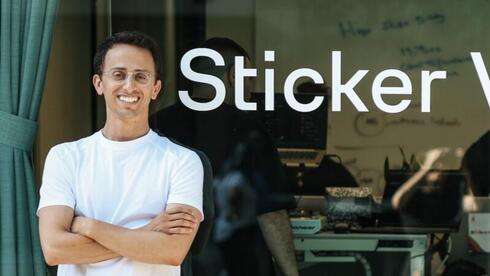
Igal Raichelgauz is the Founder and CEO of Autobrains.



