









The teenage girls preparing for Israel's next war
On Israel’s beaches and in its parks, teenage girls as young as 14 are training in combat fitness programs as they set their sights on elite IDF units once closed to women.
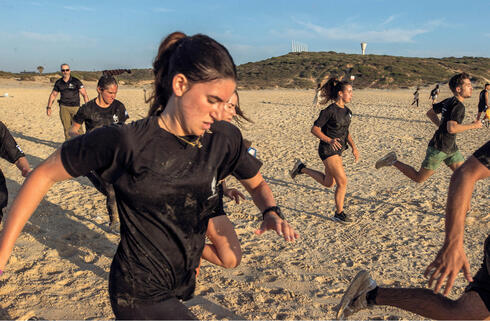
Poleg Beach last week, 6 p.m. The sun is setting over the waterline, painting the sea in pastoral shades of gold and orange, but the dozens of teenagers climbing the dune are indifferent to the spectacular scene. They are sweating and panting as they sprint, carry sandbags, and crawl. At first glance, it looks like another preparatory course for service in the IDF's combat units, but on closer inspection, it is impossible to miss the fact that almost half of the trainees are girls.
A decade ago, this sight was unusual, but in recent years, and even more so since October 7 and the years of war that followed, it has become increasingly common. There are no official figures on the scope of the phenomenon, but anyone walking along beaches, gardens, and parks across the country can see that more and more girls are participating in combat fitness courses. They train twice, and sometimes three times, a week, and hope that the effort and sweat they invest will one day allow them to be assigned to combat roles in the IDF. Not only in units such as the Caracal Battalion, which was established in 2004 to carry out routine security missions and was the first mixed-gender combat unit, but also at the very forefront of the IDF’s elite system: Yahalom, Unit 669, the Oketz Dog Unit, and even Sayeret Matkal, where the first female fighter recently completed the unit’s grueling selection course.
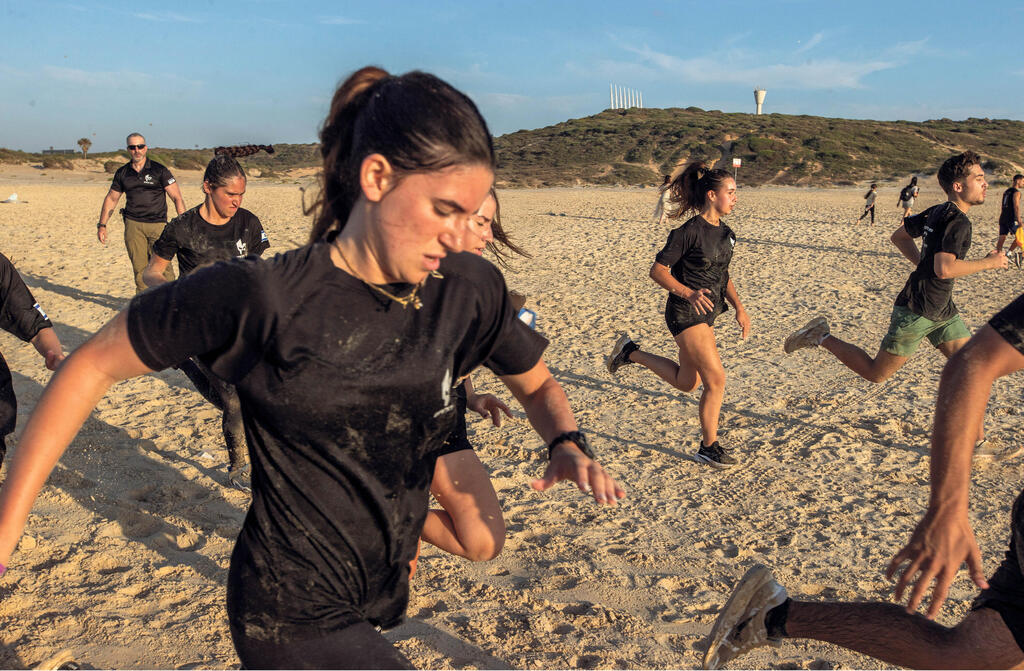
Daniel Alkobi, the professional director of Xpert Combat Fitness, also recognizes the change that October 7 has brought to the mindset of young people attending his courses. He says the question is not whether women can be fighters, but which women and which men are suited for combat roles. "There are girls who are not suitable, just as there are boys who are not suitable. And there are girls who can go as far as possible. A decade ago, I had two or three girls on the team. Today, there are teams with 15 girls. What happened on October 7 created new motivation among young people and a sense that questions about combat service are no longer theoretical. We saw what this generation did on October 7. In the test of reality, it proved itself."
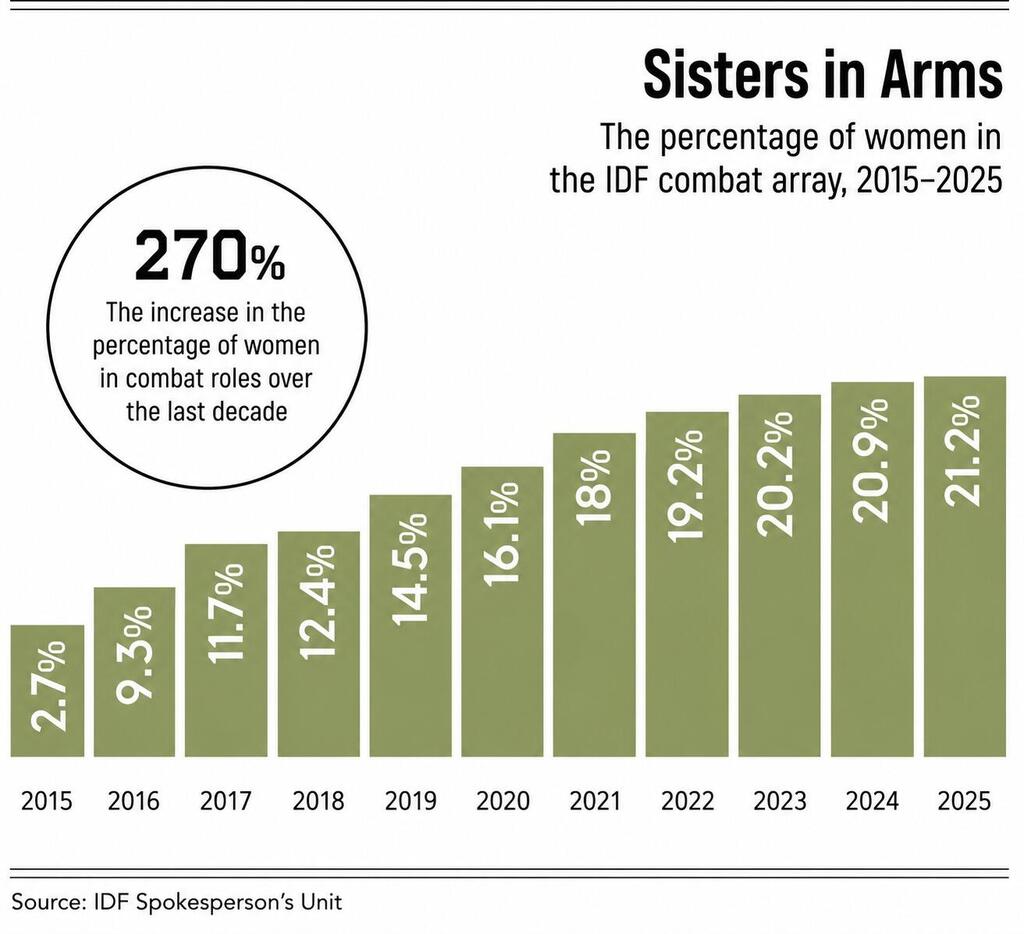
But the growing integration of women into the IDF’s combat ranks, today, about 21.2% of the IDF’s combat force consists of women, also raises broader questions that are rarely heard in public discourse. After decades in which women fought to break through the glass ceiling and integrate into combat units, today, as it gradually cracks, the debate seems to focus almost exclusively on how to integrate women into combat. Almost no one is asking a wider question: what the aspiration of young men and women to serve in combat roles actually means, and whether the younger generation, and Israeli society as a whole, is accepting, even embracing, a vision of continuous, multi-front war, as suggested by Prime Minister Benjamin Netanyahu in his recent “Super-Sparta” speech.
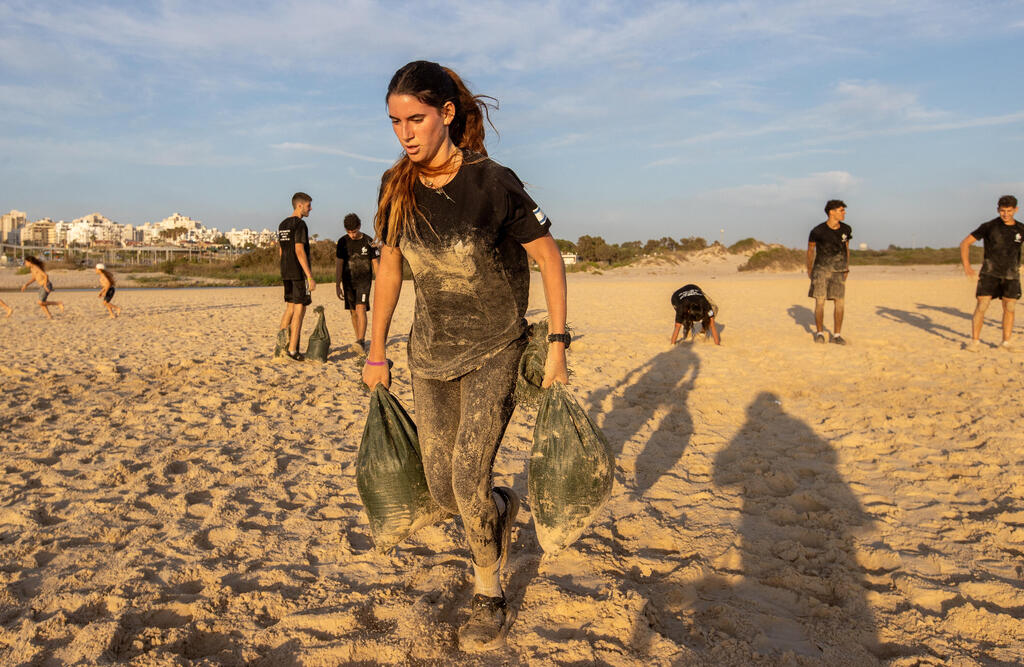
On the beach, it was difficult to find anyone reflecting on whether this shift in the IDF and Israeli society represents a victory for gender equality or a sign that the younger generation, both women and men, has internalized the idea that war is no longer a historical anomaly to be prevented, but a permanent reality to be prepared for from the age of 14. For the motivated girls I met, the possibility of reaching an elite unit is not seen as a sacrifice, but as the fulfillment of their identity as Israelis.
Two 14-year-old girls, Noa Dvoriansky and Avigail Gagar, both ninth-graders, are a good example of this mindset. They are wading in the shallow water wearing uniforms from the Warriors Spirit combat fitness program: black leggings and black shirts with the slogan on the back reading, “We don’t use machines, we create them.” Both watch the group of trainees on the dune. They are participating in training, but due to their age, they take part in a more limited program than the boys and older girls. Although military service is still years away, both are convinced that they will one day serve in combat roles.
“The only reason they’re better than us right now is because they’re older than us,” says Avigail, pointing toward the group of girls running on the sand. Her friend Noa quickly adds: “We’ll reach their level. We want to be in the most elite units.”
Gagar says combat fitness is much more than physical training for her. In the past, she played basketball and tried other sports, but here she found something different. “It’s a corrective experience. I didn’t always feel like I belonged in other groups, but here there’s a sense of mutual responsibility and accountability. It’s not just sports,” she says. “There are also values here, brotherhood, sacrifice, and Zionism. You feel like you’re preparing for something bigger than yourself.”
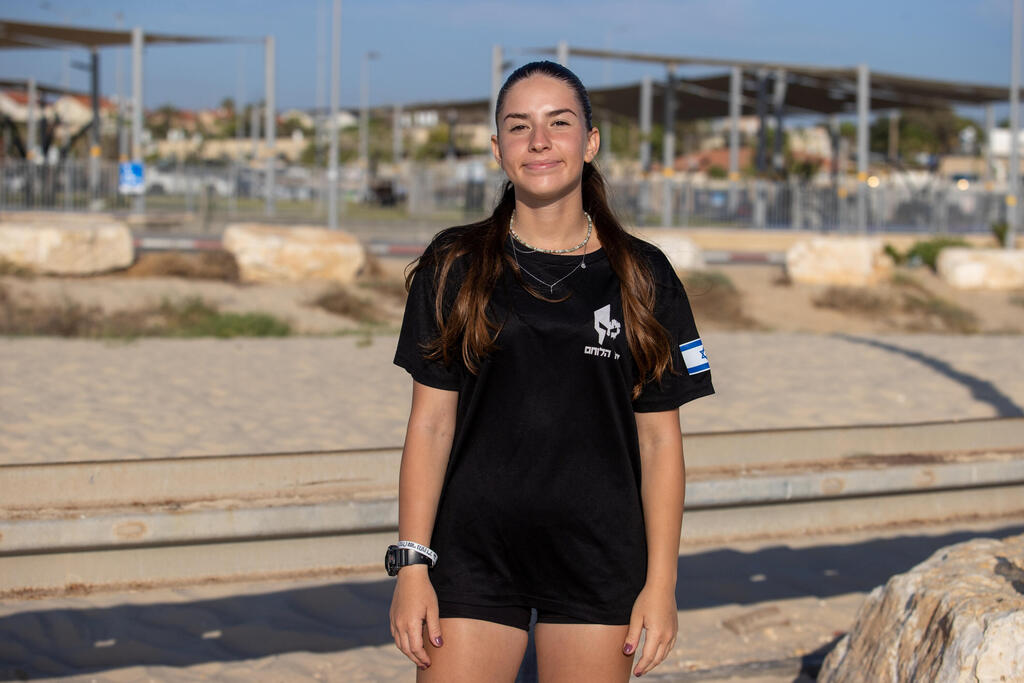
This statement, coming from a 14-year-old girl, clearly illustrates the depth of the change. For a generation growing up in the shadow of the collective trauma of October 7 and the war that followed, combat service is not seen only as a civic duty or prestigious military path, but as part of identity, something to train for, aspire to, and shape one’s body and worldview around, at an age when previous generations were still deciding what they wanted to do when they grew up.
"It's not just a desire for equality, but a commitment to collective contribution"
Prof. Elisheva Rosman-Stollman, a researcher of military-society relations in the Department of Political Science at Bar-Ilan University, says there is a widespread tendency to regard October 7 as the starting point of this phenomenon, but in reality it is an acceleration of a deep and ongoing process that began years earlier. According to her, "What we are seeing today is a meeting between the expansion of opportunities that have opened up for women in the IDF and the growing aspiration of young women to be part of arenas perceived as the center of national action and contribution. For decades, combat service has been one of the main centers of prestige, influence, and symbolic capital in Israeli society. As more roles have opened to women, so too has their desire to integrate into these spaces. It is not just a desire for equality, but also a desire to participate in spaces where narratives of responsibility, commitment, and collective contribution are shaped."
Even within religious Zionism, several of whose rabbis have recently expressed vocal opposition to mixed-gender service?
"One of the common mistakes in public discourse is treating religious Zionism as a single bloc that opposes women's service in general and combat service in particular. In reality, this is a diverse and multi-voiced field. Alongside rabbis who oppose this trend, there are also well-known rabbis who support it, including Rabbi Ohad Taharlev and others. They see women's military service as an expression of religious values rather than a contradiction of them. The debate within religious Zionism is a genuine internal debate, reflecting deep disagreements regarding the status of women, the meaning of military service, and the relationship between religion and state. If in the past the debate revolved around the very possibility of a religious girl enlisting in the IDF, today the question has fundamentally changed. In large parts of the national-religious public, military service has become the norm, and the discussion has shifted to the nature of the service, its scope, and the roles it is appropriate and possible to aspire to. In this sense, the very existence of the debate around women's service in Armor Corps units, Yahalom, Unit 669, or other elite units indicates how much the boundaries of discourse have shifted in recent decades."
Do you think this trend will increase?
"As more women enter roles that were previously closed to them, the horizon of possibilities perceived by young girls also expands. Female pilots, combat soldiers, commanders, and senior officers are not just individual success stories; they create new patterns of identification and expand the boundaries of social imagination. This is especially noticeable in religious society. When a religious girl is exposed to a religious woman who combines halakhic commitment (Jewish religious observance) with meaningful service, she no longer sees a contradiction between these identities. This model provides legitimacy, creates possibility, and allows her to imagine a life path that previously seemed impossible. In this sense, role models play a crucial role in shaping young women's aspirations and expanding the boundaries of what is possible for them."
"October 7 made me realize that it will soon be my turn"
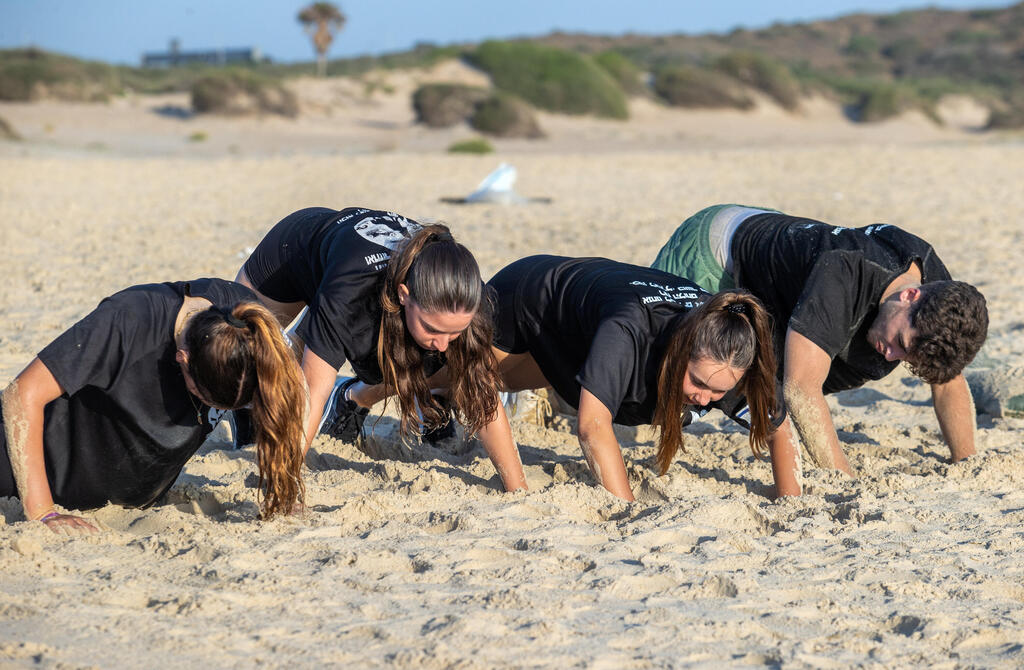
Brit Toledano, 16, from Netanya, stands out on the beach. Unlike Dvoriansky and Gagar, who are still at the beginning of their journey, Toledano’s future is already clearly mapped out. She not only wants to be a fighter but is already planning a military career. "My goal is to be a commander in the Navy or in Yahalom," she says without hesitation. "I love responsibility, and I love leading people. That's what I'm here for."
Toledano has been training in the combat fitness program for about two years and says her initial apprehension about training alongside boys who were stronger than her quickly gave way to determination. "I realized that in order to reach the goal I set for myself, I had to work hard. I tried to convince friends to join, but most of them weren't into the whole idea of sand, running, and crawling. At first, I had some concerns, especially about training alongside boys, but I quickly overcame them. I know that if I have a goal I want to reach, no one will stop me. Even if at first I can't run fast enough, do push-ups properly, or crawl well enough, I know that little by little I will improve and get better," she says.
Libi Cohen, who celebrated her 17th birthday in the dunes and outran about half the boys around her in the 1,000-meter run, is no less determined. Instructor Kobi Limer is especially proud of her: “This is how we do it!” he says excitedly, pointing at her. The two met when Limer taught Cohen civics and leadership in eighth grade, and after he started a combat fitness group in Netanya shortly after October 7, she joined immediately.
Cohen speaks about her ambition to serve in a combat unit as if it were a natural life path. She dreams of reaching Unit 669, and to do so she invests hundreds of shekels a month in training and the gym. She is very proud that over two years she has reduced her 2,000-meter run time by more than two minutes, and for her, this is only the beginning. "I always wanted to be a fighter, and after October 7 I realized it was no longer something far away, that it would soon be my turn," she says. When asked why she sees combat service as the fulfillment of her desire to contribute to the country, she struggles to understand the question. "If I can contribute, then who am I not to do it? There were people before me, and now it's my turn," she explains, both to me and to herself, why so many girls who until recently dreamed of entirely different futures are now aspiring to join elite units.
What made you want to serve in a combat unit?
"I think the situation in the country doesn't really leave much choice. I know I have the ability to contribute, and in the end we live in Israel. It's the best country there is, but it's not an easy country. There are wars all the time, and it's something that accompanies us throughout our lives. We talk about it at home, we hear about it in the news, it’s always there."
And why 669?
"I want to be in a place where lives are saved. To reach the most difficult moments and help a wounded soldier get back home. He did something that allows me to live here, so I have to do everything I can to keep him alive."
Are you afraid of being injured or killed?
"It's scary, but that's not what will stop me. If there's anything I'm willing to risk my life for, it's my country."
How do your parents feel about all this?
"Of course they worry, but they also want me to go as far as I can."
"After I went through the selection process, I had halakhic hesitations"
For decades, most combat roles in the IDF were closed to women. The turning point came in 1995, when the High Court of Justice accepted the petition of Air Force candidate Alice Miller, who sought to enroll in a pilot course but was rejected solely because she was a woman. The ruling became a milestone in the fight for equality in the IDF and initiated a gradual process during which more and more combat roles were opened to women. In 2020, the struggle escalated when four young women, Mika Kliger, Mor Lidan, Gali Nishri, and Omer Saria, petitioned the High Court of Justice, demanding that selection processes for the IDF’s elite units be opened to women. In their petition, they emphasized that they were not asking for preferential treatment, but for equal opportunity to compete for positions open to men. The petition led to a series of pilot programs, professional committees, and legal hearings that lasted years, after which training tracks for women were gradually opened in Yahalom, Unit 669, the operational mobility unit, and other elite pathways.
The ongoing increase in the proportion of women in the combat system is not only the result of social change and a growing desire among young women to serve in combat roles, but also of the IDF’s manpower needs. The war that began on October 7 and the ongoing strain on both regular and reserve forces have intensified the manpower shortage, while ultra-Orthodox enlistment remains significantly below the levels the army requires. Against this backdrop, pressure is growing to expand the pool of combat recruits, and the trend of integrating women into combat units is expected to continue strengthening in the coming years.
At the same time, as the integration of women into combat roles expanded, so too did resistance to the change. Over the years, rabbis and public figures from Religious Zionism warned against what they called “damage to operational effectiveness” and to the character of the IDF. They questioned and sometimes dismissed the ability of women to perform tasks previously reserved for men, warned against “mixing genders,” and argued that mixed-gender service in frontline units raises ethical and halakhic concerns. This persistent resistance did not subside even after countless female soldiers and officers demonstrated capability, courage, and resilience in numerous operations, both before October 7 and, of course, during that day and in the war that has followed.
A recent example came two weeks ago, when a group of rabbis publicly announced that graduates of the institutions they lead would not enlist in the Armored Corps following the IDF’s decision to expand the pilot program to include female tank crews. Since then, Finance Minister Bezalel Smotrich has also claimed that integrating women into combat units harms the IDF’s operational effectiveness, and he has even linked the expansion of the trend to the possibility that young religious men may avoid military service in the future.
But the confrontation taking place in seminaries, courts, and the corridors of the General Staff appears anachronistic to the girls training in Reisfeld Park in Kiryat Ono, where I meet another group preparing for enlistment. For them, the possibility of reaching units that were once closed to women is not a revolution but a starting point, including for religious girls.
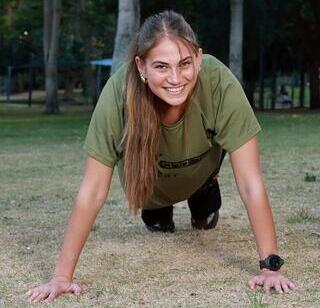
Hila Sabag embodies the transformation these girls are undergoing. She is 18, from Ramat Gan, finishing a religious seminary, serving as a counselor in Bnei Akiva, and soon, she hopes, will become a fighter in an elite unit. If someone were looking for a figure who challenges conventional stereotypes about religious women, it would be difficult to find a better example.
“With God’s help, I am enlisting in an elite unit, and that excites me very much,” she says. “I received a lot of support from home and from the ulpana (a girls-only religious high school in Israel). There were teachers who were less supportive, but most embraced and encouraged me. After I went through the selection process, I had halakhic doubts and wanted to understand what was right for me. I consulted my rabbi, and he told me: ‘This is your place, you should go there.’ As far as I am concerned, it is precisely religion that drives me to this service. I see it as a mission to the people of Israel, and I feel this is my mission.”
How do the boys in training treat you?
“The first few times it was a bit strange for them. They weren’t used to training or competing with girls. Sometimes they felt they had to be gentler, or didn’t fully understand why the competition included girls, as if it didn’t really matter. But after a few training sessions, they got used to it. As for the older boys on my team, I don’t feel they see me as less capable. I know that when I stand at the starting line, they want to beat me just as much as they want to beat anyone else on the team, and I feel the same way about them. At first, I also had the mindset of ‘I want to beat the girls,’ but I quickly changed it. Today I just want to win - period.”
Many rabbis are alarmed by women serving alongside men. What do you think of that?
“When you choose a mission, it comes with trade-offs. I consulted many religious women who served in combat roles, and I ultimately concluded that this is where I am needed. I set my own boundaries and maintain my own value system. That is why I plan to attend a seminary next year before enlistment, to strengthen that foundation within me. I have no intention of giving up my religion or hiding it. On the contrary. I am religious, and that is part of what drives me.
“There are differences between men and women, I don’t deny that, but they do not diminish women’s abilities. Today, women already make up about a fifth of the IDF’s combat force, and they can become much more. Once the army knows how to identify and utilize their strengths, it will benefit greatly.”
What stereotype about women bothers you most?
“That women break more easily than men. People break when they feel they have no purpose. It has nothing to do with gender. If you have a mission, fire in your eyes, and real motivation, there is no reason you should break.”
When did you first aspire to become a fighter?
“In sixth grade, I wrote a paper about Tamar Ariel, the first religious female fighter pilot in the Air Force, who died in a snowstorm in Nepal. I wrote that I wanted to be like her. For me, it was clear.”
The path was not easy. When Sabag was in seventh grade, she injured her knee, underwent surgery, and spent a year in rehabilitation, all to enable her future service as a fighter. Today, in preparation for her upcoming enlistment, she trains six times a week, follows a high-protein diet, and carefully manages her sleep schedule. “Everyone who knows me knows I go to bed early because of training and that I have to eat enough protein. It’s part of who I am,” she says.
Sabag’s father, Yigal (58), a former company commander in the Paratroopers, says he struggles to understand the concerns expressed by some rabbis regarding religious women serving in combat. “When I was young, very few religious girls enlisted. The main fear was that the army would distance them from religion because of the mixed environment and concerns about harassment. But over time, it became clear that girls who want to protect their values know how to do so. In many cases, a female combat soldier has an even higher likelihood of remaining religious than a girl serving in a non-combat role. Those who choose combat usually do so out of a strong sense of mission, and when you go on a mission like that, you also take greater care of your values, including religious ones.”
Sabag herself rejects the claim that combat service contradicts halakha (Jewish law). “There are rabbis who think this way and rabbis who think differently,” she says. “To say there is an absolute halakhic prohibition on women serving as fighters is simply not true. Whoever wants to find a rabbi who supports it will find one, and whoever wants to find one who opposes it will find another.”
"The difficulty is not the fighting, but coping with what you see"
Anyone who has served in a combat unit knows that high school training does not necessarily prepare candidates for the realities of operational service. Toward the end of training at Poleg Beach, the cadets stand in a semicircle around their instructor, Limor. The sun is already setting, sweat still hasn’t dried, and instead of talking about running times or drills, the conversation turns to October 7.
Limor tells them about the days when he was called up from the reserves and deployed to the Gaza border area. The cadets, most of them aged 15 to 18, listen in silence.
“Like everyone else, October 7 changed my life,” he tells them. “Since then, I see combat fitness differently. I push harder and expect more from you, because I know that one day you may face something far harder than anything you’ve experienced here. The difficulty there wasn’t the fighting. The difficulty was dealing with what you saw. There are things a person is not meant to see,” he says.
The teenagers watch him, captivated. For them, October 7 is not just a chapter in a history book or a news headline, but an event that shaped their adolescence. For Toledano, that date is also tied to a name and a face, Omri Belkin, her Sea Scouts coordinator, who was killed on October 7 at Kibbutz Be’eri. “He was a very meaningful figure in my life, like an older brother who was always there for me,” she says, her voice breaking. “I always wanted to follow the path he took, to enlist in the army and serve meaningfully. I hope that when I achieve what I dream of, something of him will be in it too.”
First published: 13:57, 28.06.26



