










Military projects boost Israeli shipyards: Revenues in the quarter rose 21.6%
The group's revenues totaled NIS 428.5 million in the second quarter, and net profit jumped 22-fold to NIS 15.6 million; the shipyard's activity benefited from progress in military projects and the order backlog reached NIS 2.52 billion, while maritime transport recorded a decline in revenue
Israel Shipyards, owned by businessmen Shlomi Fogel, Asi Shmeltzer and Samy Katsav, concluded the second quarter of 2026 this morning (Tuesday) with improved results, led by the shipyard, port and construction materials activities. On the other hand, the maritime transport sector recorded a decline in revenue, and AeroNous Systems' drone interception solutions development activity is still in the investment and development phase and is not a profitable sector at this stage. The company's shares jumped on the Tel Aviv Stock Exchange after the publication of the reports.
The group's revenue amounted to NIS 428.5 million, an increase of 21.6% compared to the corresponding quarter. Net profit jumped to NIS 15.6 million - 22 times compared to only NIS 687 thousand in the corresponding quarter. Gross profit increased by 84.1% to NIS 63.2 million, and operating profit increased to NIS 28.8 million, compared to NIS 586 thousand in the corresponding quarter. Adjusted EBITDA increased by 83.8% to NIS 60.7 million. However, part of the improvement was due to changes in the activity mix and factors specific to the sectors, and therefore the jump cannot be attributed to all group businesses uniformly.
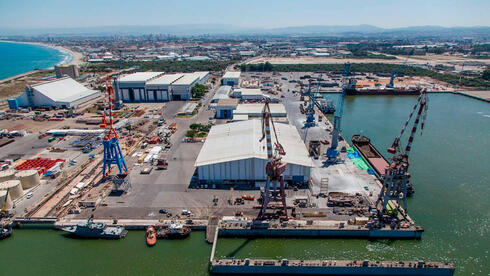
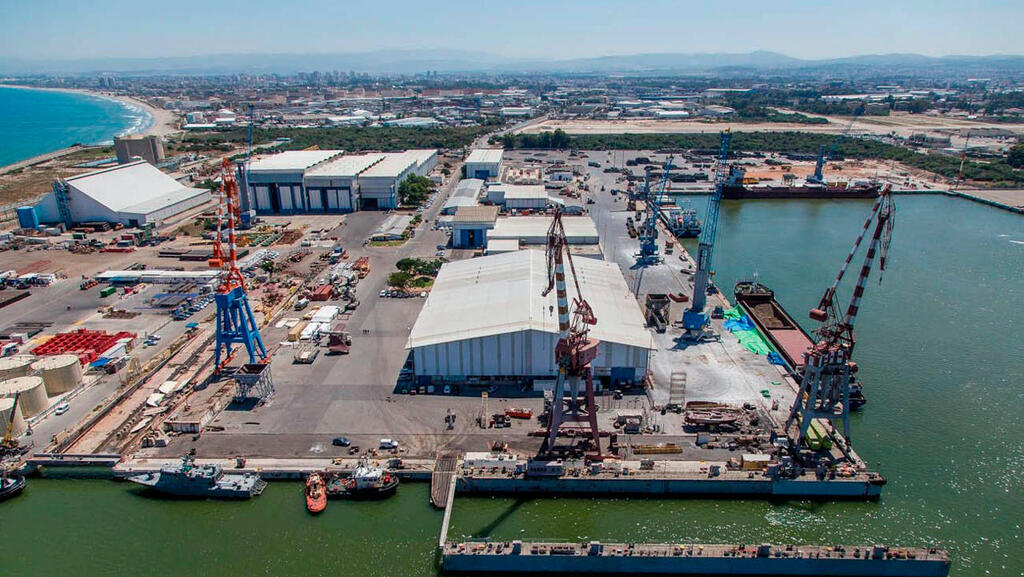
The shipyard's activity presented one of the most significant jumps in the Israel Shipyards Group. The segment's revenue climbed 76.5% to NIS 83 million, and segment profit increased 289.5% to NIS 14.8 million. The company attributes the improvement mainly to progress in military vessel production projects, centered on the Reshef project, which is expected to increase its contribution to the company's results later in 2026 and especially in 2027 and 2028. At the same time, the company began executing a project to supply four vessels to a government customer abroad, worth $62 million.
The shipyard's order backlog stands at NIS 2.52 billion as of the publication of the report, meaning that a significant portion of the growth in the sector is based on projects that have already been ordered and are in the execution stages, and not just on winning new tenders.
The port's operations also improved in the quarter. Revenues rose 28% to NIS 55.5 million, and segment profit rose 83.3% to NIS 14.3 million. The improvement stemmed, among other things, from an increase in the amount of cargo unloaded following the availability of an additional pier, as well as from the start of the runs of the silo project at the port. The construction of the silos was completed at the end of 2025, and operational runs have been carried out in them since early 2026, during which grain cargoes have already been unloaded. The shipyards are seeking to use the project to compete with the Dagon silos adjacent to the port, which dominate most of the grain industry.
The building materials sector also showed growth. Revenues rose 14.8% to NIS 276.7 million. This is a recovery for the sector and an improvement of 24% compared to the previous quarter - the first of 2026 - which was mainly affected by Operation Roaring Lion, which reduced the activity of construction sites in Israel. Segmental profit increased by 58.1%, to NIS 31.8 million. However, in this case, the increase in revenue was mainly due to an increase in the average selling price of cement, along with a corresponding increase in quantities. The improvement in profitability was also affected by the appreciation in the shekel and an accounting effect resulting from the renewal of the cement ship lease agreement. On the other hand, an increase in raw material prices and transportation costs, as well as shutdowns carried out on cement ships during the reporting period, offset part of the improvement.
The main exception in the shipyards' report in the current quarter is the maritime transportation sector, which moved in the opposite direction. The segment's revenue fell by 24.8% to NIS 15.8 million. The segment's profit, on the other hand, remained almost unchanged and amounted to NIS 2.6 million. According to the company, the decrease in revenue was due to a decrease in maritime transportation prices compared to the corresponding period. Additional effects were due to a change in the maritime trade zone, which led to a decrease in revenue during the voyage to the new zone, and winter weather hazards, which caused operational delays. In addition, the segment's revenue in the corresponding period included ship leasing transactions for customers in the port sector, and these results for the current quarter are affected by a decrease in the value of a ship that was sold after the reporting period, as well as because other revenue was included in the corresponding period for indemnity from an insurance company. At the same time, the group continues to expand its fleet of ships and in August reported the purchase of a cargo ship with a carrying capacity of 39,000 tons for $14.2 million, approximately NIS 42.6 million. Completion of the deal is expected by the end of 2026.
Another activity that is in the early stages is AeroNous Systems, which develops solutions for intercepting drones. The company established the activity about a year ago and continues to invest in developing the technology, but currently it is an activity that weighs on the results and does not contribute to them. In the second quarter, research and development expenses of about NIS 2.8 million were recorded in the field, meaning that, unlike the shipyard and the port, which already make a significant contribution to the results, Aeronauts is still in the investment and development phase.
In parallel with the improvement in results, the company strengthened its sources of financing. In July, it completed its first bond offering on the Tel Aviv Stock Exchange and raised NIS 200 million, after receiving requests for NIS 970 million. The original amount planned for the raising was NIS 150 million, and it was increased following the requests. As of June 30, 2026, the company's equity stood at NIS 946.6 million, of which NIS 940.8 million was attributable to shareholders, and it constituted 42.3% of the company's total assets. In addition, the company reported cash and cash equivalents of NIS 350 million and short-term investments of NIS 56 million.
The company does not yet know how to assess the effects of the sensitive security situation and also notes that the company is still awaiting the results of the tender to acquire 51% of the port of Lavrio in Greece, as part of the strategy to expand the group's activities abroad.



