










Why Thai, Indian and Sri Lankan workers have become essential to Israel’s labor market
Tens of thousands of workers from Asia now fill critical gaps across food, agriculture, hotels, and transport.
Across Israel’s essential industries, from food manufacturing and retail to agriculture, hotels, transport and home care, foreign workers have become an increasingly central pillar of the economy. As domestic labor shortages deepen and sectoral pressures mount, more than 50,000 workers from Asia are now filling roles that businesses say are critical to keeping supply chains, services and infrastructure functioning, even as dependence on imported labor raises new economic and operational challenges.
Industry and Commerce: More Than 50,000 Foreign Workers
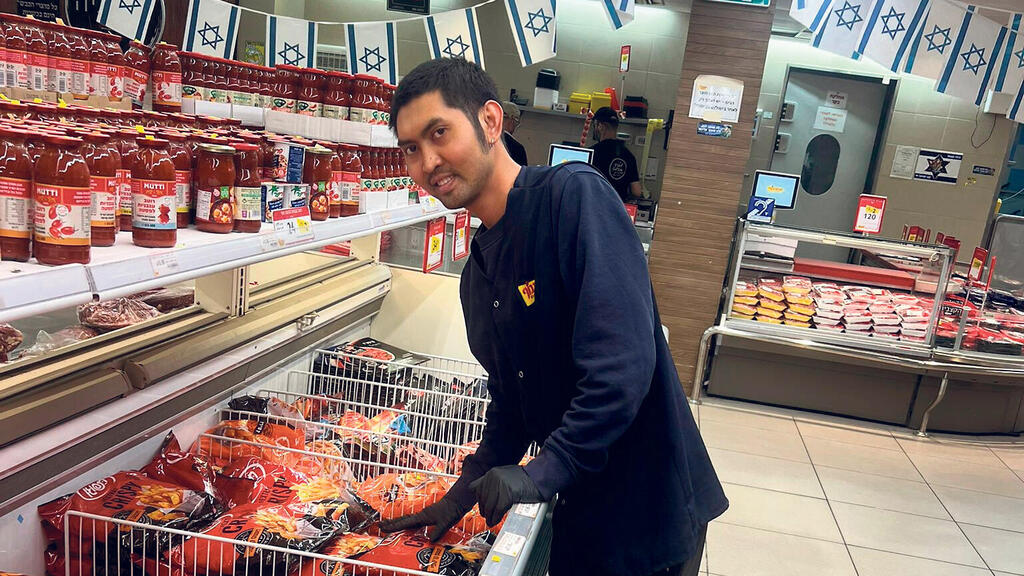
In recent months, workers from Thailand, India, and Sri Lanka have become a common sight across Israel’s retail chains, arranging products on shelves and serving in butcher shops and delicatessens. Thousands of foreign workers have also been integrated into food factories, filling basic roles such as picking, packing, and loading.
“The employment of foreign workers is a necessity,” says the CEO of a large food company. “If we hadn’t recruited them after the Palestinians left, we would have been forced to shut down production lines and shelves would have been empty. These are essential jobs that Israelis don’t want to do. The foreign workers are good workers who come here to earn a living. In Israel, they earn three to four times more than in any country in the region that employs them, and their productivity is very high.”
An executive at another company adds that foreign workers also have a positive impact on organizational culture. “There are fewer absences, and their motivation is high,” he says.
However, alongside this satisfaction, executives also point to challenges. “There are language gaps that require a companion nearby, longer training periods, and the biggest challenge is that there is no management horizon, because they stay for a maximum of five years,” one executive notes.
Another challenge for employers is the obligation to provide housing and medical coverage, which increases the cost of employment by about 25%.
The shortage of Israeli workers in retail and food manufacturing has led the CEOs’ Committee, headed by the Director General of the Prime Minister’s Office, to approve quotas for foreign workers. Two years ago, a quota of 13,200 workers was approved for industry, 70% of them unskilled. In February of the following year, it was increased to 18,200, and two months ago to 21,200.
At the same time, in June 2024, a separate committee approved 6,400 foreign workers for the trade and service sectors. This quota was later increased to 12,800, then to 25,000, and now stands at 31,000 foreign workers.
One unresolved issue is the shortage of foreign truck drivers. “There is a severe shortage of distribution drivers, and no real allocation for drivers,” says a senior food industry official. “At most, a local driver can accompany a foreign driver, but this ignores the need to maintain supply chains during emergencies. Companies are forced to shut down trucks due to driver shortages and deliver goods in smaller vehicles in multiple rounds.”
He adds that companies are even training sales staff to obtain truck licenses as a workaround.
Restaurants: Dishwashers and Cleaners from Sri Lanka
Since the war began, the restaurant industry has faced a severe labor shortage, prompting the state to allocate an additional 2,000 workers from Sri Lanka. Currently, about 1,300 foreign workers are employed in the sector, but restaurateurs estimate a shortage of around 6,000 workers. These workers mainly serve as cleaners, dishwashers, and assistant cooks.
According to attorney Amit Gross, founding partner at Gross, Kleinhendler, Hodak, Halevy, Greenberg & Co., which represents leading restaurants, the arrival of Sri Lankan workers has had a positive impact.
“Restaurants are desperate for workers, and this allows them to open more branches and extend operating hours,” he says. “It also reduces reliance on paying 70 shekels per hour to asylum-seeking dishwashers, replacing them with Sri Lankan workers earning about 50 shekels per hour.”
He adds that foreign workers help reduce costs and, in turn, prices. However, he notes that employers must also cover housing, unlike Palestinian workers.
Hotels: Workers Exist, but at a High Cost
The hotel industry is currently in dispute with the Treasury over fees required to bring in foreign workers. The fee is equivalent to that of “expert” workers in other sectors: a 1,420-shekel application fee plus an 11,320-shekel license fee, totaling 12,740 shekels. By comparison, fees for construction workers are 9,550 shekels, while trade, services, and transportation sectors pay 8,860 shekels.
According to the Hotel Association, the approved quota on October 7 stood at 6,800 workers, including 2,500 Jordanians in Eilat, 2,300 Palestinians, and 2,000 Filipinos. About 300 Filipino workers are currently missing due to war-related disruptions and travel warnings.
Palestinian workers were largely stopped after the war began, except for about 300 working in East Jerusalem.
In May 2024, the government approved the arrival of about 2,000 workers from Sri Lanka, followed by additional quota increases in 2025 and 2026.
Despite this, costs are rising sharply. The Hotel Association estimates that fees alone increased from 20.7 million shekels in 2024 to 50.5 million in 2025, and are expected to reach 65 million in 2026.
Nursing: Growing Demand and Structural Shortages
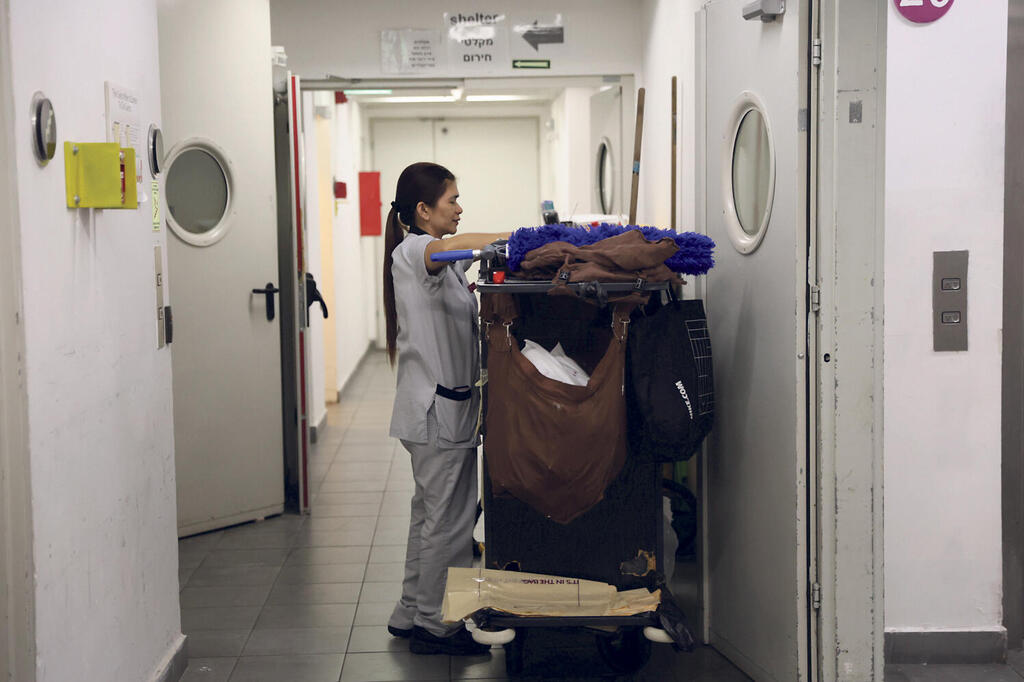
About 82,000 foreign workers are currently employed in home care in Israel, 66,000 legally and 16,000 without legal status. By 2040, Israel’s elderly population is expected to grow by 46%, requiring around 120,000 caregivers.
The monthly cost per caregiver is approximately 11,000 shekels per family. The lack of private nursing insurance coverage further increases the burden.
Caregivers are not allowed to settle permanently in Israel and must leave after several years. As a result, many arrive with limited Hebrew and little experience, becoming fully proficient only shortly before their departure. Some then remain illegally.
Lior Strasberg, CEO of the Matav Care Association, highlights two key issues: a shortage of caregivers for complex 24/7 cases, and a lack of replacement caregivers during vacations, leading families to rely on undocumented workers.
Doron Raz, chairman of the Association of Nursing Service Providers, argues for legalizing undocumented caregivers. “The state does not really pursue them. They should be allowed to work legally for a few more years,” he says.
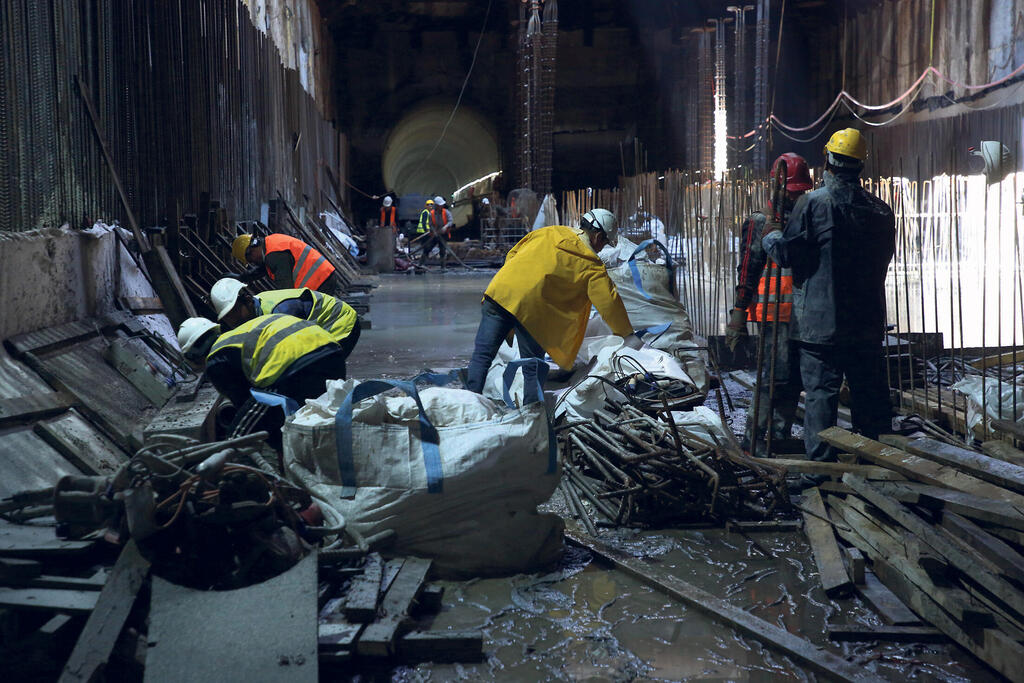
Transportation: The Metro Will Require 23,500 Workers
According to the State Comptroller, the construction and infrastructure sector faces a shortage of about 37,000 foreign workers.
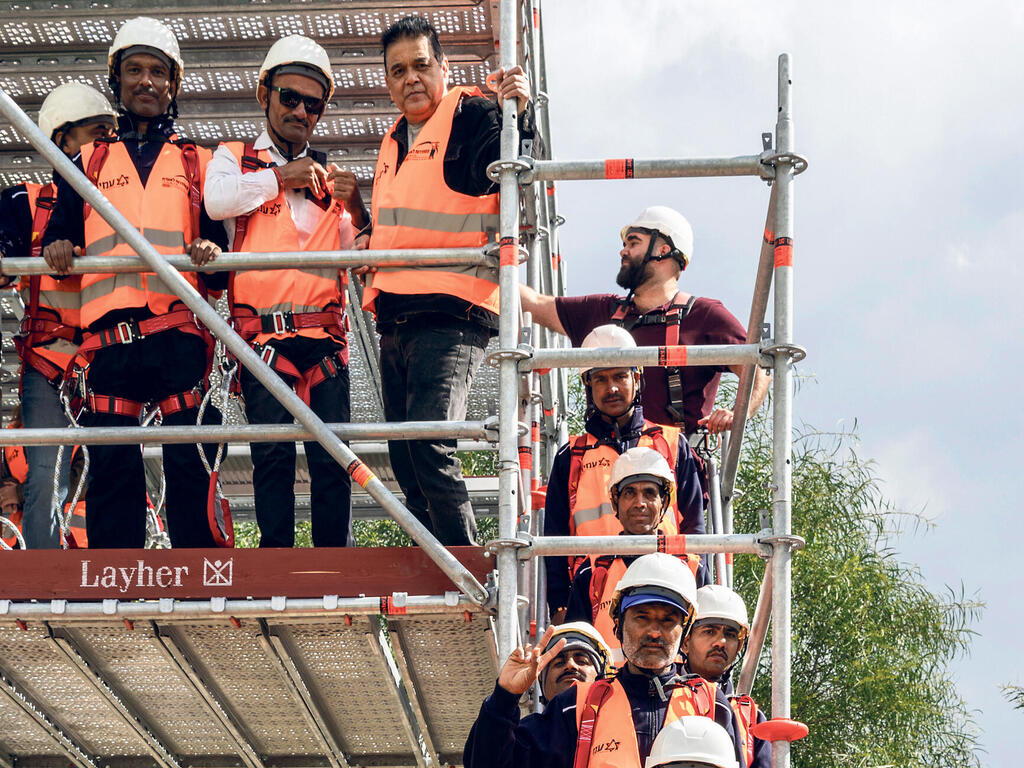
In March 2024, the government approved 5,000 visas for Sri Lankan workers for infrastructure projects, later adding another 5,000 from Sri Lanka and India.
However, only 310 of 5,000 allocated visas have been used in transportation infrastructure. The Ministry of Transportation claims that about 2,000 construction workers are already working in transport infrastructure, effectively offsetting quotas.
As a result, the committee reduced the transport infrastructure quota to 1,500 this year and 2,000 in 2027.
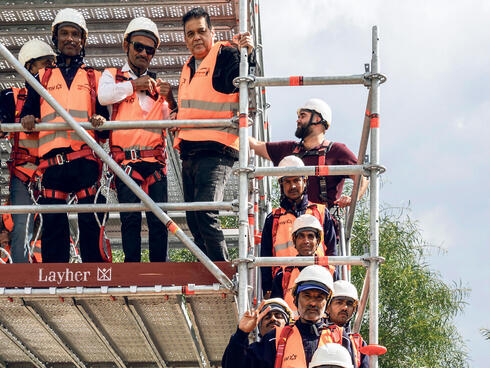
The planned metro project alone is expected to require 23,500 foreign workers, including up to 14,400 workers during peak construction in 2031-2032. A special government framework is being developed to bring in long-term visa workers for the project.
Separately, there is debate over recruiting foreign drivers. Transport companies report a shortage of 5,000 bus drivers, while workers’ unions oppose the idea, arguing that poor conditions, not labor shortages, are driving attrition.
Agriculture: “The Thais Wake Up Early in the Morning”
Agriculture has long relied on foreign labor. After October 7, about a third of foreign workers left, and an additional 10,000 Palestinian workers did not return, leaving the sector critically understaffed.
Despite government incentives, Israeli workers have largely not entered the sector.
“The need was immediate,” says Yuval Lipkin of the Ministry of Agriculture. “We saw stagnation in fruit and vegetable cultivation, so we increased production factors: land, water, and labor.”
Israel has signed agreements with Sri Lanka, Malawi, and Cambodia, though recruitment has been slow.
A quota of up to 65,000 foreign agricultural workers was approved in 2024, with potential expansion to 70,000. About 48,500 workers are currently in Israel.
Lipkin notes that Thai workers remain particularly valued. “They get up early in the morning and are very focused on work.”
The ministry is also preparing a pilot program to bring foreign workers into Israel’s cannabis industry, pending approval.
Garages: From Bodywork to Electronics Specialists
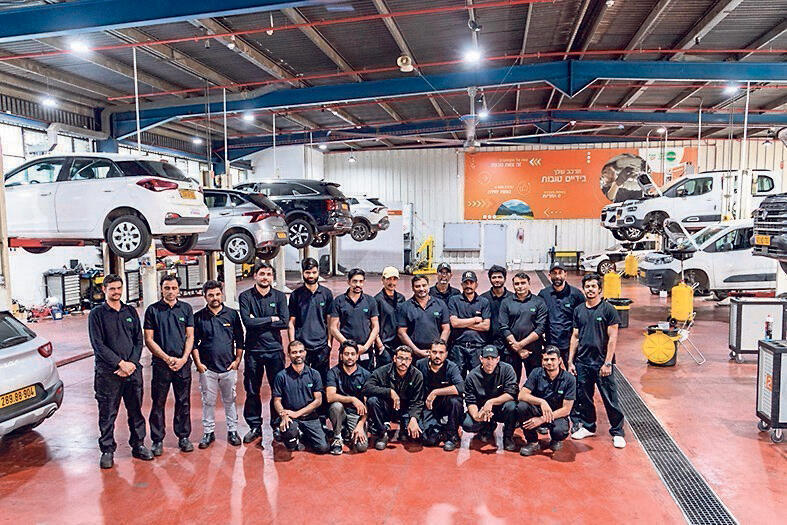
The garage industry has also become heavily reliant on foreign workers from Thailand and Sri Lanka.
In the past two years, about 1,800 workers have arrived, with another 600 expected this year.
Industry sources say the shortage began after October 7, when many mechanics were drafted into the IDF or moved into permanent military roles.
“The army pays more than garages,” one importer says.
Today, modern vehicles require advanced diagnostic skills. “Repairing hybrid and electric cars requires electronics expertise, not just mechanical skills,” he explains.
Thai workers earn about 8,000 shekels per month, compared to 10,000-12,000 for Israeli workers.
While not all foreign workers are fully trained for advanced work, candidates undergo screening and training before arriving in Israel.



