










Energean signs $1.4 billion gas deal with new Sorek power plant
The agreement brings Energean’s contracted backlog in Israel to $20 billion over two decades and completes contracts with three major power projects expected to come online by the end of the decade. The company reported $160 million in first-half profit despite a 41-day production shutdown during the war with Iran.
British-Greek energy company Energean, which operates the Karish gas field, has signed an agreement to supply natural gas to the new Sorek power plant in a deal worth approximately $1.4 billion. The agreement completes Energean’s contracts with three major power generation projects in Israel that are expected to begin operations by the end of the decade.
Together with contracts signed with the Kesem and Dalia 2 power plants, the agreements represent future contractual revenues of more than $5 billion. The Sorek deal brings Energean’s contracted backlog in Israel to $20 billion over the next two decades.
1 View gallery
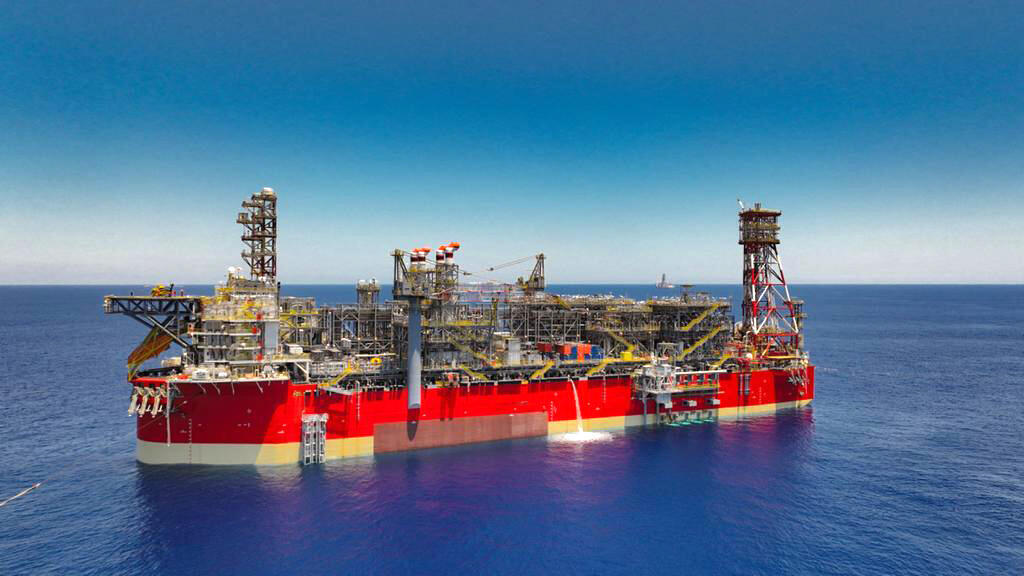
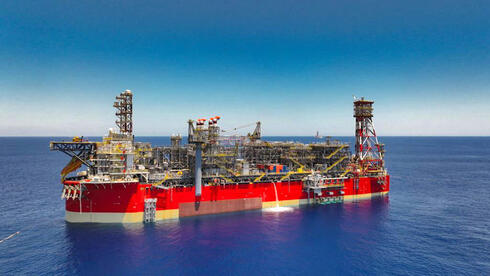
Energean's floating production system (FPSO) at the Karish gas field in the Mediterranean Sea
(Energean)
The Sorek agreement, signed after the end of the first half of the year, runs for approximately 15 years and covers the supply of up to 7.7 billion cubic meters (BCM) of natural gas. Once the plant begins operating, currently expected at the end of 2029, Energean will supply up to 0.5 BCM of gas annually. From September 2035, the contracted volume will increase to up to 0.6 BCM per year.
The agreement includes a floor price, price-linkage mechanisms and a take-or-pay commitment, under which the customer must pay for a minimum contracted volume of gas even if it does not consume the full amount.
The deal was announced alongside Energean’s first-half results. The company, which is listed in London and Tel Aviv, reported net profit of $160 million, up 45% from the corresponding period last year, while free cash flow rose 35% to $250 million. Revenue from production activities, however, fell 8% to $743 million, while adjusted EBITDAX declined 5% to $478 million.
The decline in revenue was partly due to the 41-day shutdown of production in Israel during the war with Iran, as part of Operation Roaring Lion, which began in late February and led to the temporary shutdown of both the Karish and Leviathan fields.
According to Energean, production at Karish has recovered since operations resumed. In August, the group’s monthly production exceeded 180,000 barrels of oil equivalent per day. Average production during the first eight months of the year stood at 135,000 barrels of oil equivalent per day, and the company maintained its full-year production guidance of 130,000 to 140,000 barrels per day.
Meanwhile, development of the Katlan gas field, which Energean views as another potential growth engine in Israel, is progressing toward the start of production in the first half of 2027. Energean invested $267 million in the project during the first half of the year, with cumulative investment now exceeding 60% of the total development budget of approximately $1.2 billion.
Energean CEO Mathios Rigas said the company plans to begin gas exploration in Block 2 in Greece at the end of next spring as part of its collaboration with U.S. energy giant Exxon Mobil.
“We continue to work to promote additional growth avenues through transactions and acquisitions in Europe, the Middle East and Africa and are focused on opportunities that will strengthen and diversify our production base while improving cash flow and reducing leverage,” Rigas said.
Also in the background is Israel’s fifth offshore natural gas exploration tender, recently announced by the Energy Ministry. Energean is interested in participating in the process and is exploring possible cooperation with Exxon Mobil in Israel as well.



