










VC Survey 2027
"The Series A crunch isn’t coming. It’s already being created at Seed"
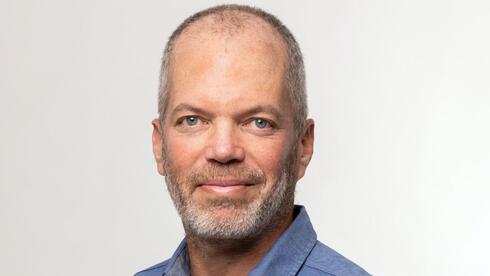
Ophir Shay, Associate at TLV Partners, joined CTech for its 2027 VC Survey.
"AI made building a product cheaper. It didn't make building a great company easier. That gap is where much of the market is mispricing risk right now," said Ophir Shay, Associate at TLV Partners, when asked how AI is changing the fund's investment strategy.

With AI reshaping how startups are built and funded, and Israel's tech ecosystem adjusting to a new economic and geopolitical reality, investors are rethinking their playbooks. Shay joined CTech to share insights for its VC Survey 2027, which invites prominent investors to discuss the trends, challenges and opportunities expected in the year ahead.
You can read the entire interview below.
ID CARD
Fund Name: TLV Partners
Total Assets Under Management: $1.1B
Partners/Managers: Rona Segev, Eitan Bek, Shahar Tzafrir, Brian Sack, Yonatan Mandelbaum
Notable Portfolio Companies: Aidoc, Silverfort, Quantum Machines, Aqua Security, Port, Unframe, Qodo, Oligo, Buildots, Converge Bio, Airis, Attestable, Pluto Security
Notable Exits: Run:ai (acquired by NVIDIA); Next Insurance (acquired by Munich Re for $2.6 billion); Granulate (acquired by Intel); Oribi (acquired by LinkedIn); Inferize (acquired by Nebius); Laminar (acquired by Rubrik); Neosec (acquired by Akamai); Cyata (acquired by Check Point)
How is AI changing the way you evaluate companies, from business models and capital needs to valuations and competitive advantage? Is this a fundamental shift in how companies are built and scaled, and are parts of the market overheating?
AI made building a product cheaper. It didn't make building a great company easier. That gap is where much of the market is mispricing risk right now.
Valuations have changed significantly over the last few years, and I expect them to continue changing as we move into 2027. As larger funds in the US look to deploy more capital into fewer companies, and become more aggressive in the Israeli market, the entire market dynamic changes. For a local fund like ours, this affects how early we need to meet founders, how quickly we need to make decisions, and the prices we’re comfortable paying. It also means some funds are paying today for growth that hasn't been proven, and some rounds are priced as if product-market fit is already there, before the company has had time to figure out what actually works.
At the same time, it’s becoming easier to start a company and see early validation from the market, which changes the lens we use when evaluating a company. Getting to the first customers faster is encouraging, but we need to understand whether that means the company has found something that will last. You can start with a smaller team today, but once you raise a large round at a high valuation, you’re also committing to a certain growth trajectory. If you raise a Series A-sized seed, you’re signing up for Series A metrics on a seed timeline. As a fund that often writes the first check, that means moving fast when we believe in a team, and being disciplined about what we're paying for: founders building around deep expertise, not early traction that only looks like product-market fit.
Related articles:
- "Israel has always won on deep technical moats, but in enterprise AI, vertical AI, and fintech, the real moat is now distribution."
- "Being an Israeli company in the current atmosphere is not helping and in many cases decreases the valuation."
- Beyond the AI hype: what investors are looking for in startups today
Does Israel's mix of AI, cybersecurity, defense tech and deep tech give it a new competitive edge, or is its traditional advantage eroding? How will foreign investors' appetite, early-stage fundraising and the election results affect its ability to build global companies?
Foreign capital is flowing into Israel again, but it isn't spread evenly. The most sought-after teams can raise large rounds within weeks, often led by US funds, while many other strong founders face a much harder market than the headlines suggest. Despite the geopolitical uncertainty, Israel keeps producing founders with unmatched technological and leadership capabilities. The rare combination of traits that build the character of an Israeli founder, together with the current state of global tech and the willingness of the local ecosystem’s members to collaborate and support each other, keeps Israel's edge intact. The real question is whether investors are willing to back that talent before the proof is in.
How will the VC industry in Israel and globally evolve over the next three to five years? How will changes in fundraising, fund structures, secondary transactions and exits reshape it, and what will funds need to do to stay competitive?
The Series A crunch isn’t coming. It’s already being created at seed. Seed rounds are being priced at valuations that used to belong to Series A, and that has consequences for what companies need to deliver before their next round. More money helps, but it doesn’t automatically mean a company can grow fast enough to justify that price. Funds will need to be more disciplined about entry prices and more selective about which companies they continue backing. Expect more secondary transactions as founders and investors look for liquidity while waiting longer for exits. At the same time, the companies that overcome this funding challenge could be positioned for much larger success, including exits at sizes the Israeli industry hasn’t traditionally seen. For funds, staying competitive will mean making these decisions carefully, even when there’s pressure to deploy capital and everyone around you is paying more.
Finally, name 2-3 startups that, in your opinion, are worth watching this year.
Attestable - As AI becomes embedded in critical systems, verifying its reliability and integrity is becoming essential. Attestable uses zero-knowledge proofs to verify AI computations without exposing sensitive data or proprietary models. Founded by mathematicians from StarkWare, Safe Superintelligence (SSI), and RAND, Attestable is well-positioned to lead the emerging AI verification market.
Pluto Security - Pluto Security is redefining AI workspace security, protecting enterprises across AI tools, agents, supply chains, and runtime environments, with over 2 million endpoints already secured. As AI adoption accelerates, endpoint AI security is becoming one of cybersecurity’s fastest-growing and most critical markets, positioning Pluto to lead this emerging category.
Onfire - Onfire tackles a major inefficiency in B2B technology sales: reaching prospects without knowing who's ready to buy. Its proprietary Account Intelligence Graph combines business data with real-time buying signals to power revenue teams and AI agents. With strong early traction, Onfire is emerging as a critical intelligence layer for agentic GTM, where proprietary data is becoming the key competitive advantage.



