










Palo Alto Networks in talks to acquire two-year-old Israeli cyber startup Beacon
Beacon has developed a platform that gives AI agents the data and context needed to detect, investigate and respond to cyber threats. Beacon raised $13 million in July and reported more than 300% growth in annual recurring revenue in the first half of 2026.
Cybersecurity giant Palo Alto Networks is in negotiations to acquire Israeli cybersecurity startup Beacon Security, Calcalist has learned. Founded in 2024, Beacon raised $13 million in a Seed funding round in July, led by Notable Capital.
If completed, the deal would add technology focused on deploying AI agents in cybersecurity operations to Palo Alto's portfolio, an area that is rapidly emerging as a new battleground in the industry. Palo Alto is reportedly also currently in talks to acquire Israeli startup Clutch Security for $500 million.
Beacon has developed a platform in the field of agentic security that enables information security teams to build and deploy AI agents capable of performing cybersecurity tasks autonomously, including threat detection, incident investigation and response. The platform aggregates data from hundreds of sources and security systems across an organization, then normalizes and enriches the information to give AI agents a unified view of the company's security environment.
The company also offers a library of ready-to-use security agents, while allowing organizations to develop their own agents and autonomous workflows. Its technology is designed to ensure that agents have access to reliable, comprehensive and up-to-date information on which to base their decisions and actions.
That challenge is becoming more pressing as organizations move beyond using AI as an assistant and begin giving autonomous systems responsibility for security operations. Existing security architectures were largely designed for human analysts, with information spread across multiple products and systems, often in inconsistent formats. Beacon's platform is intended to consolidate that data and provide the context needed for both analysts and AI agents to identify threats, investigate incidents and respond more effectively.
Related articles:
- After three cyber exits, Shai Morag raises $60 million to reinvent enterprise identity
- A startup led by Israeli air-defense veterans raises $36 million to tackle the growing threat of drone swarms
- Alta raises $25 million Series A: “We’re doing for marketing and sales what AWS did for cloud infrastructure”
"The acceleration of AI agents in the enterprise is creating a distinct need for a legible context layer for cyber defenders, which is fueling a fundamentally new security architecture," CEO and co-founder Gal Tal-Hochberg said when the company announced its funding round in July. "We built Beacon to solve these challenges by providing the trusted data layer that allows organizations to deploy security agents compliantly and effectively."
Beacon says it serves dozens of organizations across financial services, insurance, healthcare, hospitality and technology, including Fortune 500 companies. The company reported that its annual recurring revenue grew by more than 300% in the first half of 2026, although it has not disclosed its revenue or customer count.
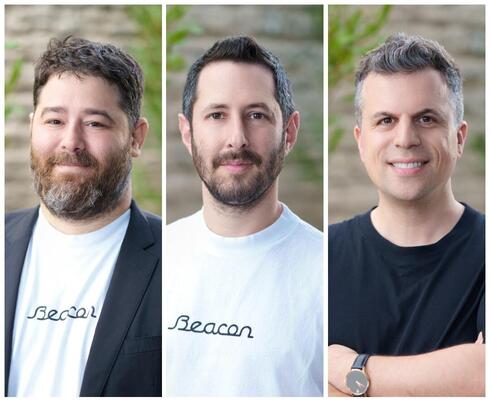
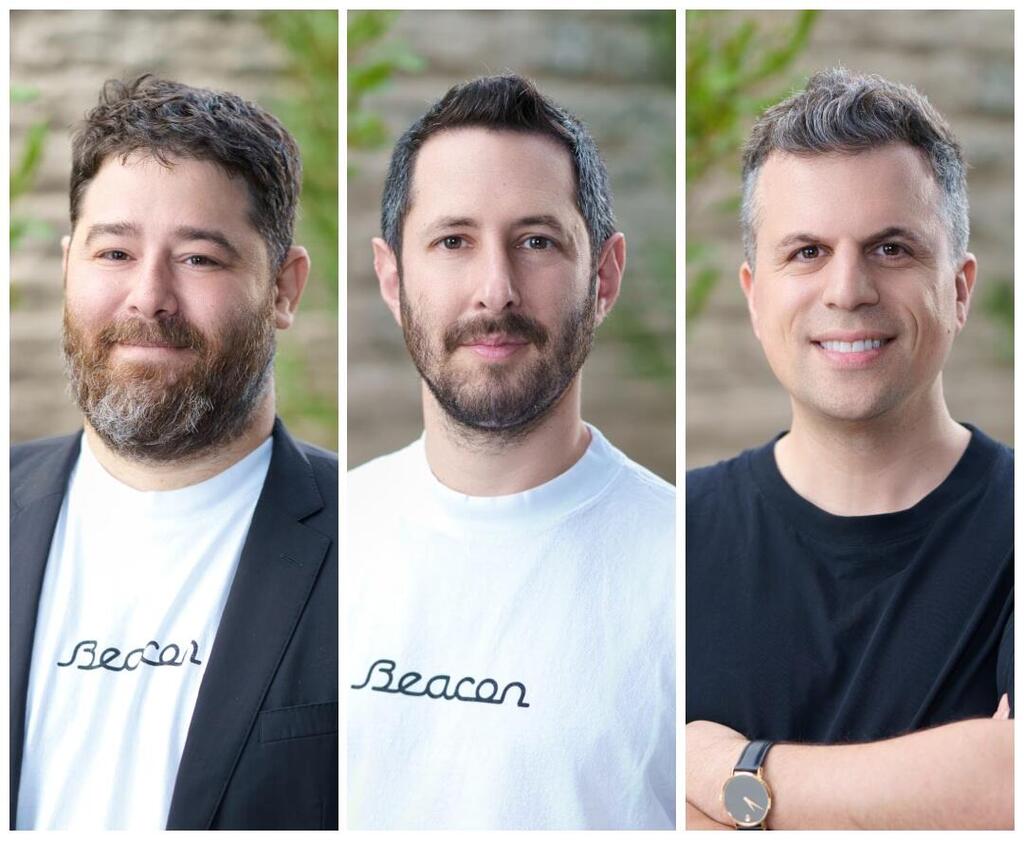
The company was founded by Tal-Hochberg, Chief Product Officer Or Mattatia and Chief Technology Officer Ido Israeli. All three are veterans of the IDF's intelligence units 8200 and 81. Tal-Hochberg previously co-founded HiredScore, an AI recruitment company acquired by Workday for $520 million, and served as Group CTO at venture capital firm Team8. Mattatia previously served as VP of Product at cybersecurity company Mitiga, while Israeli was VP of R&D at Skyline AI, which was acquired by real estate services company JLL.
Beacon's $13 million Seed round was led by Notable Capital, with participation from Holly Ventures, AlphaDrive Ventures, SVCI and Jefferies Family Office, as well as more than 60 entrepreneurs and cybersecurity executives. Among the individual investors were founders of cybersecurity companies that have previously been acquired, including by Palo Alto Networks itself. These included founders of Talon, Dig Security and Cider Security.
The potential acquisition would fit into Palo Alto Networks' long-standing strategy of buying Israeli cybersecurity companies to expand its technology portfolio. Since 2014, the company has acquired 12 Israeli startups. Those deals have helped it expand beyond traditional network security into cloud security, endpoint protection, DevSecOps and identity management.
Palo Alto's Israeli acquisition spree began with Cyvera in 2014, in a deal valued at approximately $200 million. It acquired LightCyber in 2017 for around $105 million and Secdo in 2018 for approximately $100 million. In 2019, it bought Demisto for approximately $560 million, Twistlock for around $410 million and PureSec for roughly $47 million. Subsequent acquisitions included Bridgecrew in 2021 for approximately $156 million, Cider Security in 2022 for around $300 million, and Dig Security and Talon Cyber Security in 2023 for approximately $400 million and $625 million, respectively.
The company's largest Israeli acquisition was CyberArk, which it agreed to buy for approximately $25 billion in 2025. The transaction was completed in February 2026. In April 2026, Palo Alto completed its acquisition of Israeli startup Koi Security in a deal reported at approximately $400 million, adding technology focused on securing enterprise endpoints and software used by AI agents.
Israel has also become a major operational center for Palo Alto. CTech reported in February that the company employed approximately 1,600 people in Israel before the CyberArk acquisition, which added around 1,000 employees to its local workforce. CEO Nikesh Arora has also said that the company's commitment to Israel has not changed following the departure of founder Nir Zuk from day-to-day leadership.