










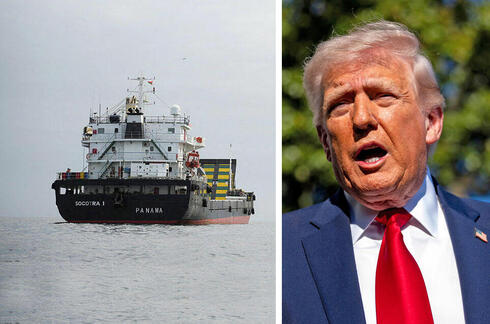
Trump’s “blockade” of Hormuz may not be what it seems
Venezuela precedent suggests selective pressure, not total shutdown.
After the failure of talks in Pakistan, the Strait of Hormuz has returned to center stage following U.S. President Donald Trump’s declaration of a blockade of the waterway. This is no longer merely a technical statement about freedom of navigation, nor just a warning to Iran. It represents an American attempt to forcibly shape the post-war order and prevent Tehran from turning its control over Hormuz into a lasting political and economic advantage.
In other words, while Iran has recently sought to demonstrate that the cost of attacking it extends beyond its borders, Trump is now signaling that any attempt to leverage Hormuz as a tool of coercion will also carry a heavy price. Yet precisely because of the weight of the term “blockade,” caution is warranted. It remains unclear whether Trump intends to enforce a full, hermetic closure of the strait or pursue a more selective approach targeting vessels that cooperate with Iran, such as those paying transit fees.
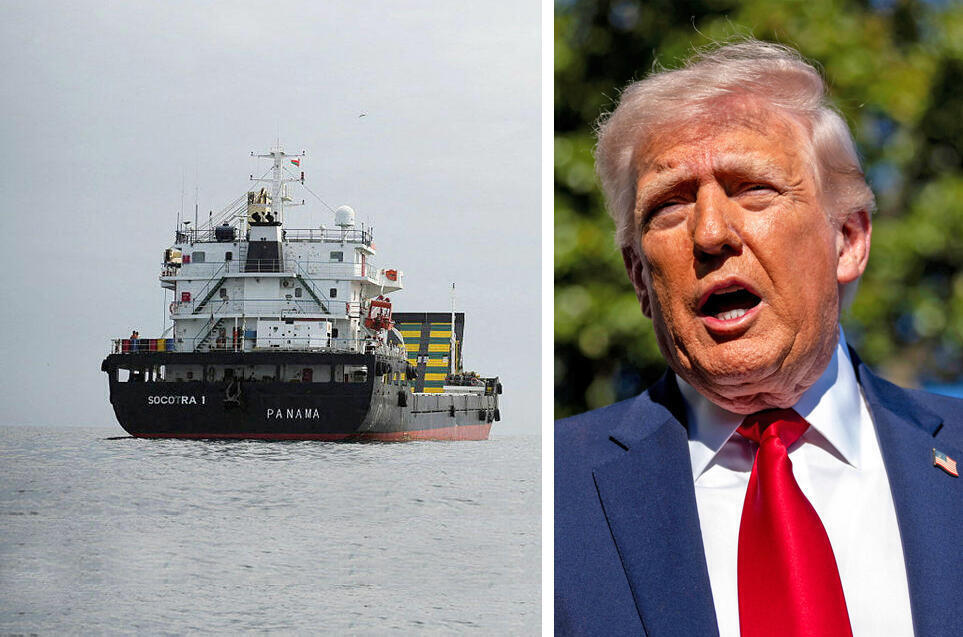
Trump’s announcement recalls a similar move in Venezuela. In December 2025, he declared a “total blockade” on oil tankers. The term was similarly sweeping, and its enforcement was initially unclear. Nevertheless, the impact was significant: within two weeks, Venezuela’s oil exports fell by roughly half compared to November, then nearly halted altogether. The U.S. later moved to seize tankers, including a Russian-flagged vessel. In practice, this suggests that when Trump declares a “blockade,” it does not necessarily mean a complete naval shutdown. Instead, a mix of threats, selective enforcement, maritime tracking, and psychological pressure can disrupt trade even without total physical control.
However, if that is the model, the implications for Hormuz are far more serious. Venezuela is a major oil producer, but the Strait of Hormuz is a central artery of the global energy system. Nearly 20 million barrels of oil and refined products pass through it daily, along with close to one-fifth of global liquefied natural gas (LNG) trade. Even a partial or selectively enforced “blockade” could have immediate market consequences: increased risk premiums, higher insurance costs, more cautious shipping behavior, and delays along a route that has yet to fully recover from recent conflict and mining threats.
The broader political significance is equally important. Trump is not only signaling that the U.S. will not tolerate Iranian toll collection in the strait; he is attempting to define the rules of the post-war environment. The message is clear: Iran may claim resilience and survival, but it will not gain de facto economic sovereignty over Hormuz. The move is designed to strip Iran of what it sought to achieve during the conflict, turning its ability to disrupt the strait from a temporary pressure tactic into a durable strategic asset.
In practical terms, the move also targets Iran’s wartime revenue gains. In March, when activity in the strait was partially restricted and prices surged, Iran’s oil revenues reportedly rose by about 37%. This was driven both by higher prices and by Iran allowing limited passage. In effect, Tehran managed not only to disrupt global markets but also to profit from the disruption. Trump’s move seeks to undermine both Iran’s operational leverage in the strait and the financial model it built during the crisis.
The key question now is how Iran will respond. Here, the Venezuela analogy is instructive, not because the countries are similar, but because the pattern is familiar. Trump often begins with maximalist rhetoric, leaving the opposing side to test its limits. If Tehran backs down, it risks appearing to retreat shortly after presenting Hormuz as a strategic success. If it escalates directly, it may give Washington justification for renewed military action. The most likely path lies somewhere in between: calibrated friction, diplomatic protests, rhetorical escalation, targeted harassment of shipping, and limited, symbolic acts of force.
Ultimately, Trump’s declaration of a Hormuz blockade appears less like an empty threat and more like a strategy modeled on Venezuela: bold rhetoric, operational ambiguity, and the use of pressure to alter behavior before full escalation becomes necessary. But unlike Venezuela, even limited disruption in Hormuz reverberates immediately across global energy markets. In that sense, Hormuz is no longer just a shipping route, it is the arena in which the outcome of the war’s economic dimension will be decided: whether Iran retains a lasting strategic lever, or whether the U.S. succeeds in stripping it away.



