










Between Israel and Iran, India walks a diplomatic tightrope
New Delhi’s multi-vector foreign policy may be paying dividends in the Strait of Hormuz.
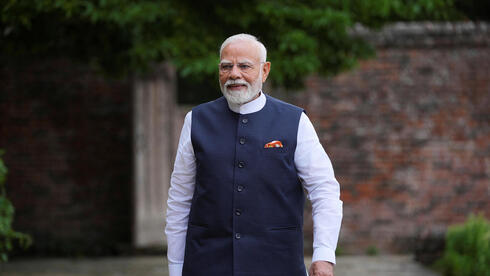
Three days before the outbreak of war, Indian Prime Minister Narendra Modi visited Jerusalem, marking what many saw as the culmination of a new phase in relations between India and Israel. The state visit formalized the upgrade of ties to what both countries described as a “special strategic partnership.”
In Middle Eastern diplomatic terms, such a designation is often interpreted as a clear alignment with the Western axis. But when the guns began to thunder on February 28, it became clear that the reality in the Strait of Hormuz was far more complex than the diplomatic headlines emerging from Jerusalem.
A particularly intriguing claim circulating in the Indian media and international trade circles is that Iran is showing unusual flexibility toward Indian shipping. While global shipping companies face soaring insurance premiums and growing security risks along key maritime routes, Indian-flagged tankers appear to be continuing their passage through Hormuz under conditions that other countries do not enjoy.
Although this information has not been officially confirmed, the dynamics on the ground suggest the possible existence of a tacit arrangement operating quietly beneath the surface of regional escalation.
The Foreign Ministry in New Delhi has acted cautiously in order to maintain this ambiguity. India’s foreign minister, Subrahmanyam Jaishankar, confirmed that he has held a series of telephone conversations in recent days with his Iranian counterpart, Abbas Araghchi. The talks focused on maritime security and energy stability, but the ministry’s official spokesperson said it was still “too early” to provide details about the nature of any understandings reached.
At the same time, reports in the Indian press suggest that Tehran may indeed be allowing relatively safe passage for Indian tankers, even if Iranian officials publicly deny the existence of such an arrangement.
The key question is not only whether such an exemption exists, but why Iran, facing war and internal uncertainty, would have any interest in offering it.
Part of the answer lies in Tehran’s pragmatic understanding that India is not a traditional Western power. From Iran’s perspective, India is an Asian state pursuing a multi-vector foreign policy: it can strengthen ties with Israel, maintain close relations with Washington, and at the same time preserve a functional and pragmatic channel with Iran whenever its national interests require it.
Iran appears to recognize this balancing act and, for now at least, is choosing to accommodate it.
New Delhi has consistently avoided endorsing the hard-line anti-Iranian rhetoric coming from Washington and Jerusalem. Instead, it has adopted a cautious diplomatic tone. In parliament, Jaishankar described the Middle East as India’s “extended neighborhood,” a phrase intended to emphasize India’s direct stake in the region’s stability, given its dependence on energy imports and the millions of Indian citizens working in Gulf states.
For Tehran, this is an important signal: India may not actively support Iran, but it is also not a participant in international efforts to isolate it.
Alongside rhetoric, several practical gestures have helped build trust between the two countries. On February 28, Iran requested permission for three of its vessels to dock at Indian ports, a request that New Delhi approved quickly despite international pressure.
One of the ships, the IRIS Lavan, docked at Kochi port on March 4. Jaishankar described the decision as “the right thing to do” and framed it as a humanitarian gesture.
Another diplomatic signal came when India’s foreign secretary signed the book of condolences at the Iranian embassy following the assassination of Iran’s Supreme Leader, Ali Khamenei.
On the economic front, bilateral relations are no longer centered on oil as they once were, largely due to U.S. sanctions. However, the decline in energy trade has highlighted the importance of civilian trade.
Annual trade between the two countries stands at about $1.68 billion. A large share of that consists of Indian exports, roughly $757 million, primarily basmati rice, tea, sugar and pharmaceutical products.
For Iran, India has become an important source of food and medical supplies during a period marked by war and economic pressure. These sectors are critical for domestic stability and are therefore difficult for Tehran to jeopardize for political reasons.
Yet the real strategic center of gravity in the relationship lies in the Iranian port of Chabahar Port.
For India, the port in southeastern Iran is far more than a logistical project. It provides a strategic corridor that allows New Delhi to bypass rival Pakistan on routes to Afghanistan and Central Asia.
India has continued to promote the project despite international pressure. In May 2024, New Delhi signed a ten-year agreement to operate the Shahid Beheshti terminal at the port.
The Indian government views the project as a flagship gateway for regional trade and has already invested about $120 million in infrastructure and equipment.
From Iran’s perspective, Chabahar is a key geopolitical asset designed to position the country as a central transit hub in the International North-South Transport Corridor.
This corridor, stretching from Mumbai through Iranian ports and onward to the Caucasus and Russia, is intended to shorten transportation times between South Asia and Europe by roughly 40% while significantly reducing shipping costs.
Within this framework, India becomes a critical partner in building a strategic trade route that bypasses traditional geopolitical constraints. Damaging Indian interests would risk undermining Iran’s most important infrastructure initiative.
Tehran understands that losing the Chabahar project, disrupting vital supplies of food and medicine, and weakening ties with one of the world’s fastest-growing economies would be too high a price to pay for symbolic displays of toughness.
For Iran’s leadership, maintaining pragmatic relations with India appears far more valuable than punishing New Delhi for diplomatic gestures toward Israel.



