










Microsoft establishes Israeli team to prepare encryption systems for the quantum era
Led by Inbar Badian, the new group will develop AI-powered tools to map organizations' encryption assets and identify vulnerabilities. The initiative is part of Microsoft's plan to transition its products and services to quantum-resistant encryption by 2029.
Microsoft is establishing a new development group within its Israeli R&D center focused on the security of encryption systems, Calcalist has learned. Led by Inbar Badian, the group will develop a new capability that combines artificial intelligence and autonomous agents to help organizations continuously map their encryption assets, assess and prioritize risks, and address vulnerabilities.
The initiative is intended to help organizations prepare for the threat quantum computing poses to widely used encryption systems and manage the transition to quantum-resistant cryptography. Powerful enough quantum computers could eventually break some of the public-key encryption methods that underpin much of today's digital security, potentially exposing sensitive information and undermining organizations' security infrastructure.
1 View gallery

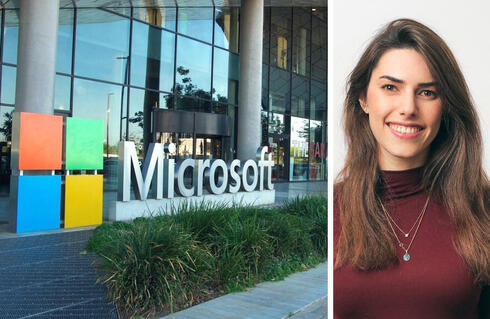
Inbar Badian alongside Microsoft Israel offices.
(Photos: Microsoft, ShU studio / Shutterstock)
In her previous role in the CTO group of Microsoft's Security division, Badian focused on strategy and innovation, including preparations for the quantum era. She was also involved in developing initiatives combining cybersecurity, AI and quantum technologies.
The risks facing organizations' encryption systems are not merely a concern for the future. Outdated or inadequately protected encryption assets can expose sensitive information today, often without organizations being aware of the vulnerabilities. At the same time, attackers may already be collecting encrypted data with the intention of decrypting it in the future, once advances in quantum computing make that possible. This threat, often described as "harvest now, decrypt later," adds urgency to preparations for the post-quantum era.
Encryption is embedded in software and hardware, communications between systems and cloud services. Yet organizations often lack a comprehensive picture of where and how it is being used. When a vulnerability is discovered, they need to identify which systems are affected and determine which require immediate remediation. The same visibility will be essential for the transition to quantum-resistant encryption, a complex process that could take years. Mapping existing encryption assets is therefore a starting point both for addressing current vulnerabilities and preparing for future threats.
The new group is part of Microsoft's accelerated preparations for the quantum era. The company has set a target of transitioning its products and services to quantum-resistant encryption by 2029. The initiative builds on a series of investments by Microsoft in its Israeli development center, with a particular focus on quantum readiness.
Microsoft's R&D center in Israel was the company's first such facility outside the United States. Over the years, it has become a strategic development hub for Microsoft globally and, in recent years, a center of expertise in artificial intelligence and cybersecurity.
The center operates across six locations in Israel. Its largest campus is in Herzliya, with additional sites in Tel Aviv, Haifa, Nazareth, Be'er Sheva and Jerusalem. Its teams play a significant role in developing Microsoft's core technologies and products, which serve millions of customers and users worldwide. The center has also repeatedly been recognized as one of Israel's leading workplaces.



