










“If your product is harmful, stop”: Nvidia CEO draws line on AI safety
Jensen Huang urged AI companies to halt models they know cause harm, but argued against imposing sweeping restrictions on the technology itself.
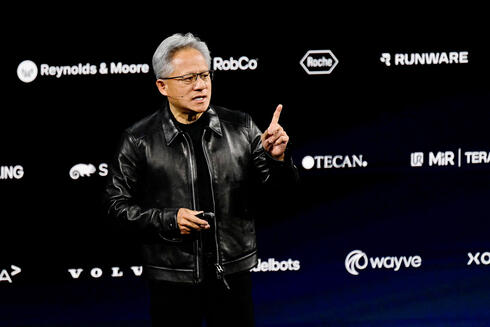
AI companies should stop distributing models they know are harmful, Nvidia CEO Jensen Huang said Thursday at the company’s GTC conference in Berlin. At the same time, he warned against regulating AI technology too broadly, arguing that doing so could stifle the industry before it has a chance to transform the economy.
“I am in favor of an immediate slowdown. I am in favor of an immediate halt. Do not release [them],” Huang told journalists. “If you know your product is harmful, stop immediately. If you think you need someone to force you to do so, you can ask, but you shouldn’t force everyone else. Not all [models] are harmful. If your product causes harm, stop causing that harm. If you believe that leaving your house would cause harm, then stay home. Companies bear a great deal of responsibility.”
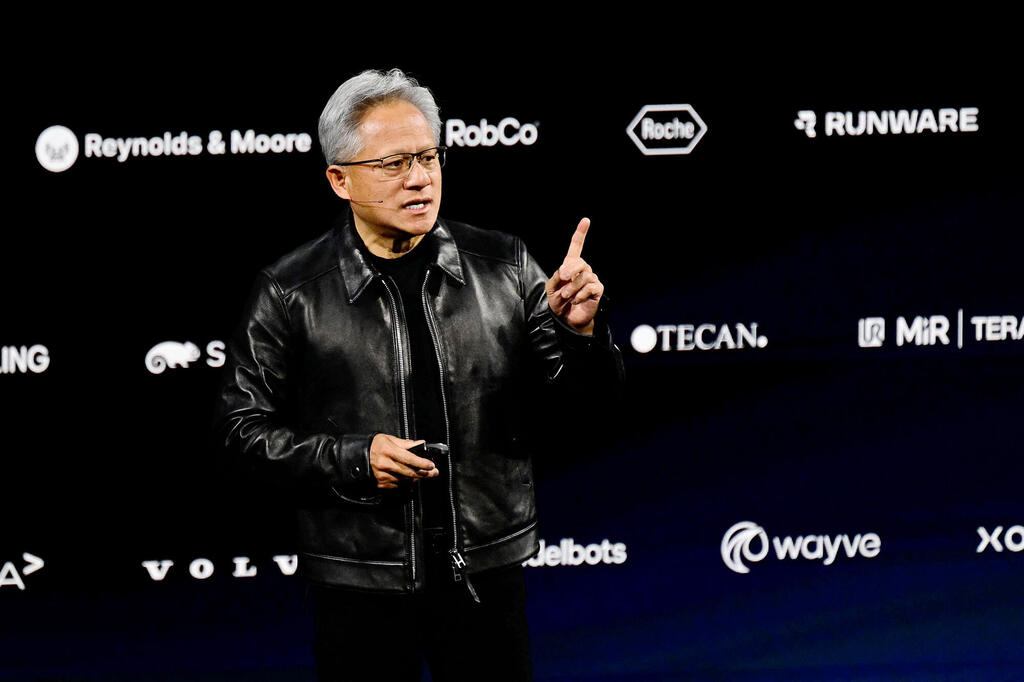
Huang said he opposes regulating AI at the level of the underlying technology, arguing that rules should focus on specific applications instead. “Technology is regulated at the application level, but one must be more cautious regarding the technology itself, as it is highly abstract,” he said.
“AI is not an application; it is a technology, encompassing language models, chemistry, autonomous driving and more. I am concerned that people equate AI with chatbots. A chatbot is an application of AI, not AI itself. We need to be specific about what exactly we intend to regulate. If we completely stifle the industry, there will be no AI at all. That is the worst-case scenario.”
One of the biggest questions surrounding AI is how it will affect employment, particularly whether the technology will trigger widespread layoffs and job losses. Huang argued that focusing on AI as a way to perform existing tasks faster misses its more significant potential: enabling companies to pursue work that would previously have been impractical or impossible.
“There are two ways to think about productivity. The first is doing things more efficiently. The second, and superior, approach is doing things that were previously impossible,” he said.
“Most engineering and design work involves exploring possibilities, experimenting, refining and repeating the cycle. However, there is a finite amount of time available to test different versions. With AI, you can evaluate countless possibilities. No company could possibly hire enough people to test every available option across design, engineering, cost and more in the way that AI can. That is productivity.”
Huang said Nvidia applies this approach to its own design work, using AI to explore a wider range of possibilities. The same principle, he argued, could transform drug discovery, where researchers must navigate an enormous number of possible combinations of proteins and chemicals.
“I find this far more compelling than simply shortening a one-hour task to ten minutes. That’s not ambitious enough. Technology should expand our ambitions, not just grant us more free time,” he said.
Huang also rejected the idea that technological advances necessarily lead to lasting job losses. “Historically, every time we’ve introduced a new technology, the economy has grown, and we’ve actually become busier,” he said. “AI creates jobs. In sectors like energy, manufacturing, semiconductors, infrastructure and construction, wonderful new roles are emerging.”
He claimed that AI had already created one million jobs in the United States, while the country continued to face a shortage of hundreds of thousands of workers. He argued that the technology could boost productivity, increase GDP and fuel economic growth. “AI creates jobs. Tell young people: AI will create a job for you.”
Asked about the immediate impact of AI on white-collar employment, where concerns about job displacement are already mounting, Huang said the emergence of new industries has always coincided with the decline of others.
“Even without AI, new industries emerge while old ones disappear. That is the nature of the world, much like in a city, where new restaurants and businesses replace old ones,” he said. “With AI, some jobs will become less necessary or less engaging than they once were, while others will become more essential. The world is constantly changing, and that is a good thing.”
He compared this process to biological evolution, arguing that change is necessary for the next generation to emerge.
Huang also addressed the environmental implications of the rapid expansion of AI infrastructure, particularly the technology’s enormous electricity requirements and the resulting risk of higher greenhouse gas emissions. Rather than viewing rising energy demand primarily as a problem, he described it as an opportunity to accelerate investment in new energy technologies.
“This is the best opportunity in the last 100 years for market dynamics to drive significant investment into sustainable energy,” he said. “The demand for energy is immense, as is the innovation in the field: fusion, nuclear reactors, hydropower, solar, batteries and AI for grid management. The volume of ideas receiving investment is staggering.”
Huang argued that rising demand could make clean energy projects more attractive to investors by creating a commercial incentive to develop new sources of power and improve existing systems.
“If one believes in a sustainable future, the solution is to use more energy. After all, why would the market invest in energy if there were no demand?” he said. “While subsidies are an option, there is no more powerful catalyst for change than market dynamics.”
“If we care about the future, now is the perfect time. Let AI flourish. Do not stifle it. It is funding the future of nuclear energy and clean energy systems,” Huang said.



