











Qodo raises $70 million Series B to tackle AI’s code quality problem
The Israeli startup targets the growing gap between faster code generation and slower validation.
Qodo, an AI code review and governance platform, has raised $70 million in a Series B round, bringing the company’s total funding to $120 million. The round was led by Qumra Capital, with funding participation from Maor Ventures, Phoenix Venture Partners, S Ventures, Square Peg, Susa Ventures, TLV Partners, Vine Ventures, Peter Welender (OpenAI), and Clara Shih (Meta).
Qodo’s platform uses AI to test code, enabling development teams to deliver high-quality, reliable software more quickly while adhering to organizational governance standards. Its latest version, Qodo 2.2, incorporates advanced contextual understanding and a testing system that integrates multiple AI agents, drawing on code history and prior pull request decisions. The system provides developers with precise, explainable feedback that can be implemented immediately, while reducing unnecessary noise.
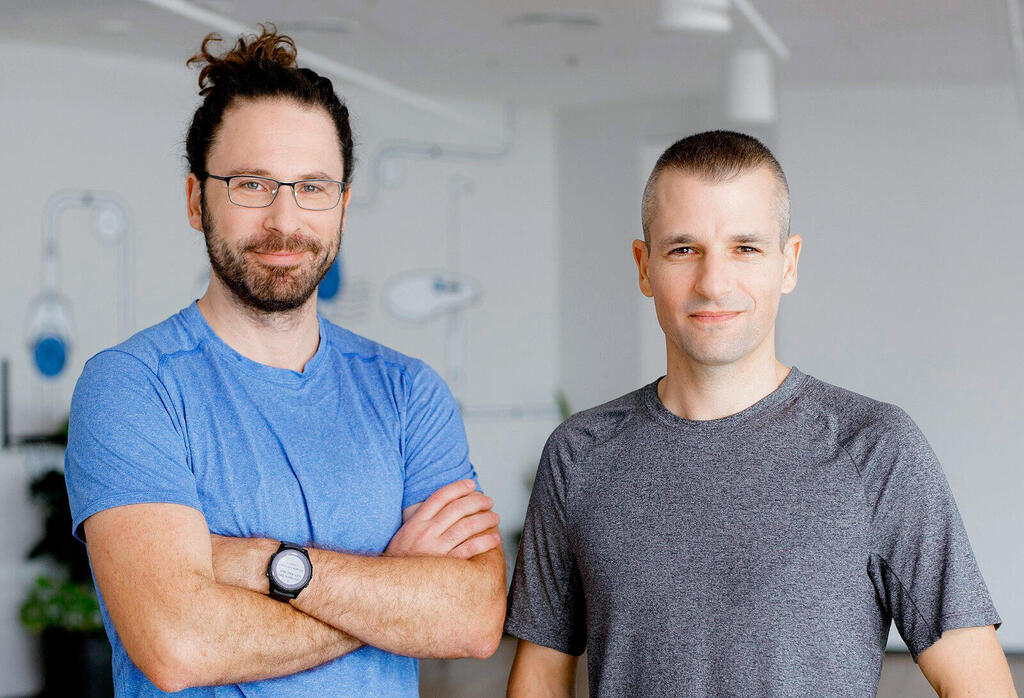
“The cost of writing code has dropped significantly, but that doesn’t mean the code meets the standards organizations can trust, in fact, it often doesn’t. This created a new bottleneck around testing and validating code against company requirements,” CEO and co-founder Itamar Friedman told Calcalist.
“The problem we are solving is widely recognized, including in high-profile failures like CrowdStrike. We act as a second brain for developers when it comes to quality. Companies that want to move fast with AI need this layer, otherwise they risk deploying unreliable software.”
Friedman added that the company has shifted from serving startups to working with large enterprises:
“In our early stages, we focused mainly on startups. Today, we are working with major global companies. We’ve recently signed significant agreements with companies like Nvidia, Walmart, and Box, and our revenue has grown tenfold over the past year.
“This funding comes at a time when our category is being defined. We aim to lead it. We plan to invest heavily in sales and continue building a strong development center in Israel, despite current challenges, while further advancing our platform.”
He also emphasized the company’s positioning within the AI ecosystem:
“Our technology is fundamentally different from companies that focus on models. Models can generate code, but they don’t fully understand complex software systems. The next stage of AI is building systems that understand systems, and that’s where we are focused.”
Qodo was founded in 2018 by Friedman, CEO, and Dedy Kredo, Chief Product Officer. Friedman previously served as a director at Alibaba Group and was co-founder and CTO of Visualead, which was acquired by Alibaba. Kredo served as VP of Customer Data Science at Explorium and previously managed a product line at VMware. Their experience revealed the challenges of verifying code against product specifications, prompting them to develop a comprehensive solution.
The company employs 115 people across Israel, the United States, and Europe, and serves hundreds of customers, including Walmart, Nvidia, Red Hat, Box, Intuit, Ford Motor Company, and monday.com.
The rapid acceleration of AI in software development means that billions of lines of code are now deployed to production environments each month, with a growing share generated by large language models. This scale makes it increasingly difficult for human engineers to maintain quality control. While AI agents can generate code autonomously, they do not inherently understand organizational standards, architectural history, or acceptable risk levels.
In a survey of 500 developers, 95% said that knowing code was generated by AI requires them to spend more time on testing. Nearly half reported adding new testing layers, metrics, and documentation requirements. As AI-generated code continues to grow, ensuring its reliability is becoming a critical challenge for organizations.



