










Opinion
Changing the narrative: To become a financial powerhouse, Israel must stop fearing crypto
"While the financial world completes its crypto transformation, moving from suspicion to adoption and integration, Israel is in a state of deep cognitive dissonance," writes Lior Lamesh, co-founder and CEO of GK8 by Galaxy.
Last month, a seismic shift occurred on Wall Street, yet its aftershocks were barely felt in the offices of Israeli regulators and bank boardrooms. Bank of America, one of the most conservative and powerful financial institutions in the world, announced it is allowing its advisors to recommend Bitcoin investments to clients. This is no longer a tacit approval, but an active policy backed by a directive from the Chief Investment Officer to allocate a percentage of portfolios to digital assets.
Simultaneously, Vanguard, one of the world's largest investment management companies, which only a year ago declared that Bitcoin ETFs did not align with its philosophy, has opened its platform to crypto trading. Charles Schwab, the American brokerage and investment giant, has also marked mid-2026 as its target for launching direct trading.
The significance of these moves is dramatic. When Wells Fargo, Morgan Stanley, and now Bank of America remove these barriers, we are talking about opening the floodgates to managed capital worth nearly $13 trillion. If even a single percent of this capital flows into the crypto market, it translates to an influx of approximately $130 billion- double the amount that has entered Bitcoin ETFs since their launch. This is not a wave of speculative investors seeking "get rich quick" schemes, but rather institutional, stable, and "slow" money, which brings stability to the entire market and reduces the volatility that has characterized it for a decade.
However, while the financial world completes its crypto transformation, moving from suspicion to adoption and integration, Israel is in a state of deep cognitive dissonance. The gap between its status as a technological powerhouse in the blockchain sector and the local banking and regulatory system's attitude toward the field is nothing short of astonishing, some might even say tragic.
In Israel, the narrative surrounding crypto is still stuck somewhere in 2017. Public and regulatory discourse is dominated by fear. The first words that come to the average banker's mind when hearing "crypto" are money laundering (AML), terror financing, and risk. True, these are real challenges that must be addressed, but the world has already found solutions. In the U.S., they understood that the way to address risks is not to block the technology, but to adopt it within a supervised system, using advanced technological tools for monitoring and security.
The irony is that a significant portion of the very technological tools that allow Bank of America and Vanguard to sleep soundly at night are developed right here. Israel is the number one exporter of security and Custody technologies, the complex protocols that allow financial institutions to manage billions in digital assets without fear of hacking. We provide the digital steel vaults to the world, yet at home, we are still arguing over whether it is permissible to hold crypto, battling outdated prejudices.
This suspicious attitude creates double the damage. The Israeli investor is discriminated against, denied access to financial products that are becoming standard in every Western investment portfolio. More importantly, we are pushing the industry out. When entrepreneurs in the field hit a brick wall when trying to open a bank account for their company or raise capital in Israel, they simply incorporate their companies abroad. The result: brain drain, massive tax revenue losses, and a missed opportunity to become the financial hub of the new world.
The change must begin with the story's framing. The crypto market needs a positive narrative in Israel, not one that ignores the risks, but one that recognizes the potential. We must stop viewing the sector through a narrow prism and focus solely on negative past events. The narrative needs to shift from a risk to be managed to a financial infrastructure to be leveraged.
Imagine a scenario in which the Israeli regulator adopted a proactive approach like the U.S. SEC's in recent months, streamlining ETF registration, or in which Israeli banks competed to provide better crypto services. This is not science fiction; this is the current economic reality in the Western world.
The recent moves by U.S. financial giants prove that the technological and logistical barriers have been removed. The problem is no longer how to do it, but whether there is a will to do it. When the most conservative players in the world open their doors, the excuse of immaturity or extreme risk no longer holds water. The State of Israel must decide whether it wants to remain merely a technology provider for this revolution or be part of it.
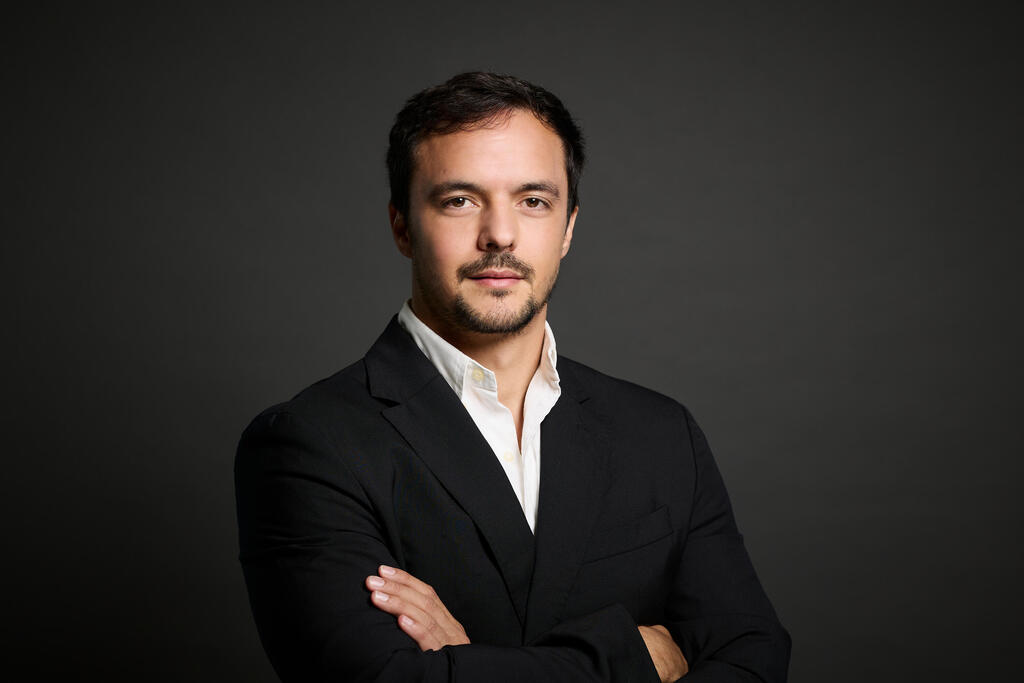
The author is the Co-founder and CEO of GK8 by Galaxy, which develops a platform for the management and custody of digital assets for financial institutions.



