










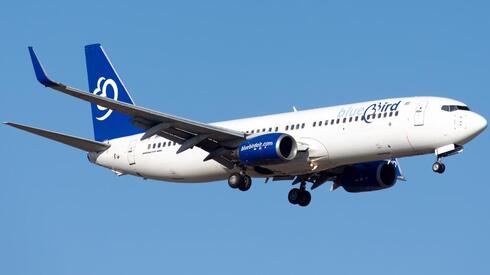
A Greek airline with Israeli owners is becoming a force at Ben Gurion
Bluebird Airways accounted for 7.5% of passenger traffic in July, while its parent group also owns Cyprus-based TUS Airways.
Israeli airlines almost completely dominate the country’s aviation market, accounting for more than 60% of passenger traffic. They are typically followed by Hungary’s Wizz Air and UAE-based carriers such as Etihad and Flydubai. But in July, Bluebird Airways posted an unusually strong performance, capturing 7.5% of passenger traffic at Ben Gurion Airport after flying around 173,100 passengers.
The figure put Bluebird fourth among the airlines carrying the most passengers to and from Ben Gurion, behind El Al, Israir and Arkia. It was only the second time the airline reached fourth place, after May, when the aviation industry was still affected by the closure of Israeli airspace during Operation Roaring Lion. At the time, Bluebird held just 3.7% of the airport’s market.
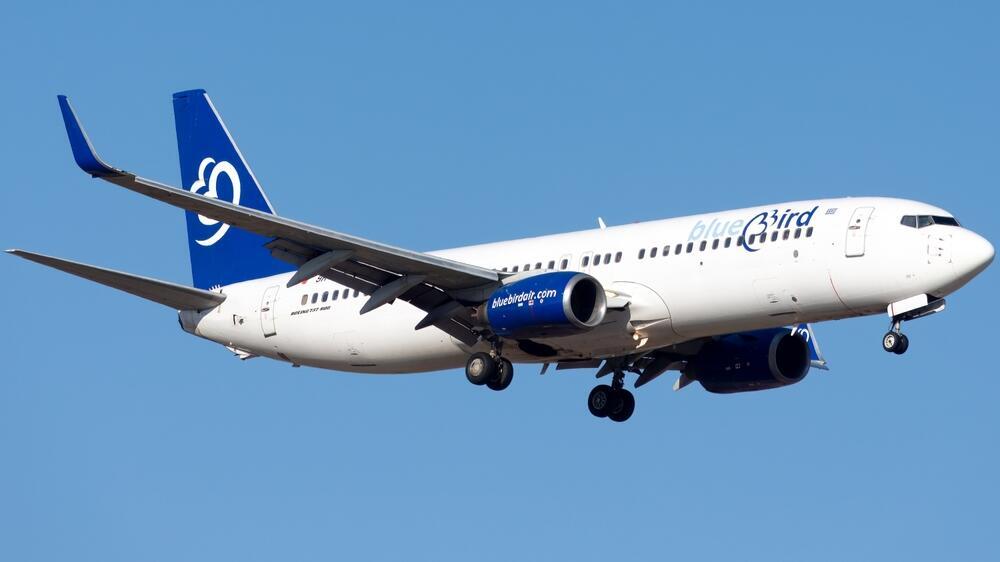
Bluebird has also moved into fourth place for the year as a whole. Since the beginning of 2026, the airline has carried around 340,800 passengers, giving it approximately 4% of passenger traffic at Ben Gurion.
Bluebird Airways is a Greek airline with a strong Israeli connection. Founded in 2008 and headquartered in Heraklion, Crete, the company is owned by Israeli tourism group Vacation Lines, controlled by businessmen Ami Cohen and Arnon Englender. Since 2024, Vacation Lines has also owned TUS Airways, which is headquartered in Larnaca, Cyprus.
That Israeli connection became particularly important during the Swords of Iron war, when Bluebird and TUS emerged as important links to the outside world. Unlike most foreign airlines, both continued operating flights for much of the war, apart from short interruptions.
Even during periods when only Israeli airlines were permitted to land at Ben Gurion Airport, including during rescue-flight operations, the two companies continued serving Israeli passengers by operating flights to nearby airports, including Taba in Egypt.



