










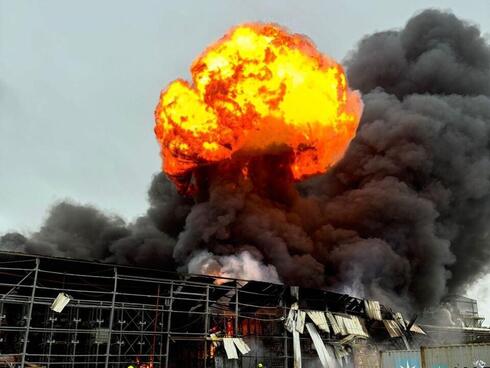
Iranian missile attack sparks fire and renews fears over Israel’s chemical hubs
Incident in Neot Hovav highlights risks as Haifa Bay evacuation plan slips to 2031.
The black smoke that rose for hours on Sunday above a chemical plant in Neot Hovav, following a hit by fragments from an Iranian missile interception, once again underscored the risks inherent in concentrating hazardous industries near populated areas. The incident, which raised fears of a potential leak of toxic materials, coincided with the publication of the annual report of the Haifa Bay Development Authority, showing that plans to evacuate petrochemical industries from Haifa Bay, designed precisely to prevent such scenarios, have been delayed again, now pushed back to 2031.
Between urgent security and environmental concerns and the reality of delays, bureaucracy, and disputes over infrastructure and compensation, the gap continues to widen.
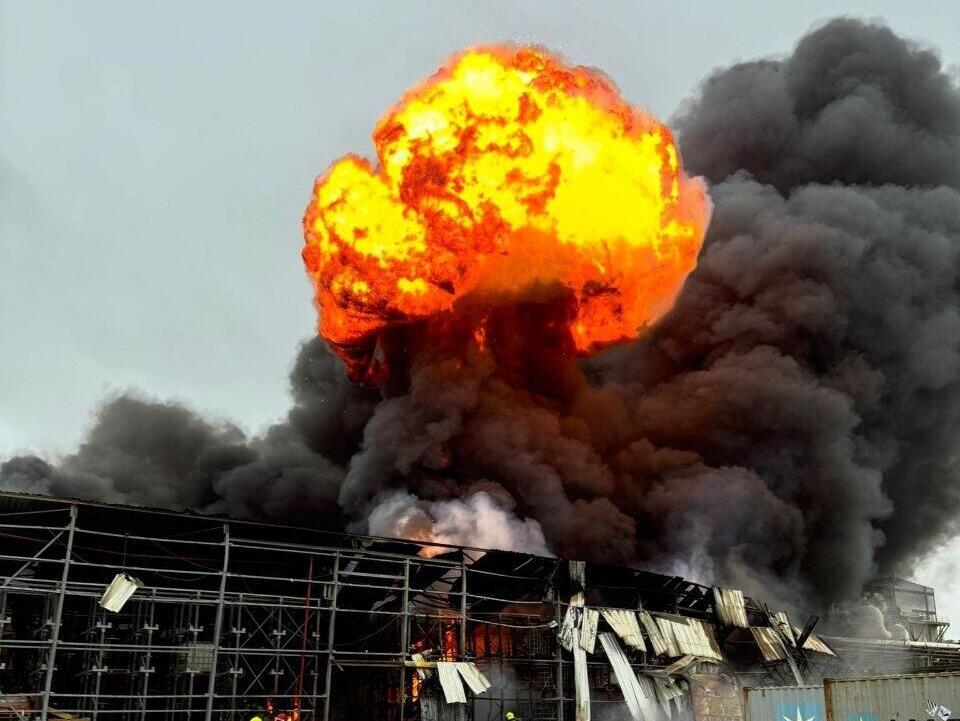
Yesterday, a fire broke out at the Adama plant in the Neot Hovav industrial zone, south of Beersheba, after interception fragments from an Iranian missile struck the site. Apart from one person treated by emergency services, there were no casualties. The plant manufactures generic agricultural pesticides and is one of two operated by the company in Israel. Adama, formerly Makhteshim Agan, was sold in 2011 to the Chinese giant ChemChina and employs hundreds of workers at the site.
Thick smoke from the blaze was visible from afar, as more than 30 firefighting teams from across the Negev were deployed to contain the fire, even as Iran continued launching missiles at targets in southern Israel.
Amid concerns over the release of hazardous materials, the Home Front Command issued an emergency alert to thousands of nearby workers, instructing them to remain indoors, seal windows and ventilation systems, and avoid the area. Police blocked access roads to the industrial zone. The company said the damage was limited to a storage warehouse and did not affect production facilities, adding that it was coordinating with emergency services and the Ministry of Environmental Protection.
Dozens of factories operate in Neot Hovav, many of which handle hazardous materials essential to their production processes. The Adama facility that caught fire was a warehouse containing finished products. The site employs around 600 workers.
The industrial zone also hosts major facilities, including one of the largest plants of Teva Pharmaceutical Industries, as well as operations by companies involved in gas supply, chemical logistics, and energy infrastructure. The concentration of such facilities highlights the broader risks posed by industrial clusters handling hazardous substances.
The incident, although occurring in a relatively remote area, has renewed attention on a far more sensitive site: Haifa Bay. According to the latest report by the Haifa Bay Development Authority, the timetable for evacuating the Bazan complex and other petrochemical facilities has been extended to 2031. This marks the second delay; just a year ago, completion was expected by 2030 instead of 2029, as set in a 2022 government decision.
Yuval Admon, head of the authority, attributed the delay to the need to build alternative infrastructure in northern Israel for storing and distributing fuel products, including 550,000 tons of distillates and about 20,000 tons of liquefied petroleum gas (LPG), alongside a dedicated maritime system to enable direct unloading from ships.
Avi Simhon, head of the National Economic Council and chairman of the plan’s steering committee, blamed the delays on bureaucratic hurdles. “The reason is excessive bureaucracy,” he said. “Everything is repeatedly reviewed, countless meetings are scheduled over long periods, and multiple legal advisors are involved. That is the main obstacle, not politics, but a system that requires endless approvals.”
Government officials, however, say such delays were anticipated, given the scale and complexity of the project. Simhon acknowledged the challenge but insisted on accelerating the process: “What usually takes 15 years, we are trying to do in five.”
According to Admon, interim solutions may be formulated in the coming months, including temporary use of existing energy infrastructure in the north, in an effort to return to the original timetable. He described 2026 as a “decisive year,” adding that once infrastructure construction is underway, particularly between 2027 and 2029, certainty around completion will increase.
The plan to evacuate polluting industries from Haifa Bay is intended to fundamentally transform the region, including the remediation of contaminated land and the construction of more than 110,000 housing units.
The move carries major implications for Israel’s energy sector, centered on the closure of Bazan’s refining operations and a transition toward imported fuels stored at new facilities across the country. It will also require complex negotiations over compensation, estimated at billions of shekels, between the state and industrial operators. These talks are currently stalled.
“This is an unprecedented process,” Simhon said. “There is a disconnect between the state and the companies. Without a clear target date, there will be no progress.”
Recent missile strikes have intensified the debate. During last year’s conflict, three ballistic missiles hit the Bazan complex, killing three employees and damaging critical infrastructure. More recently, the site was struck again by interception fragments, though the damage was limited.
Despite these incidents, Bazan argues that its operations remain essential. Chairman Moshe Kaplinsky said the past two years had demonstrated the importance of domestic refining capacity. “Without Bazan, the needs of the economy could not be met,” he said, noting that the company supplies around 65% of Israel’s distillates, including LPG, diesel, and jet fuel.
Still, the combination of repeated missile incidents and ongoing delays has renewed calls to accelerate the evacuation of petrochemical industries from Haifa Bay, amid concerns that a future strike could pose a far greater threat to the densely populated region.



