










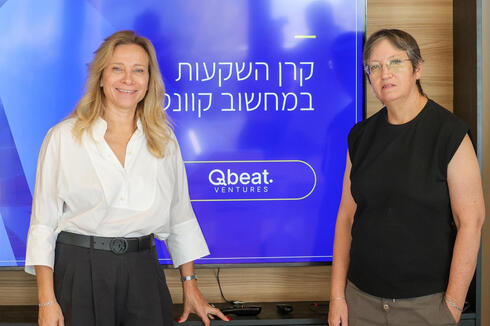
Quantum fund Qbeat secures $20 million first close; Shlomo Kramer among backers
Co-founded by Dorit Dor and Maya Netser, Qbeat positions itself as Israel’s first VC fund dedicated exclusively to quantum computing.
Dorit Dor and Maya Netser’s venture capital fund, Qbeat Ventures, has reached a first closing of $20 million and has already invested in four startups. Among the fund’s investors are senior figures from Israel’s cybersecurity industry, including Shlomo Kramer, co-founder of Check Point, Imperva, and Cato Networks; Arik Kleinstein, co-founder and managing partner of Glilot Capital Partners; and Fireblocks founders Michael Shaulov and Idan Ofrat.
The fund’s partners plan to raise approximately $100 million, positioning Qbeat as the first Israeli venture fund dedicated exclusively to quantum computing.
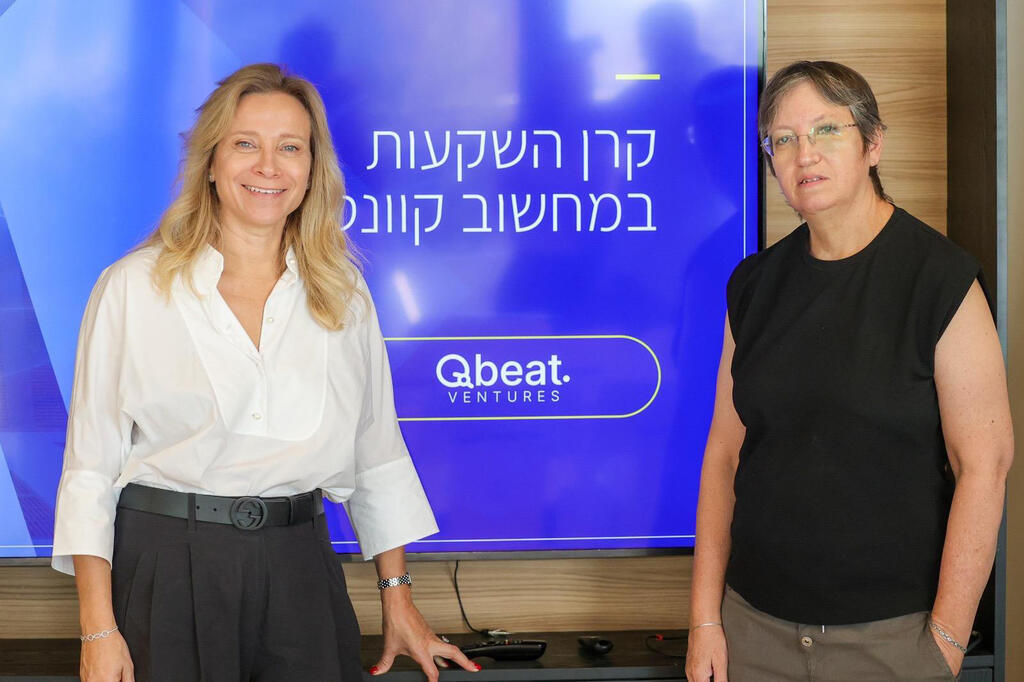
Qbeat Ventures was founded by Dr. Dorit Dor, former chief technology officer of Check Point, who led the company’s technology development for much of its history, and Maya Netser, a former partner at the HFN law firm, who has been involved in a series of exits in the medical technology sector.
Established in 2025, the fund plans to invest in 12 to 15 early-stage hardware and software startups in the quantum computing space, from pre-Seed through Series A. While Qbeat has a strong Israeli focus, it is not limited geographically and intends to invest in companies abroad as well. As its portfolio matures, the fund plans to participate in later-stage financing rounds.
Among Qbeat’s early investments is Quantum Art, one of Israel’s most prominent quantum startups, which completed a $100 million Series A round in December. The company was founded by Weizmann Institute researchers Dr. Tal David (CEO), Dr. Amit Ben Kish (CTO), and Roee Ozeri (CSO), and is developing quantum computers designed for complex industrial applications.
The fund has also invested in QuamCore, an Israeli company developing quantum computing architectures; Orange Quantum Systems, a Dutch startup that provides testing and measurement solutions for quantum chips aimed at accelerating development cycles and improving hardware reliability; and QIZ Security, a U.S.-based cybersecurity company founded by Israeli entrepreneurs, focused on quantum-resistant encryption.
“Quantum technologies are approaching a critical tipping point, where scientific breakthroughs will begin to translate into real-world systems and applications,” Dor and Netser said following the fund’s initial closing. “We founded Qbeat to support entrepreneurs who are building the foundations of a new technological era, with a long-term perspective, professional depth, and business focus. What differentiates Qbeat is our exclusive focus on quantum technologies and our understanding of the full spectrum, from academic research, through industry roadmaps, to emerging commercial applications.”
Investment in quantum technologies accelerated sharply in 2025, although the majority of funding continues to come from government sources. In Israel alone, quantum startups raised roughly $500 million during the year, while global investment in the sector is estimated at around $5 billion. Government commitments worldwide now total tens of billions of dollars, with countries including the United States, China, the European Union, Germany, the United Kingdom, South Korea, and India collectively investing an estimated $45 billion in quantum research to date.
Despite the growing momentum, one of the sector’s central challenges remains the long development cycles required to bring quantum technologies to market, a dynamic that makes it difficult for venture capital funds to generate returns on timelines comparable to those in more mature technology sectors.



