










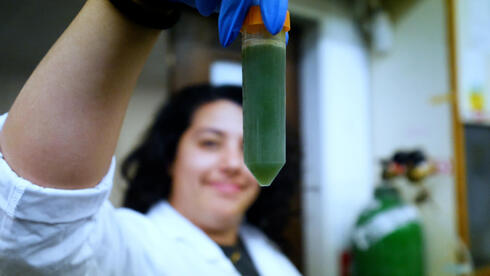
Israeli startup aims to cool the planet through agriculture
New technology developed by Cooling Crops lowers crop temperatures and restores degraded soil.
“The vision and dream is to lower the Earth’s temperature,” says Oded Shoseyov, professor of Protein Engineering and Nano Biotechnology at The Hebrew University of Jerusalem in the Faculty of Agriculture in Rehovot. “It sounds crazy, but the only way to do it is through agriculture.”
Prof. Shoseyov, a serial entrepreneur with a long list of startups and inventions behind him, is one of the founders of Cooling Crops, a small Israeli startup based in Rehovot aiming to turn that idea into reality. The company has developed a spray that lowers plant temperature by up to 6 degrees, restores degraded soils, and improves crop performance.
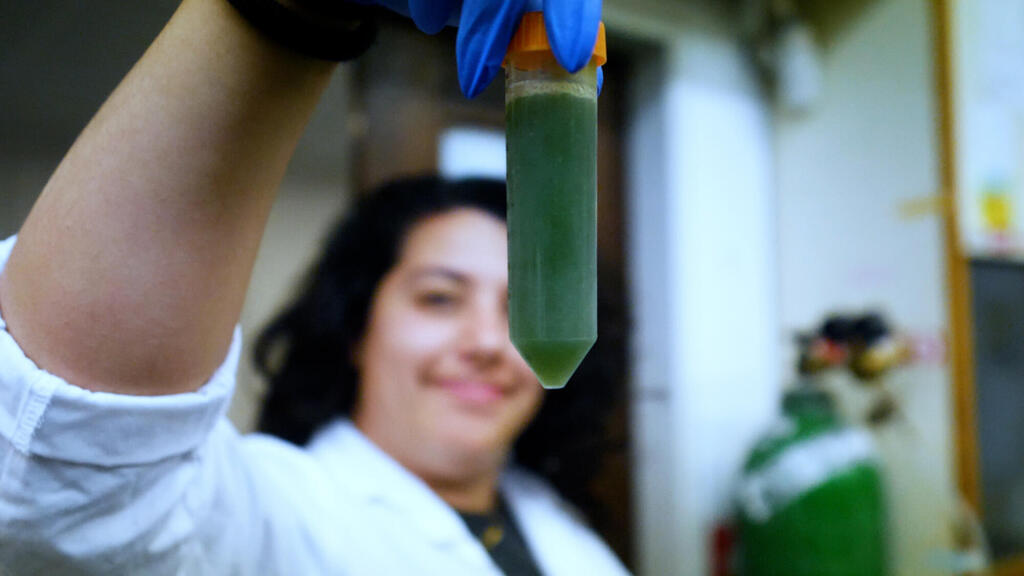
If deployed at scale, the company believes its technology could achieve something no existing solution has: cooling the planet itself, by leveraging farmers who are already cultivating land and have a direct incentive to increase yields.
To understand Cooling Crops’ approach, one must start with a basic physical process. The sun heats the Earth, and some of that energy is radiated back into the atmosphere. The challenge is that greenhouse gases act like a blanket, trapping much of that heat.
“It turns out there are two ‘windows’ in the atmosphere,” explains Prof. Shoseyov, “through which energy can escape.” These are specific wavelength ranges in which greenhouse gases are transparent, allowing heat to pass into outer space. “Our technology enables part of that energy to be emitted through these windows. Even on a day when temperatures reach 42°C, we can reduce plant temperature by 6 to 7 degrees, which is significant.”
Such a reduction can be critical. A drop of several degrees during extreme heat can determine whether a crop survives or fails. Assaf Pinkas, vineyard manager at a winery also connected to Shoseyov, has seen the impact of rising temperatures firsthand. “Heatwaves that used to be short now last a week or more,” he says. “For every degree of temperature increase, yields can drop by around 10%. The financial impact is substantial.”
The problem extends beyond crops to the soil itself. “Modern agriculture has relied heavily on agrochemicals and fertilizers, which degrade soil ecosystems,” says Prof. Shoseyov. “In Europe alone, about 60% of land is affected by desertification.”
The company’s second line of innovation draws on biology, specifically cyanobacteria. “These microorganisms can absorb CO2 and produce polysaccharides that bind soil particles together,” Shoseyov explains. “This stabilizes the soil, prevents erosion, and supports seed germination.” In nature, this process, known as biocrust formation, can take up to seven years after events like forest fires. Cooling Crops claims it can replicate it within months.
“We are introducing not just a practice but a technology, a new material that did not previously exist,” says CEO Sagi Sheinkman, comparing it to an accelerated form of mulch.
That raises a natural question: how can materials found in nature be patented?
“The issue is not protecting the concept of plant cooling,” explains Dr. Revital Green, Head of the Chemistry and Pharma Department at Ehrlich Group. “It’s about protecting the specific technological structure the company has created.” According to Dr. Green, the innovation lies in a unique structural organization, such as the integration of bacteria within layers of cellulose, that does not occur naturally and enables new functional properties.
Eyal Bagon, co-founder and CTO, is leading early-stage trials currently underway on the roof of the Faculty of Agriculture in Rehovot. “We began with carrot pots, applying different dosages,” he says. “At full dosage, we saw significantly stronger germination compared to untreated soil.”
The company is also testing different material combinations to balance durability, cooling efficiency, and cost. Early results indicate temperature reductions of 3 to 6 degrees under direct sunlight, more than 80% improvement in soil stability, up to threefold water retention, and a 3%-12% increase in germination rates.
Pinkas has already expressed interest in applying the technology in his vineyards. “We hope the lab results point in the right direction,” he says.
Globally, the stakes are high. “The economic damage from declining soil fertility is estimated at about $900 billion annually,” says Sheinkman. “Of that, around $200 billion is directly tied to agriculture. Our goal is to reach as many regions as possible, to create both a cooling effect and land restoration.”
At the core of the company’s model is a simple premise: farmers themselves are the engine of adoption. They do not need to be motivated by environmental concerns alone.
“The farmer’s incentive is to increase yield,” says Shoseyov. “In the process, they also contribute to cooling the planet, without additional cost.”



