










From cancer-sniffing dogs to quantum computing, U.S. and Israeli firms win $7.4 million in grants
Seven joint projects will receive conditional funding from the BIRD Foundation, with private investment expected to bring total spending to $20 million. The projects range from AI-assisted cancer detection and satellite laser communications to semiconductor memory, precision agriculture and hospital-based 3D printing.
Seven joint projects will receive conditional funding from the BIRD Foundation, with private investment expected to bring total spending to $20 million. The projects span medical diagnostics, satellite communications, semiconductors, agriculture and hospital-based 3D printing.
An Israeli cancer-detection company working with a U.S. research center will combine artificial intelligence with dogs’ unusually sensitive sense of smell. Other partnerships aim to map chemical reactions using quantum computing, improve the efficiency of chip memory and develop laser links for satellite communications.
These are among seven projects approved for $7.4 million in conditional grants by the Israel-U.S. Binational Industrial Research and Development (BIRD) Foundation in September. Together with private-sector investment, the projects are expected to attract $20 million in funding.
The projects illustrate the range of technologies being developed through the foundation, which supports joint research and development by Israeli and American companies. Its grants can cover up to half of a project's budget, with a maximum of $1.5 million per project. Funding is repaid through royalties from sales of products developed with BIRD support, rather than through an equity stake in the participating companies.
One of the more unusual collaborations brings together Israeli startup SpotitEarly and Fox Chase Cancer Center in Philadelphia to develop and validate a technology intended to detect multiple types of cancer at an early stage. The approach combines AI with dogs’ highly sensitive sense of smell. The work will involve developing, testing and validating the technology, meaning the newly funded project is still a development effort rather than an established diagnostic service.
SpotitEarly has previously participated in a BIRD-supported project with Penn Medicine, also in Philadelphia, focused on early cancer detection using dogs’ sense of smell and AI.
Other projects target less visible but potentially consequential parts of the technology supply chain. RAAAM Memory Technologies of Petah Tikva will work with U.S. chipmaker GlobalFoundries to develop and qualify its GCRAM on-chip memory technology. The companies say the technology is designed to reduce chip area and power consumption compared with SRAM, without adding manufacturing steps or cost. The grant will support development and qualification, not establish that those benefits have already been achieved in commercial production.
In space communications, Holon-based NovaLink Space and Ciena Corporation of Maryland will develop a compact satellite laser communication terminal capable of terabit-class transmission. The project will combine NovaLink’s optical phased array technology with Ciena’s coherent transceiver technology.
Tel Aviv-based Qarakal Quantum and California’s Quantum Elements will work on a minimum viable product that uses quantum computing to map complex surface-catalysis reactions. Such reactions are important in chemical processes, and the project aims to apply quantum computing to a problem that can be difficult to model accurately with conventional methods. The companies have not announced a completed product.
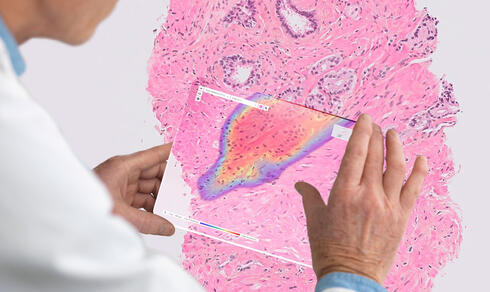
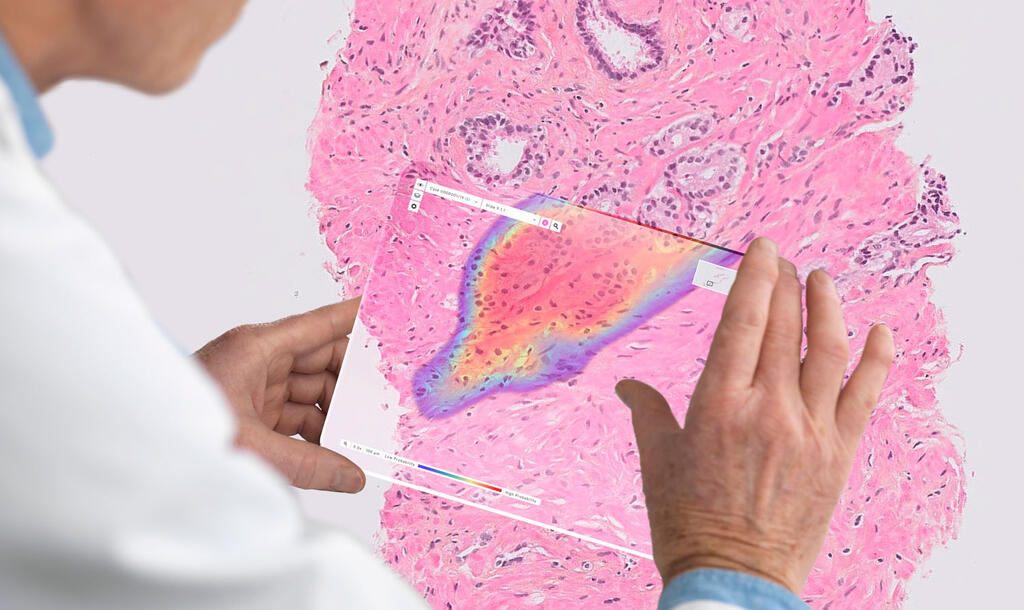
The remaining projects focus on healthcare, agriculture and medical manufacturing. Ibex Medical Analytics of Tel Aviv and Philadelphia-based Proscia will develop an AI-powered precision oncology platform designed to automate biomarker scoring and integrate it into digital pathology workflows. SeedX, based in Or Yehuda, will work with Illinois Foundation Seeds on AI-based precision sorting for corn, sweet corn and carrots. CustoMED of Tel Aviv and North Carolina’s Myrava will develop an automated hospital-based 3D-printing system for customized orthopedic tools, including use in emergency surgery.
The latest awards bring the total number of BIRD-supported collaborations to more than 1,200 since the foundation was established in 1977. BIRD says it has invested approximately $470 million in joint projects, which have generated more than $10 billion in direct and indirect revenue.



