










AppsFlyer sale collapses after Apollo seeks new deal terms
Board halts $1.9 billion transaction with Apollo and Fortissimo amid shifting software market valuations.
The sale process of AppsFlyer has been halted. Calcalist has learned that the company’s board of directors decided not to proceed with the transaction after the American investment firm Apollo Global Management sought to introduce new conditions into its joint offer with Israeli private equity fund Fortissimo to acquire the company.
Apollo and Fortissimo had proposed acquiring 50%-60% of AppsFlyer’s shares at a company valuation of $1.9 billion. The acquisition was expected to be carried out through a debt fund managed by Apollo, with Fortissimo joining as the Israeli partner. The total value of the deal was expected to reach about $1 billion. Under the proposed structure, Apollo would have held 70% of the acquired shares, while Fortissimo would have held the remaining 30%.
The breakdown in negotiations comes against the backdrop of a decline in software stock valuations on global markets since the beginning of the year, driven in part by fears that artificial intelligence could aggressively disrupt many existing software business models. According to people familiar with the process, Apollo became more cautious and requested additional protection mechanisms in the agreement.
Although the deal had reached an advanced draft stage and was close to being signed, AppsFlyer’s board, together with its financial adviser Goldman Sachs, decided to halt the process and reject the revised proposal.
Apollo is one of the world’s largest private investment firms, managing approximately $900 billion in assets. Fortissimo recently raised $1.1 billion for its sixth fund. This is the second deal Fortissimo has abandoned in recent months, after failing to reach agreement on the acquisition of Israeli drip-irrigation manufacturer Netafim.
AppsFlyer last raised funding in 2020, securing $210 million at a $2 billion valuation in a round led by General Atlantic. General Atlantic also played a central role in launching the current sale process and selecting Goldman Sachs as the investment bank advising the company. Initially, AppsFlyer’s board sought a valuation of $2.7 billion to $3 billion.
The sale process was intended to serve as an alternative to a planned initial public offering, which the company had previously considered at a target valuation of $4 billion to $5 billion. However, such a move was expected to face challenges due to a slowdown in growth to around 9%-15% annually, a rate widely viewed as relatively modest for a technology company seeking a Nasdaq listing. The difficult conditions in the digital advertising market also contributed to the shift toward exploring a sale.
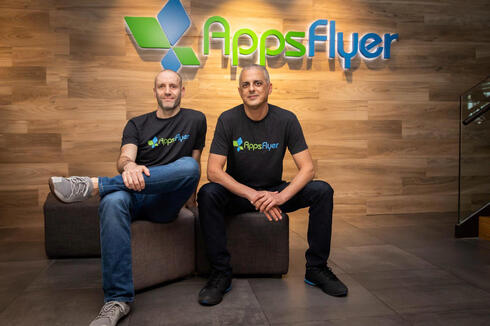
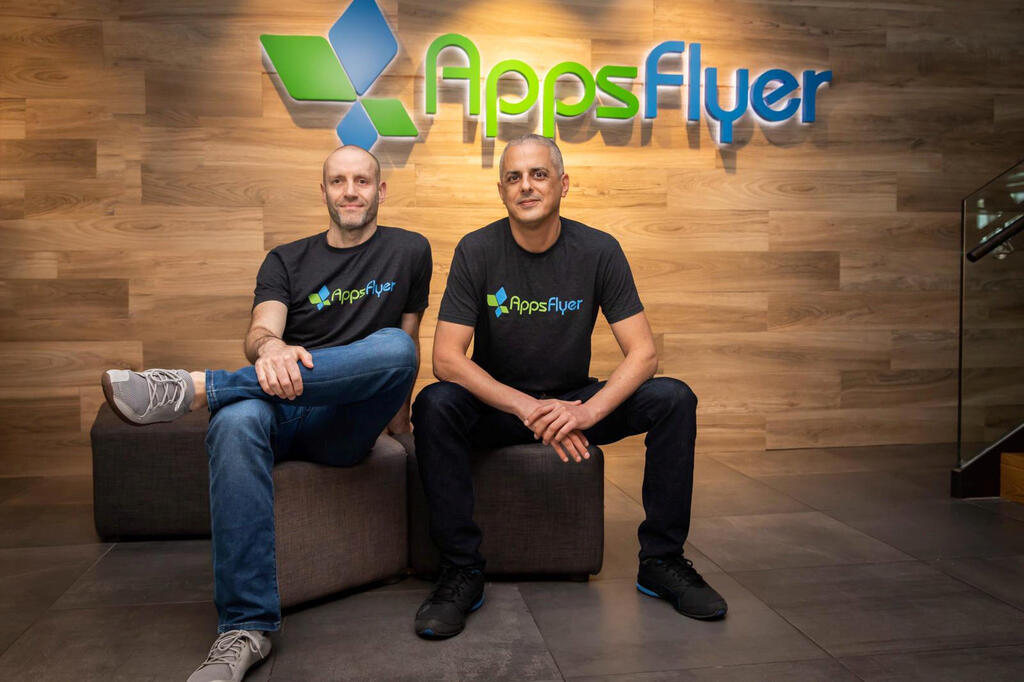
AppsFlyer generates approximately $500 million in annual revenue and is profitable, with no need to burn cash. Last year the company laid off about 7% of its workforce, roughly 100 employees. Founded in 2011 by CEO Oren Kaniel and Reshef Mann, AppsFlyer currently employs around 1,300 people.
The company develops technology that enables app owners to identify where their most valuable users originate, whether from Google searches, advertisements on Facebook or X, email marketing, SMS campaigns, or television advertising. Its platform analyzes these traffic sources and allows marketers to measure the effectiveness of campaigns and allocate budgets more precisely.
In recent years, AppsFlyer has completed several acquisitions that expanded its product portfolio. To date, the company has raised approximately $310 million from investors including General Atlantic, Salesforce Ventures, Goldman Sachs Growth, Qumra Capital, Pitango, and DTCP.
In recent months the company has also introduced new artificial-intelligence capabilities designed to help marketers create AI agents, identify user acquisition sources, and track user journeys across platforms. One of the platform’s key innovations is the ability to analyze cross-platform user behavior, from mobile devices to smart TVs, while securely sharing data with partners and maintaining user privacy.
The company has also launched an enterprise security suite that includes permissions and access management based on the Zero Trust model, which relies on real-time behavioral analysis to prevent advertising fraud. The suite also features AI-powered reporting tools and a creative management center designed to streamline and accelerate the creation and distribution of marketing campaigns.



