









How a low-profile billionaire keeps winning the chip game
Avigdor Willenz strikes again as DustPhotonics sells for up to $1.3 billion.
For decades, Avigdor Willenz has built a reputation for identifying the next critical layer of computing infrastructure before it becomes obvious. On Monday, that instinct paid off once more.
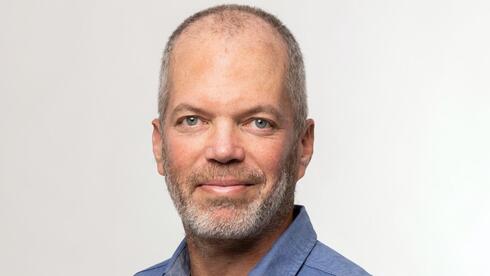
The Israeli investor, whose track record spans multiple high-profile semiconductor exits, is the chairman of DustPhotonics, which is being acquired by Credo Technology Group in a deal worth up to roughly $1.3 billion. The transaction includes $750 million in cash, $123 million in shares, and a potential earnout tied to performance milestones.
The deal is the latest in a long line of successes for Willenz, who has repeatedly placed early bets on companies operating at the technological bottlenecks of modern computing, from switching chips in the early internet era to artificial intelligence infrastructure today.
Willenz’s career has been defined by an ability to anticipate where value in the semiconductor industry will concentrate next. In the mid-1990s, he founded Galileo Technology, a pioneer in merchant silicon switching, which was acquired by Marvell Technology for $2.7 billion in 2001.
That success was followed by a series of bets on companies later absorbed by some of the largest technology groups in the world: Annapurna Labs, acquired by Amazon in 2015; Leaba Semiconductor, sold to Cisco Systems in 2016; and Habana Labs, acquired by Intel in 2019.
Even outside direct exits, his investments have continued to deliver. In 2024, Astera Labs, where Willenz was an early backer, emerged as one of the standout IPOs on Nasdaq and is currently valued at over $28 billion.
Taken together, these outcomes point to a consistent thesis: that the most valuable companies in computing are those solving the hardest infrastructure problems at moments of technological transition.
DustPhotonics fits squarely into that pattern. The company operates in silicon photonics, a field that replaces traditional electrical data transfer with optical signals, allowing faster and more energy-efficient communication between chips and systems.
Its technology integrates optical functions onto a single chip, reducing complexity and improving performance, an increasingly important advantage as artificial intelligence systems scale. Its products are already deployed in optical transceivers used in large-scale AI clusters, supporting speeds of 400G, 800G and 1.6T, with further development underway.
In a statement accompanying the deal, Willenz described silicon photonics as “a critical building block for AI infrastructure,” adding that DustPhotonics had focused on “the right architecture and execution.”
That framing echoes the logic behind his previous investments, many of which centered on technologies that later became essential components within broader systems.
Even as he exits DustPhotonics, Willenz is already positioning for the next phase of the AI cycle. His latest venture, Element Labs, co-founded with former Habana executives David Dahan and Ran Halutz, is focused on developing processors optimized for inference, the stage at which trained models are deployed in real-world applications such as image recognition and natural language processing.
Unlike Habana Labs, which targeted large-scale training workloads, Element Labs is aiming at smaller, localized data centers, pushing computation closer to end users. The approach is designed to reduce bandwidth and energy demands on hyperscale infrastructure while improving response times. The company raised $50 million last year, underscoring Willenz’s continued focus on emerging bottlenecks in AI computing.



