









“I’m talented, I’m skilled, I’m safe”: The psychological contract of high tech is breaking
Monday.com’s decision to cut 20% of its workforce has become a symbol of a deeper shift in Israeli high tech, as AI, war and uncertainty challenge the belief that talent and hard work can guarantee security.
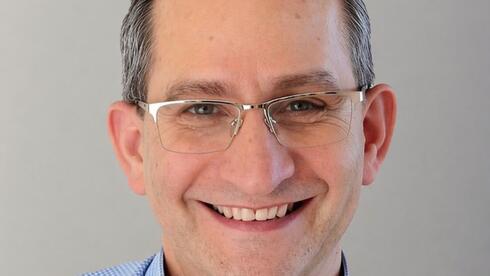
For its existence, the high tech sector has largely been characterized by a singular “psychological contract” between worker and organization. “I'm talented, I'm skilled, I'm safe,” says Ziv Elron, Co-Founder and Social Psychologist at IM.Tec. However, "today it seems that people in high tech who were once in the strongest position are now among those facing the greatest uncertainty.”
On 22 July 2026, it was announced that Israeli workplace software giant Monday.com would be cutting 20% of its workforce (620 employees worldwide), citing a restructure as it transitions from a work management platform to one designed for Al agents and human collaboration. The revelation follows an unrelenting wave of layoffs driven in most part by the AI revolution, which has seen some of Israel’s most prominent tech darlings slashing their workforces, including in 2026 alone: Artlist with 40% (200 employees), Wix with 20% (1,000 employees), and Playtika with 15% (500 employees). Off the back of this, Monday.com’s decision feels like a watershed moment for Startup Nation, and a turning point in the national psyche.
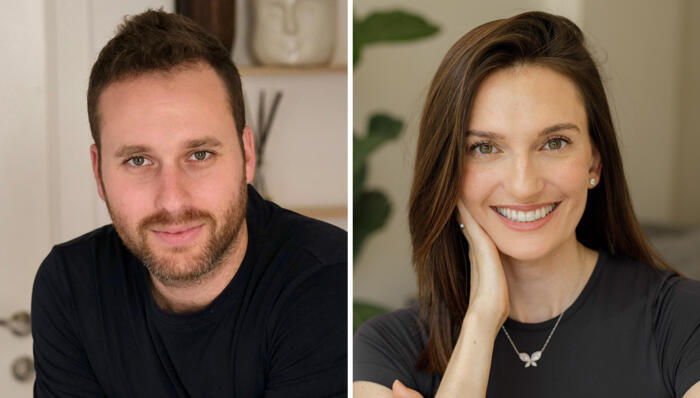
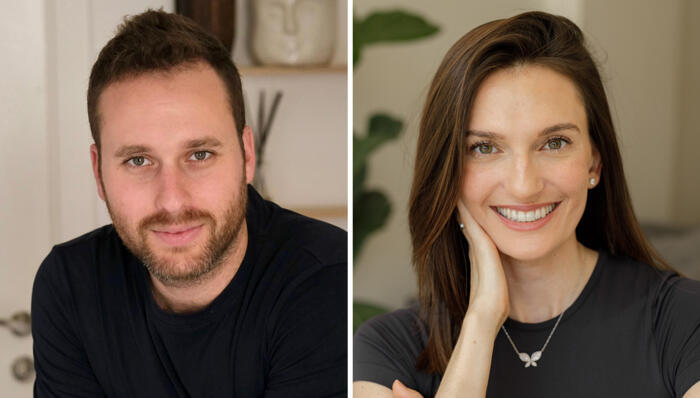
"Different from other people working in high tech and in startups around the world, Israel has an additional layer of uncertainty,” says Noa Matz, a startup psychologist and former VC Partner, denoting the cumulative result of ongoing war and geopolitical instability. “Now, lately, we've gained another layer of uncertainty, and that's occupational safety. We no longer feel safe, that this Israeli high tech industry can keep us safe.”
It feels fair to wonder how far the shockwaves of these layoffs will ripple beyond the immediate tech ecosystem, as cracks continue to be exposed in a sector once thought untouchable.
"We say that the Jewish mother used to want her son or daughter to be doctors or lawyers, and now every Jewish mother wants her children to be in high tech," says Dr. Hadar Ben-Sira Rothman, a licensed occupational psychologist and trauma-focused psychotherapist at NATAL.
Given how much of our national identity is tied to the aspirations of our high tech sector, what happens when the faith in Startup Nation falters?
First, there are the existential repercussions of mass unemployment spurred by performance-agnostic, industrial transformations like AI, which threaten to render legacy tech careers redundant seemingly overnight.
"Today's layoffs are different,” explains Dana Matalon Goren, VP HR at cyber startup Zero Networks. “We are entering a new era in which roles will keep disappearing, not because of performance, but because AI and agents are taking over entire functions.”
"We are seeing changes in hiring patterns," acknowledges Racheli Kogan, a Partner at the VC fund Symbol with a background in HR and behavioral science. Symbol recently launched Shushu, a platform connecting startups with their first early-stage employees.
"There are fewer frontend roles than there used to be, teams outside of cybersecurity are generally hiring more carefully, and companies expect each new hire to have a much bigger impact than before.”
"When a role, not a person, becomes redundant, it's tempting to internalize it personally," Matalon Goren continues. "Does being let go mean I'm not good enough?"

From Matz's perspective, "you can feel the anxiety everywhere." She notes that this sentiment comes from her experience as "a person who's been speaking heart-to-heart with managers, employees, working in this industry for more than 12 years," adding: "And it's heartbreaking to see".
In a country as small and interconnected as Israel, the strife of the individual can quickly compound into the collective state: a whole greater than the sum of its parts. The high-tech workforce (as with the whole country) is still reeling with the rolling trauma of the last few years, on top of demanding jobs and, for many, life-pausing sacrifices for Miluim (army reserves). As a result, it is not hard to imagine why the bandwidth to withstand another blow would be at a low point.
Having completed almost 300 days of reserve duty himself over the last three years, and with his proximity to the high-tech sector, Elron says of this plight, "I know it very closely".
From a workforce psychology perspective, Matz recognizes the Israel-Iranian conflict wave of March 2026, which lasted over a month, as “a point in time where it was just a little too much." Usually, during times of crisis like the previous war situations, “We have this ‘down’,” she describes. “People are less energetic, less able to collect themselves and bring themselves to work creatively and have fuel. Especially founders, to have fuel for, bringing more and creating more and pushing their company forward.”
“But then after a week or two or three, things are back to normal energy levels, and you see balance again,” she explains.
“What happened now is that I don't see this balancing,” notes Matz. “We didn't bounce back.”
After years of strain and no bounce-back time, Ben-Sira Rothman observes, “people lost their patience and they got angrier.” She continues: “It doesn't matter if you're angry at the government or at Hamas or the Iranians, you're angry at someone. And you need to take it out.”
Indeed, for many, the rising collective temperature has started to bleed into much of daily life in Israel. Ben-Sira Rothman says that a lack of patience from partners while some are on reserve duty has led to "many divorces". In the workplace, she continues, “I can tell you about the reservists, that at the beginning, [many companies] were very considerate, and now they're laying off people because they do reserve duty.”
Ultimately, says Ben-Sira Rothman, “the pool of empathy is empty.”
For anyone, as Matz notes, "unemployment creates a painful gap between how people have understood themselves and their current reality.” However, there is a unique approximation of self-worth that comes with highly coveted sectors like high-tech. As Ben-Sira Rothman describes, high-techists will often consider it “a really dominant part of [their] identity.”
Belonging to a name like Monday.com or Amazon carries with it a high degree of social clout; a globally retrievable status symbol. Many workers enter these companies holding “a psychological contract between the workers and the industry, of being a part of something that is big, is meaningful, is worth something,” Ben-Sira Rothman continues.
"This is where the ‘role vs. job’ distinction matters most,” adds Matalon Goren. “Because it turns a structural, organizational decision into a personal verdict."
According to Matalon Goren, the greatest risk factor to an individual right now is not the redundancy of their role, but that unemployment will be met with a sense of "nothing to reinvent from: no sense of your own transferable strength, no practice at starting over, no answer yet to the question of who you are when the title is gone."
Further, as Elron stresses, "The title may disappear overnight, but psychologically, the person is losing much more than the title. He loses his status, his belonging to the tech sphere,” as well being on “the ‘right side’ of the economical map.”
And this identity shock rarely stays confined to the individual. As Matalon Goren warns, “a professional crisis can become a family crisis almost overnight.” At home, Ben-Sira Rothman describes how couples may find it difficult to recalibrate “the balance of the power inside the house [after] a partner that contributed to the economy of the house is now in a state where they don’t contribute.”
Inevitably, the shame of a perceived high-stakes loss of social status and economic standing can compel some individuals to withdraw from their social circles entirely. "I know people who say ‘I'd rather not go meet friends’," says Ben-Sira Rothman, out of fear that they will be asked what they’re up to, "’and I'll have to tell them that I got fired.’"
Some of the psychological fallout can be attributed to the broken promise of the corporate “family,” an ethos the high tech sector has notoriously peddled for years. When sweeping cut-offs hit, it inevitably breeds a sense of betrayal. “No one believes that anymore,” says Ben-Sira Rothman.
“The moment you treat an employee like a family member and then cut them off you create significant harm,” adds Elron.
It raises the question of how this broken trust affects those who survived the cuts, and how a newly precarious environment impacts their performance. As Elron cautions: “They don't feel any more safe about their place and this is a very challenging position to be in.”
"The basics of a vibrant and creative startup is psychological and occupational safety,” explains Matz. To buffer the already considerable uncertainties of building a startup, these safety factors are ideally a given, or else, the corporate culture turns defensive.
In the midst of broad scope layoffs, Matz continues, and especially in the worst case: “When the criteria feel arbitrary, communication is vague and another round seems possible, people become politically alert and self-protective. Collaboration declines because sharing information, asking for help or admitting uncertainty suddenly feels risky."
Furthermore, Matz argues that AI has made the ingenuity of the employee secondary to efficiency. When "it's more important to get the job done than to bring yourself to work,” she remarks, “you can imagine how the outcome can become flat."
Matz offers a recent conversation as an example of a CEO struggling to pour their "essence" into their tasks, in this case, a particular document. "I can only focus on the layout of the page,” Matz recounts the CEO telling her. “I can't bring myself to bring more depth into this document... The only outcome I can bring now is the font size.”
Bearing all this in mind, the high-tech sector feels on course for a rather bleak future. So, is AI going to be the kryptonite of the Startup Nation? Not quite.
Firstly, the AI revolution has sent the pendulum swinging, and the market is yet to find its equilibrium. "Right now the system is shocked, and we’re working while the system is still in shock mode, and we're doing our best,” says Matz.
Even in this state, Kogan shares that since the launch of Shushu, “In just 20 days we already had around 120 open roles from really exciting startups. So alongside the layoffs, we're also seeing hundreds of founders building new companies and hiring their first teams.”
Secondly, and perhaps unfortunately, the experts argue that the fortitude forced by continuous national crises has actually left Israelis more prepared to weather this and other "earthquakes" in the long term.
"Since we didn't have psychological safety anyway, the reactions to this are more moderate because you can't trust anything anymore," explains Ben-Sira Rothman. "The basic things in life are shaken. So, I think people are more indifferent to the 'earthquakes.'"
"We got so used to things being interrupted," she continues, "and we built resilience."
While it may seem premature to look for a silver lining, the experts share an enthusiasm for a systemic change the country may actually be hungry for. Elron believes Israel's top talent has been "asymmetrically" hoarded by the high-tech sector, and that the current wave of layoffs "will cause a healthy diffusion."
"A lot of talented people are working inside the tech sphere, and it's a great opportunity to have them in a lot of other industries," he says, listing sectors like healthcare, education, and defense.
Indeed, while the discovery that “hard work, loyalty and strong performance do not necessarily provide security” is a hard pill to swallow, Matz remains optimistic. “I think it will create some kind of a transformation," she expresses, "and, for many people, maybe that's an opportunity for them to find who they really are, and grow from this crisis."
Similar to Elron, Matz predicts a gradual but “growing willingness to trade prestige and upside for stability, autonomy or a more sustainable life.”
She adds, “It's hard for me to accept the fact that so many people are comfortable and happy working in an environment, a high-tech environment behind a screen, nine hours a day for their entire lives."
Meanwhile, from Ben-Sira Rothman's recent experience, she notes, “I've heard from many, many reservists that their day-to-day job was so gray and boring, and Miluim gave them a new wave of purpose and capability.”
And as Elron affirms: “High tech is not the whole story of Israel.”
"High tech will still be strong, but it will be strong differently, with fewer people and more effectiveness. And I think people are not concerned, and more than this, they are welcoming it. They want to change to some extent.”
“It's a great opportunity for the people themselves to find a new path, a new unconditional identity,” he continues. After all, it is a precarious trap to “build my confidence on my title and professional identity” alone, as the foundation is so inherently fragile.
“So maybe something needs to be changed, because we are holistic people.”
First published: 12:26, 26.07.26



