








"The company is bigger than me": Why Mobileye's founder is stepping aside
Amnon Shashua says the timing reflects Mobileye's evolution into a global AI company rather than concerns over its recent performance.
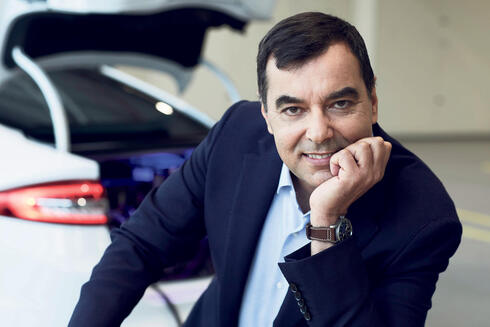
For nearly three decades, Prof. Amnon Shashua has embodied Mobileye. He founded the company, built it into Israel's largest-ever technology acquisition, guided it through a return to the public markets, and turned it into one of the world's most influential autonomous driving companies.
Now, after announcing his decision to step down as CEO, Shashua says the company has reached a point where it needs a different kind of leader.
"There is never a good time to retire," he said during a conference call following the announcement. "But of all the possible times, this is the right timing for me and the company."
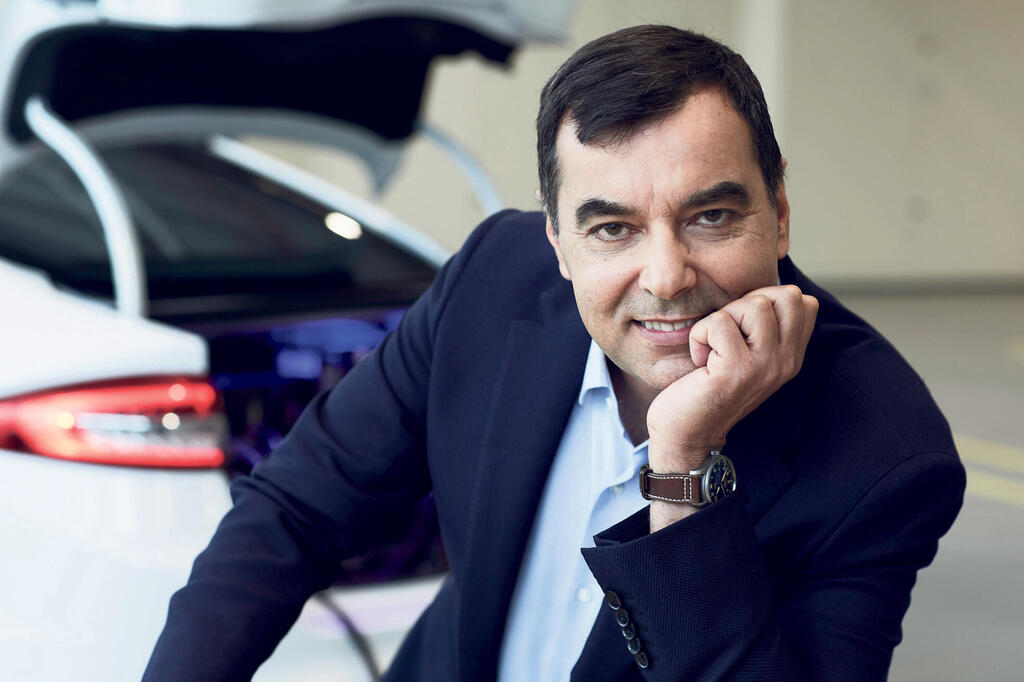
Rather than portraying the move as a step back, Shashua described it as a recognition that Mobileye is entering a fundamentally different phase, one that requires operational execution at a scale beyond what he believes can be combined with leading the company's long-term technological vision.
"We are at a crossroads of very significant operational expansion," he said. "We are entering the consumer market and a new market in robotics, all while the pace of development in AI is insane."
"I am originally a scientist and an entrepreneur," he added. "Doing both things at the same time, ongoing management and technological leadership, turned out to be too much of a burden."
Instead, Shashua wants to concentrate on what he views as Mobileye's next technological frontier.
"I chose to focus on the technological and strategic side and leave the operational expansion to new blood."
The comments suggest the succession is driven less by dissatisfaction with Mobileye's recent performance than by Shashua's belief that the company's next chapter demands a different management structure.
He also rejected any suggestion that his involvement in ventures outside Mobileye, including digital bank One Zero and AI21 Labs, had distracted him from running the company.
"Mobileye has always been my top priority," he said. "We currently have 4,200 employees who require close management care."
Nor did he attribute the company's declining share price to anything beyond broader market dynamics.
"The decline in the stock in recent years is not related to the other companies I founded," he said. "I am optimistic about Mobileye's continued growth, which will ultimately be reflected in the stock price. The company is bigger than me and than anyone else."
Although Mobileye's board has proposed appointing Shashua chairman after a successor is selected, he said even that decision remains open.
"I decided to postpone the decision until we see who the CEO will be, what their abilities and skills are, and how to properly structure the company's management for the long term," he said.
"I don't want to make decisions now that will narrow the pool of candidates."
While the leadership transition dominated attention, Shashua devoted much of the discussion to explaining why he believes Mobileye's biggest opportunities still lie ahead.
He pushed back against criticism that autonomous driving has taken longer than expected to become commercially viable.
"The autonomous vehicle vision has not been delayed," he said. "We are very close to removing the driver."
According to Shashua, Mobileye's first commercial robotaxi deployment with Volkswagen's MOIA is scheduled to begin by the end of this year, with expansion into additional cities planned during 2027.
At the same time, he emphasized that autonomous driving is no longer the company's only growth story.
"Beyond robotaxis, Mobileye has a strong business core and an immediate revenue engine of almost $2 billion from driver assistance systems with automakers," he said.
Perhaps the clearest indication of where Shashua intends to devote his attention came when discussing Mentee Robotics, whose acquisition drew criticism from some investors.
For him, humanoid robotics is no side project.
"Mentee is a central pillar of the infrastructure we are building," he said.
"In Physical AI, there are currently very few companies with such technological breadth, in fact, only us and Tesla."
Shashua said Mobileye expects the first robots carrying its own brand to reach the market in 2028.
He also offered an unusually warm assessment of Intel, despite years of speculation over the semiconductor company's ownership of Mobileye.
"In 2017, we were a company of 460 employees with revenue of $300 million," he said. "The journey with Intel was extremely positive."
He credited Intel with transferring hundreds of employees and radar technology that has become a core component of Mobileye's robotaxi platform.
Looking beyond Mobileye, Shashua dismissed suggestions that his next chapter could involve public office.
"There is no thought of public activity," he said. "The answer is no."
Instead, he argued that Mobileye itself demonstrates what Israeli technology companies can become.
"Mobileye is proof that it is possible to build a huge company with significant profits from Israel," he said.
He added that Israel has "tremendous potential" to lead in artificial intelligence, provided the country continues to invest in the field.



