










Chinese fund: “The Chinese government has imposed a ban on any new investment in Israel”
Kibbutz Hanita sues controlling shareholder of Hanita Lenses, the Chinese Ballet Vision fund, for $11 million, claiming refusal to buy remaining shares violates their agreement amid post-war financial strain.
Members of Kibbutz Hanita on the northern border are demanding $11 million from the controlling owner (80%) of “Hanita Lenses,” the Chinese Ballet Vision fund, claiming that it is refusing to exercise the option to purchase the remaining shares in the factory as stipulated in the agreements between the parties. This emerges from a lawsuit filed by the kibbutz at the end of last week in the Tel Aviv District Court.
In a letter of response from the Chinese fund to the request to exercise the option, which was attached to the lawsuit, the Chinese controlling shareholder claims, among other things, that “since the outbreak of fighting in Israel, the Chinese government has classified Israel as a high-risk area (red category) and has imposed a ban on any new Chinese investment in the country. As long as this restriction remains in place, there is no real operational possibility of exercising the option.”
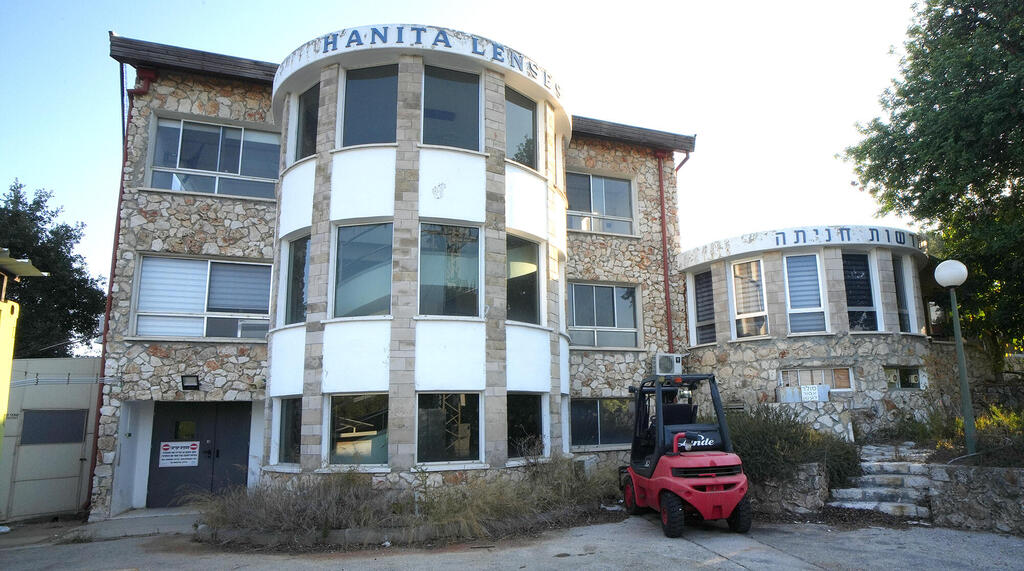
According to documents attached to the lawsuit, Kibbutz Hanita sold 74% of the factory, which specializes in the production of intraocular lenses for medical purposes, to the Chinese fund in 2021 in exchange for $35 million ($25 million to the kibbutz members and an additional $10 million injected into the factory). As part of the set of agreements, the lawsuit claims, the Chinese fund granted the kibbutz members, who remained minority shareholders in the factory, an option to oblige it to purchase the remaining shares for about $9.5 million, equivalent to about $11 million in today’s terms, by early December 2025.
According to the kibbutz, following the first sales agreement its holdings were diluted in 2022 in two follow-up agreements, so that the Chinese fund’s stake in the factory currently stands at about 80%. The first dilution, about 3%, was made in return for an additional investment of $7 million. The second dilution, another approximately 3%, was made against a future investment of about $8 million at an unknown date, an investment that has not yet been made. “Last December,” the kibbutz’s lawsuit states, “the plaintiffs notified the buyer of the exercise of the option granted to them in the sales agreement. The plaintiffs are in dire need of funds following the ‘Swords of Iron’ war. Kibbutz Hanita, located very close to the border, has experienced two extremely difficult years, and the funds are needed for the rehabilitation of the kibbutz and its members. This is especially true for the older kibbutz members, who will be particularly affected by a delay in receiving the funds.”
Regarding the circumstances behind the kibbutz’s desire to sell the remaining shares to the Chinese fund, it was written that “the factory has been fully managed in recent years by the purchaser, and the plaintiffs are not involved, and are even excluded, from management.” The kibbutz added that “the company’s board of directors does not meet, and the factory is managed centrally by a representative of the purchaser. Under these circumstances, the plaintiffs have come to the conclusion that their continued holding of the factory’s shares is meaningless and pointless.”
However, according to the kibbutz, despite the Chinese fund’s apparent contractual obligation, “the purchaser is violating its obligation to purchase the remaining shares from the kibbutz. The purchaser is doing so in flagrant violation of the provisions of the agreement and the obligations it assumed under it.”
Why is the Chinese foundation refusing to exercise the option it granted to kibbutz members to purchase their shares? According to a letter of reply sent last December by Liu Yuxiao, director of the Ballet Vision fund and acting CEO of the factory, to Hanita community manager Meir Oz, there are two reasons: first, the factory’s heavy losses, which required large investments by the fund; and second, the Chinese government’s alleged prohibition on making investments in Israel since the start of the Swords of Iron War.
“Over the past three years, the company has suffered severe operating losses totaling approximately $15 million, which completely exhausted all additional capital injections we made after the acquisition in 2022,” wrote the representative of the Chinese fund. “In addition, the company has accumulated bank debt of approximately $4 million, created mainly between the fourth quarter of 2024 and the first quarter of 2025 in a desperate attempt to reverse the trend of business deterioration, an attempt that ultimately failed. In March 2025, the company had only about $100,000 in cash and was in a serious operational crisis.”
“We tried to prevent a collapse”
Yuxiao continued: “It is against this backdrop that I took on the role of CEO in March 2025. I have invested unprecedented efforts to stabilize the company. My sole goal was to prevent the company from collapsing into bankruptcy. Thanks to these intensive efforts over the past eight months, I am pleased to report that the company is on track to achieve operational balance (break-even) this year. This is a significant milestone after three consecutive years of heavy losses, although I recognize that significant challenges still exist. However, the current fragile recovery requires complete focus and attention. Any distraction from the critical mission of improving the company’s operations could jeopardize the progress that has been made. Without maintaining operational momentum, discussions regarding the option are impractical and even premature.”
Yuxiao also linked the fund’s refusal to exercise the option to political circumstances. “I would like to bring to your attention a material external limitation,” he wrote to Hanita’s community manager. “Since the outbreak of hostilities in Israel, the Chinese government has classified Israel as a high-risk area (red category) and has imposed a ban on any new Chinese investment in the country. As long as this limitation remains in place, there is no real operational possibility of exercising the option. This is why Hanita’s China division relies on shareholder loans from us, we cannot make additional capital injections into the company, which in turn limits the China division’s ability to raise the necessary funding.”



