










Israeli tech’s dual reality: Mega deals vs. rapid AI exits
The market balances headline-grabbing acquisitions with fast-moving young startups.
Israeli technology companies recorded a dramatic surge in exit activity in 2025, driven by blockbuster deals and an unprecedented rise in initial public offerings, according to PwC Israel’s annual Exits Report. While the headline numbers point to extraordinary growth, a closer look reveals a bifurcated market: mega-deals dominate the top end, while small, fast-moving acquisitions of young AI-focused startups proliferate below.
Total transaction value, combining mergers, acquisitions, and IPOs, jumped approximately 340% to $58.8 billion, compared with $13.4 billion in 2024. However, this surge is largely skewed by the $32 billion Wiz acquisition, a singular deal that set a new benchmark for Israeli tech exits. Excluding Wiz, deal value still doubled over the previous year, while the average acquisition size fell 40%, from $268 million in 2024 to $160 million in 2025.
“Breaking the valuation barrier for mega-deals is undoubtedly a significant event and an expression of the strength of the local talent,” said Yaron Weizenbluth, PwC Israel’s Tech Partner and Territory Assurance Leader. “Both the Wiz and CyberArk deals set a new upper threshold for Israel on the global exit map and prove that the country holds a special place in defining the future of global cybersecurity.”
It should be noted that these figures do not include the reported $7 billion acquisition of Armis by ServiceNow, which was announced after the reporting period. Including this transaction would further increase Israel’s total exit value for the year.
The report highlights a remarkable jump in IPO activity, with seven Israeli companies going public in 2025 for a total valuation of $14.6 billion, up from six IPOs worth just $781 million in 2024. Five of these IPOs were conducted on U.S. stock exchanges, including Navan at $6.2 billion and eToro at $4.4 billion, signaling a renewed return of Israeli tech to Wall Street. The average IPO valuation soared to $2.1 billion, a 1,515% increase compared to 2024.
While mega-deals like Wiz and CyberArk dominate the headlines, a growing number of smaller acquisitions, often of companies founded less than three years ago, are shaping the broader market. PwC Israel recorded 22 transactions of young companies, nearly half of them AI-focused, mostly valued under $50 million.
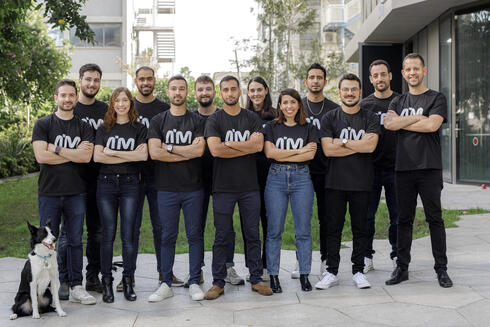
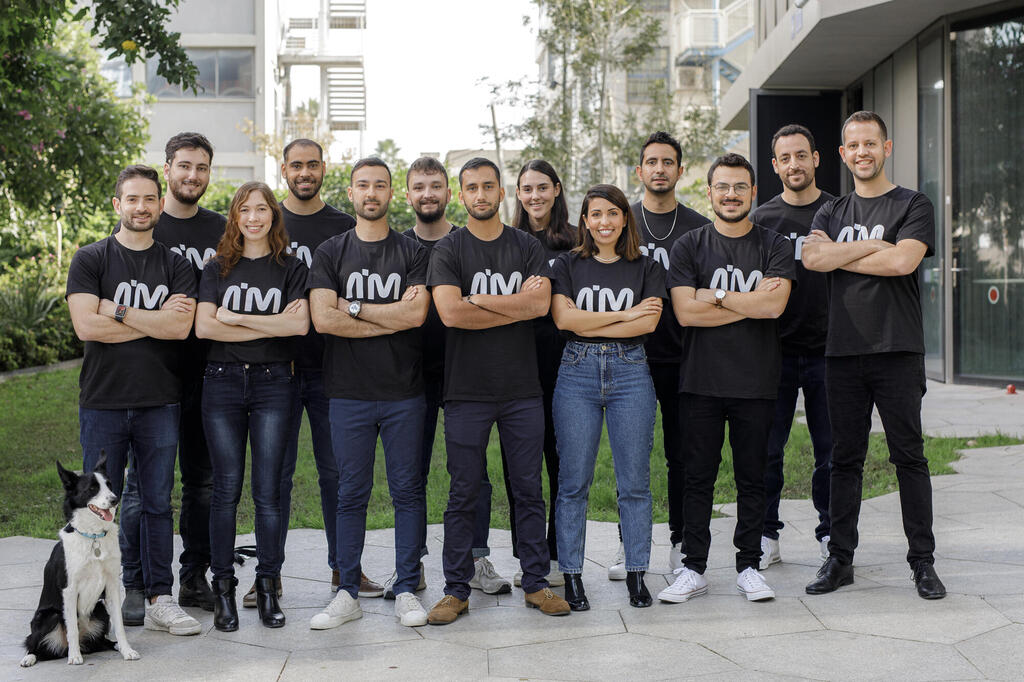
“Such companies, thanks to small, efficient, and fast-moving teams, generate significant interest from larger tech firms seeking either to boost their AI capabilities or to make defensive acquisitions,” Weizenbluth noted. Examples include Base44, acquired by Wix for $80 million a year after founding, and Aim Security, sold to Cato Networks for $350 million before its third anniversary.
Despite this proliferation of small exits, mid-sized deals between $100 million and $500 million decreased sharply, falling from 44% of total deals in 2024 to 25% in 2025. Conversely, nine exceptionally large deals, ranging from Wiz to fintech acquisitions like Next Insurance ($2.6 billion) and Melio ($2.5 billion), accounted for $53 billion, a 679% increase over 2024.
Cybersecurity and AI remained the most active sectors in deal count, though total values tell a nuanced story. AI & Cloud led with 20 transactions totaling $1.5 billion, while Cyber deals numbered 19 with $34 billion in value, mostly due to Wiz. Fintech, however, emerged as the primary value driver, with 16 deals totaling $16.4 billion, including multiple IPOs. Mobility and logistics, led by Via’s $3.6 billion IPO, along with digital health, defense tech, and enterprise software, each recorded six transactions.
The report highlights a shift toward domestic activity. The number of “Blue and White” deals, involving both Israeli acquirers and sellers, doubled from 15 in 2024 to 30 in 2025, although their aggregate value dropped 41% to $1.9 billion. Meanwhile, American acquirers continued to dominate, executing 43 deals (51% of total) valued at $51 billion, followed by European and Australasian buyers with more modest involvement.



