









An unlikely AI founder is trying to fix one of medicine’s most human problems
Galit Desheh had no background in computer science when she founded Ozz Health. Drawing on a career in trauma, gender and empathy, she is developing an AI system intended to help patients understand what is happening to them and feel more in control.
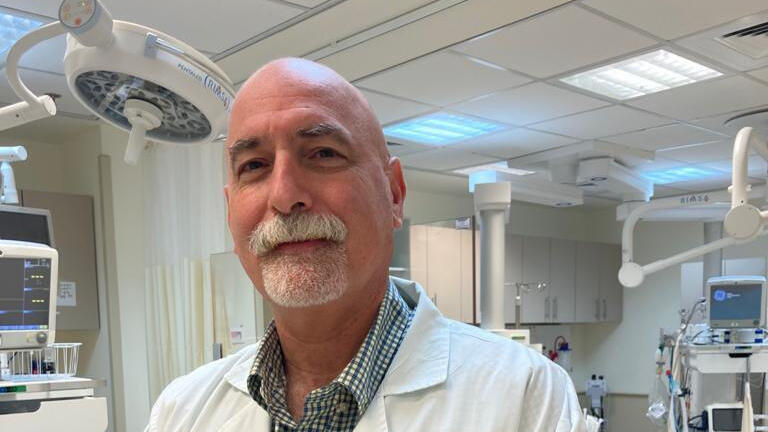
“This is my fifth career,” says Dr. Galit Desheh. “I’m 56 years old, with no technological knowledge or background in computer science, and yet I started a startup that brings together everything I’ve done in my life. If someone had told me this a few years ago, I would have laughed out loud.”
Indeed, Desheh has made a name for herself in very different fields as an expert in gender and trauma. She served as CEO of the Israel Women’s Network, advised companies on diversity and inclusion, and ran the education department at the Tel Aviv Sexual Assault Crisis Center. She holds a doctorate in political science with a specialization in gender from the Hebrew University, in partnership with Ulster University in Northern Ireland. In her most recent role, she came closest yet to the tech sector, when she was recruited to run Power in Diversity, an initiative led by venture capital funds to increase the presence of women in high-tech.
Now she is the entrepreneur heading Ozz Health, a startup that aims to improve the experience of hospitalized patients and their companions through an app that accompanies them throughout the stages of hospitalization, provides personalized information that is updated online according to their treatment status, and helps reduce anxiety.
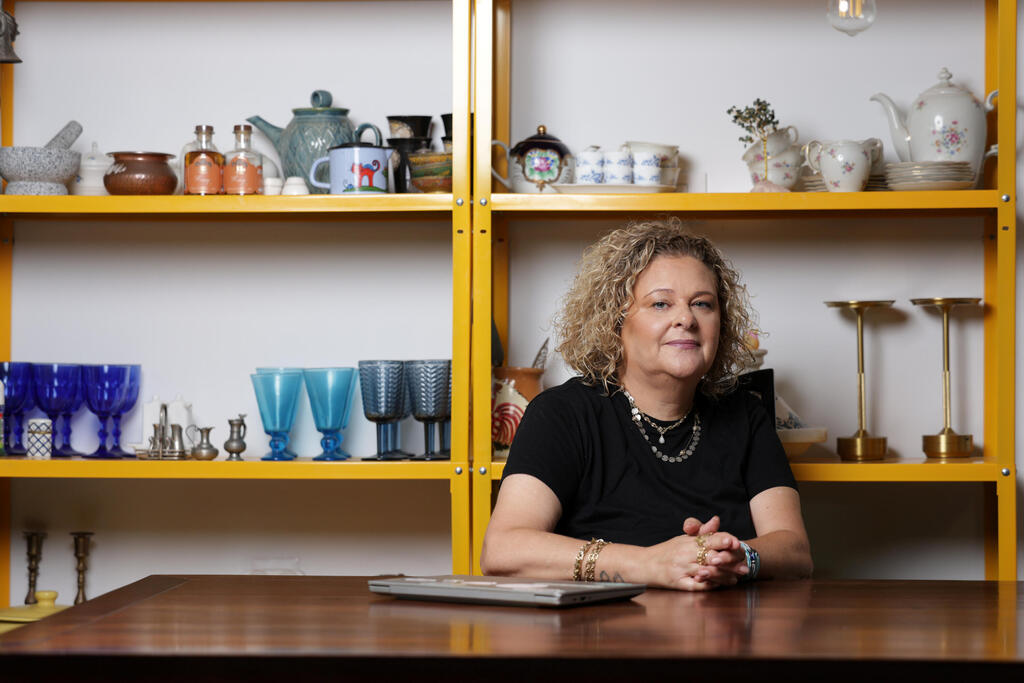
“As someone who has worked in trauma for many years and treated female survivors of sexual assault, I know that the first thing you need to give a person who has experienced injury or trauma is the feeling that their needs are understood and that control over their life is returning to their hands,” says Desheh. The problem, she says, is that hospital staff are absorbed in trying to provide the best possible medical treatment and do not always have the capacity to respond to the mental state of the patient and their close family. “Bottom line, the moment we enter a hospital and put on the gown that opens in the back, we feel like we become worthless,” she says.
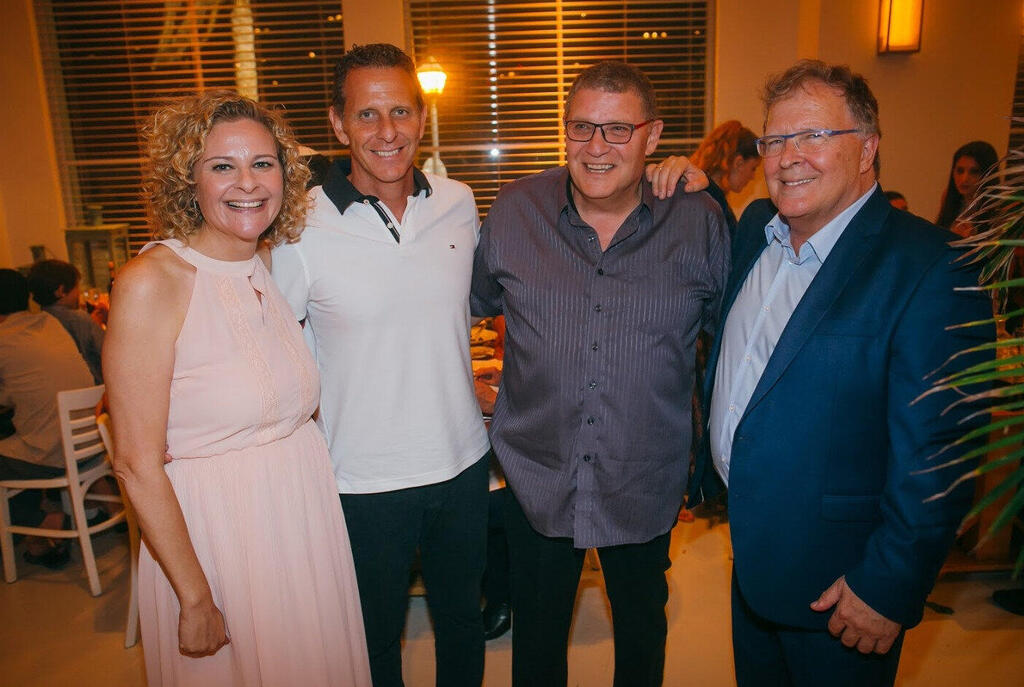
This distress touches on a very personal and painful point for Desheh: the death of her brother, Oz Desheh, from a brain tumor at the age of 59. “It was a terrible blow,” she says. “He was the backbone of so many people and so many things. Of his kids and his partner, and of us too.” By “us,” she also means her brothers Eitan Desheh, an executive in the food industry, and Eyal Desheh, one of the senior figures in Israel’s business community, who previously served as CFO of Check Point and Teva and as chairman of Isracard. “With the disease he had, you can hold on for up to three years, but we only got 10 weeks,” she says. “Sometimes people tell me, ‘It’s okay, it’s good it was short, he didn’t suffer’, but he suffered, and so did we.”
Nine years have passed since then, but the experience left its mark on her. “For four years I didn’t set foot in the hospital where Oz was admitted,” says Desheh. “Eyal says that with me everything gets sorted into what’s traumatic and what isn’t, because that’s my profession, but that whole period was a very, very difficult crisis. We fell through the cracks and had to chase people in white coats from morning to night. And we’re supposedly ‘connected.’ I remember one specific incident, when we came looking for Oz during one of his hospital stays and couldn’t find him on the ward. After nerve-racking minutes of terrible pressure, it turned out that overnight they had moved him from rehab to internal medicine without anyone bothering to update the family.
“After that incident, my sister-in-law took Oz out of the hospital and set up a home hospice for him in the living room. We would come see him almost every day even though he was no longer conscious. On the last day, she called at six in the morning and said, ‘Come.’ So we all came, the siblings, the daughters, the spouses. My sister-in-law, that crazy woman, cleaned the house beforehand, brought out snacks and alcohol for us. We sat, drank and made jokes. That’s how we said goodbye to him, like a crazy Italian family from the movies.”
These experiences stayed with Desheh, and to process the trauma, she talked about them. That led to a chance conversation with a neighbor, a serial entrepreneur, about his own complicated experiences with his elderly parents, who were in and out of hospitals. He told her about an idea he had for creating a kind of “knowledge library” that would guide people through the healthcare system. “I listened to him, and it connected my own story, but also both of my professional fields: the world of identities and the world of empathy and trauma.”
That’s how the startup Ozz got started, a play on her deceased brother’s name and the Land of Oz. “Our goal is to keep patients and their companions on track the whole time. Like they say in ‘The Wizard of Oz’, the main thing is not to stray from the yellow brick road, not to get tangled up and wander off to the sides, because that’s where things go wrong,” Desheh explains. That’s also why she chose the name “Dorothy” for her app, after the book’s heroine.
Still, how does a trauma treatment expert become the founder and CEO of a startup that builds software?
“In 2017, I came closest to high-tech, when Alan Feld of the venture capital fund Vintage looked for someone to lead an initiative to promote diversity and inclusion in startups. I didn’t understand anything about the field, and my partner, Ronen Drori, who’s an organizational consultant, sent me a link to a glossary of high-tech terms. I just sat down and studied. Coming from the social sector, it took me a while to digest this industry. And eventually I realized that at my core, I’m an entrepreneur too, and I love innovation.”
Matching the caregiver to the patient by language, gender and skin color
The product Ozz is building is the Dorothy app, which is installed on hospitals’ information systems and accompanies patients from the moment they enter the emergency room. But unlike a standard medical app, it doesn’t just display information. It also tries to understand who the patient is and adapt itself to them, with the aim of reducing anxiety and giving them a greater sense of control over the situation. For example, Dorothy will explain to the patient that they are waiting for a blood test, what the purpose of the test is, how long it will take, and how invasive or painful it may be. Later, it will also show them the test results and explain each measurement.
“We call this an Identity Based Company,” Desheh explains. “The system is based on AI and uses identity components found in medical information systems: age, sex, place of residence and occupation, as well as additional characteristics more relevant in the United States, like ethnicity, in order to tailor how information and guidance are given to the specific person. For example, right now we’re in talks with a hospital in Baltimore, which is considered the shooting capital of the United States, so our system also takes into account the fact that this is a post-traumatic population.
“One doctor asked me: ‘Will this system make patients and their families hit me less?’ And I answered yes, because when the patient is informed and feels more in control, and the family also has more information, everyone is calmer.”
Does the system also give medical recommendations?
“Absolutely not. Its goal is to accompany and explain what the medical staff is doing and give information about what comes next in the process. But the way all of this is presented can change depending on the user. For example, a 30-year-old Black lawyer might want more professional terminology and a faster pace. She needs to feel like she’s not being brushed off there. An 80-year-old, on the other hand, might need a more emotional response, to feel like they’re being seen.
“The system has an avatar, a personalized human figure, which is also based on research. For example, one study showed that Black women aged 50-60 in the United States prefer to be treated by a Black woman. That raises the odds that they’ll follow the instructions even after being discharged. That’s a substantial issue, because only 20% of Americans continue with the treatment protocol they’re given after being discharged from the hospital, which leads to repeat hospitalizations.”
And a Black avatar will solve that?
“You’d be surprised. The president of one hospital I met with told me they had a 70-year-old Spanish-speaking patient. They brought her an interpreter throughout her hospitalization and gave her all the post-discharge instructions in Spanish. When they asked if she understood what she needed to do, she said yes, but when asked whether she would follow the instructions, she shook her head no. Why? Because her doctor, who happened to be the head of the department, was a relatively young woman, while she only trusts older male doctors with white hair.”
Still, you’re basing this whole process, which is meant to address a very human need, on AI. How can a machine give anxious patients empathy?
“Empathy isn’t about being nice. Empathy is the ability to see the other person according to their needs. And in certain cases, AI can actually do that better than humans, because people come with unconscious biases and with limitations of time and capacity. Take, for example, medical staff who treat elderly dementia patients, they often have to explain the same thing over and over, both to the patient and to family members who don’t always come together. Here AI is a game changer, because it doesn’t get tired and it doesn’t get frustrated.”
AI also bypasses the prejudices medical staff might hold. It doesn’t assume, for example, that women are hysterical, that elderly people simply like to complain, or that people with darker skin are less intelligent. It gives everyone the same response, with sensitivity and to the point. “It doesn’t fall into the pitfalls that people fall into because they have unconscious biases that can’t be corrected,” says Desheh.
Why would hospitals even bother with this headache? Their job is to treat the body, not the mind.
“American hospitals are losing money, and there’s an epidemic of loss-making centers shutting down across the United States. They can reduce their losses if they receive grants from the government, and those depend on patient satisfaction levels. There’s a standardized system that measures this, and if the rating is especially low, the government can also impose a fine. Beyond government grants, highly rated hospitals can also charge more for the care they provide from private insurance companies. Companies that provide insurance for their employees and bring hospitals into network agreements also check the satisfaction-system scores first.
“So our assumption is that hospitals will be willing to pay for their patients’ use of our software, which also won’t require any action from staff, which is usually the main bottleneck to adopting new software. American hospitals’ profit margins are so thin that even an extra million dollars in grants to a hospital can be the difference between a loss and a profit.”
“Post-traumatic people are more susceptible to anti-democratic manipulation”
Ozz was founded in 2024 by Desheh together with Tanya Abarbanel (CPO) and Yaniv Sidi (CTO), and employs five people, including Prof. Mike Drescher, head of the emergency medicine department at Beilinson Hospital. The startup is conducting research with the emergency department of Beth Israel Hospital in Boston and is running a pilot at two hospitals in the United States and one in Israel.
The company has existed for more than two and a half years already, why haven’t you raised money until now?
“Every time we thought about starting to raise money, the war would flare up and we’d stop. But we do want to start raising capital.”
What about bringing a system like this to Israel?
“Israel is a third-world country when it comes to dialogue with patients. The only hospital that has a system trying to do something in this regard is Ichilov. So here in Israel I’m working on something a bit different, more focused on the trauma of residents of the Gaza border region and accompanying them through medical processes. We still don’t know well enough how to treat communal trauma. These are people who haven’t necessarily been diagnosed as post-traumatic. And the state, which pushes a narrative of heroism, isn’t looking to diagnose them either. But the healthcare system has to learn to build support systems here. A sick and weak society is a society that’s more susceptible to manipulation, including the influence of anti-democratic forces.”
What exactly are you doing in the south?
“We proposed to the Sderot municipality that we build a system based on our methodology, so that essentially every resident could use it to get guidance through medical processes. Beyond the effects of trauma, which make people ask fewer questions, this area also has a problem of a lack of available appointments and long waits that cause many of them to drop out along the way. People who want to see a specialist can’t wait five months. Especially not people who live in trauma-affected areas, some of whom tend to avoid medical treatment altogether because it floods them with bad memories.”
Ozz’s Israeli arm is called Lior’s Lighthouse, in memory of Lior Tarshansky, 15, who was murdered in his home in Kibbutz Be’eri on October 7. His sister Gali was kidnapped to Gaza and released in the first deal, after 54 days in captivity. Desheh met their mother, Reuma, through her volunteer work with the nonprofit Bayit Al HaYam (“House by the Sea”), where she supports a group of mothers who lost their children in the massacre.
Lior’s Lighthouse is part of the Next October startup incubator, founded by former Minister of Science Izhar Shay in memory of his son Yaron Uri Shay, who was killed in the battle for the Gaza border region. The company operates within the Resilience HUB in Sderot, funded by the National Insurance Institute, Sheba Medical Center and the Sderot municipality.
“I call this a memorial startup,” Desheh says with a sad smile, “but the very fact that this tech-and-business venture is wrapped in a layer of impact, of work for the greater good, is critical for me, and for all of our lives today.”



