










OpenAI picks Israel's Sheba as first hospital outside the U.S. for healthcare AI
The strategic partnership gives Sheba Medical Center early access to OpenAI's healthcare AI models, allowing physicians to test cutting-edge clinical tools before they are rolled out more broadly.
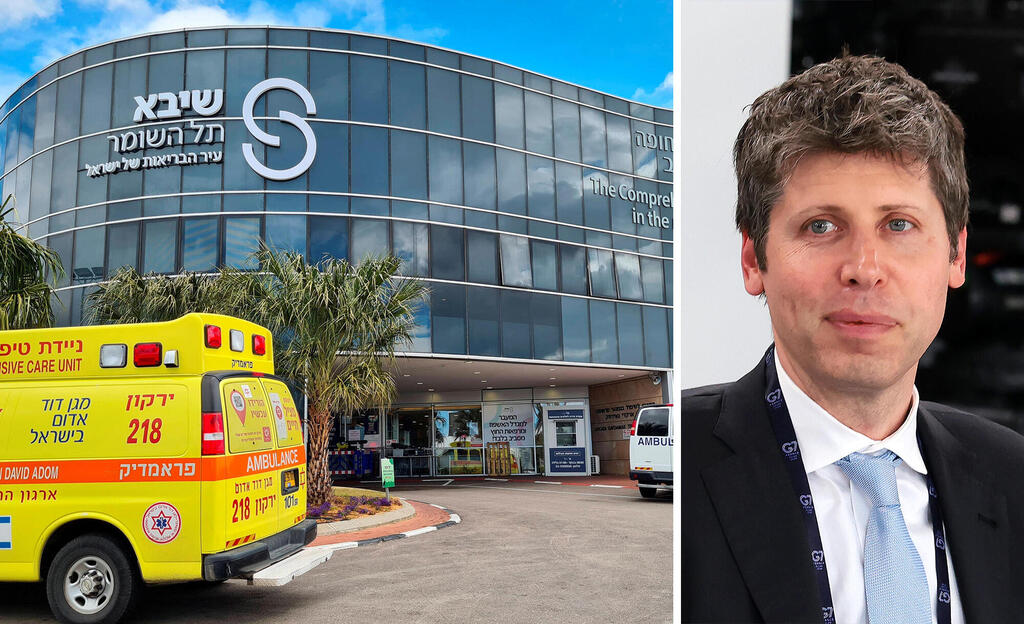
Sheba Medical Center, through its ARC innovation arm, has signed a strategic partnership with OpenAI that will give physicians at Israel's largest hospital access to the artificial intelligence company's healthcare models. The agreement makes Sheba the first hospital outside the United States to join OpenAI's healthcare program and gain access to its dedicated suite of medical AI models.
Calcalist has learned that the agreement was signed with Nate Gross, OpenAI's Head of Health. A delegation from Sheba is scheduled to visit OpenAI's headquarters in August for a series of meetings with senior executives.
The partnership covers OpenAI's healthcare models, including ChatGPT Health, which were introduced in January and are currently available only at a limited number of U.S. hospitals. The models are designed specifically for clinicians, helping them make medical decisions and develop treatment plans based on the latest clinical research. The system is encrypted and built to meet the security requirements of healthcare organizations.
Under the agreement, Sheba physicians will receive early access to OpenAI's latest healthcare models before they become broadly available. The collaboration also deepens the research relationship between the two organizations as part of OpenAI's healthcare program.
Dedicated teams at Sheba will participate in product development, gain insight into new models during their development, attend OpenAI healthcare events, and build internal applications optimized for the platform. As part of the collaboration, Sheba will also integrate its own clinical protocols, treatment pathways, and institutional guidelines into OpenAI's models, enabling responses that reflect the hospital's approved standards and, in the future, potentially support recommendations tailored to Israeli clinical practice.
On a day-to-day basis, clinicians and researchers will be able to submit patient case descriptions and receive responses that include relevant medical literature, supporting studies, journal references, publication dates, and other information designed to assist clinical decision-making. The citations allow physicians to independently verify the evidence underlying each recommendation.
Beyond clinical decision support, the platform is expected to assist with administrative and operational workflows, helping reduce documentation burdens and improve efficiency across the hospital.
The initiative builds on Sheba's growing portfolio of AI-based healthcare technologies developed through its ARC innovation center. These include solutions from Aidoc, which uses AI to analyze medical imaging and accelerate the diagnosis of critical conditions, and SmartER, an emergency department platform that automatically documents and summarizes patient encounters.
ARC was established in 2019 by Sheba Director General Prof. Yitshak Kreiss and Chief Transformation and Innovation Officer Dr. Eyal Zimlichman to accelerate digital healthcare innovation. The center enables startups to test new technologies within the hospital, develops strategic partnerships with healthcare institutions worldwide, and operates an investment platform in collaboration with TriVentures.
"The healthcare system is one of the fields where artificial intelligence can have the greatest impact," OpenAI said in a statement. "We are excited to collaborate with Sheba to make advanced AI capabilities available to doctors, researchers, and healthcare professionals."



