










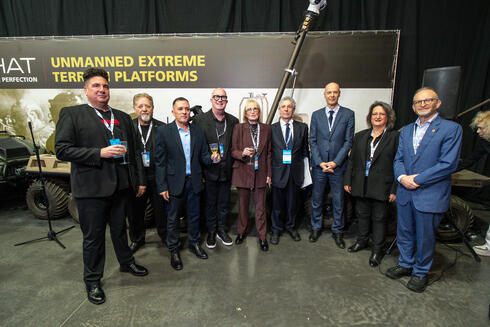
“Israeli defense tech is tested in the operational arena, including in Iran”
Former Israeli Air Force commander highlights battlefield validation of technology.
Senior Israeli defense officials and industry executives delivered an unusually direct message on Tuesday about the country’s strategic posture: Israel is not only managing a complex and evolving security campaign, but is preparing for the next phase of aerial and autonomous warfare.
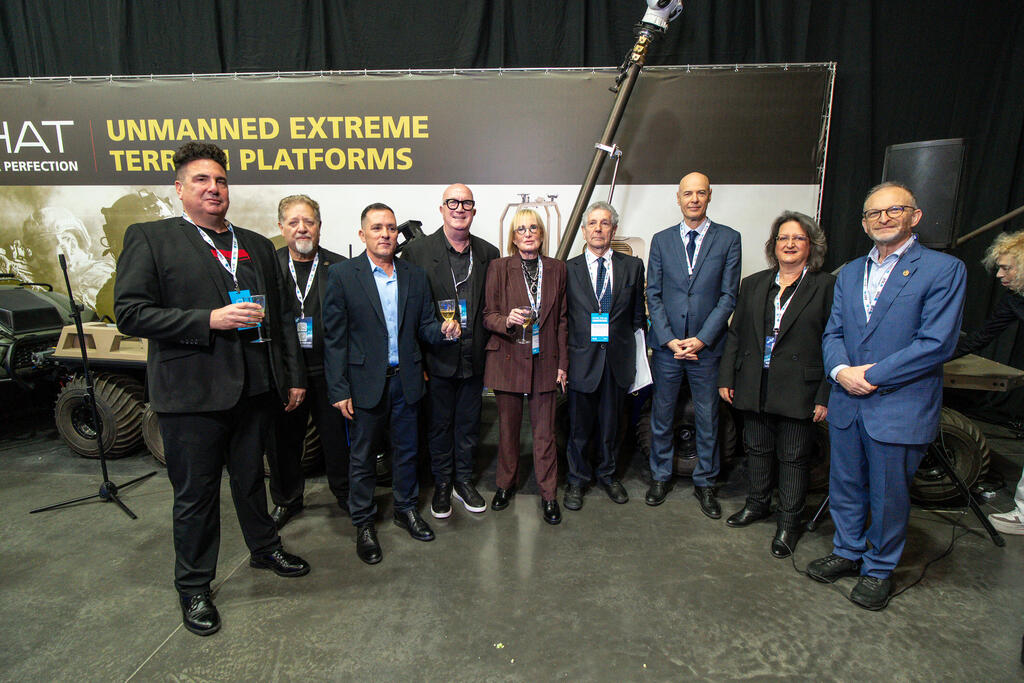
Speaking publicly at the Defense Tech.IL Conference organized by the Stier Group, former and current defense leaders emphasized operational readiness across multiple layers of defense, the growing integration of artificial intelligence, and the forthcoming deployment of advanced missile interception systems, including Arrow 4.
Brigadier General (Res.) Ran Kochav, former commander of the Air Force’s Air Defense Array and former IDF spokesperson, described Israel as maintaining high readiness “at all layers of defense, from early detection and warning, through multi-layered interception to rapid and precise response capability.” The emphasis, he said, is not on any single system but on coordination between arrays capable of absorbing “overload and combined threats.”
“We are managing the campaign responsibly,” Kochav said, stressing the prioritization of vital infrastructure and sensitive sites, along with the ability to escalate alertness when required.
Major General (Res.) Amikam Norkin, former commander of the Israeli Air Force, framed Israeli military technology as battle-tested rather than theoretical. Israeli systems, he said, are “tested where it really matters, in the operational arena, including in Iran.”
Norkin argued that Israel’s comparative advantage lies not only in technological innovation but in the ability to translate that innovation into operational capability. “The real advantage of the Israeli security industry and the Air Force is not only in technological development,” he said, “but in the professional ability to transform it into relevant and precise operational capability that achieves defined goals.”
Boaz Levy, CEO of Israel Aerospace Industries (IAI), provided a more forward-looking assessment. He said the company is developing new capabilities daily and working to bring them into operational use, pointing in particular to the Arrow 4 missile defense system, which is intended to replace Arrow 2.
“When we prepare a new system, we look at tomorrow’s threats, not existing ones,” Levy said. Arrow 3 and Arrow 4 operating together, he added, will introduce more advanced interception capabilities against aerial targets. “With the help of Arrow 4, we will increase Israel’s interception successes.”
Levy also indicated that Israel is already looking beyond current systems. Development of Arrow 4 and Arrow 5 is advancing in parallel, he said, through what he described as a “deep engineering-operational process.” The objective is to expand defensive capabilities against evolving threats characterized by greater range, speed and complexity.
Beyond missile defense, Levy highlighted a broader transformation under way within Israel’s defense ecosystem. Future systems, he said, will incorporate more autonomous tools and artificial intelligence, both within platforms themselves and in command-and-control rooms that process battlefield data and transmit instructions to forces in the field.
“The change is great,” Levy said, describing a shift from isolated systems to integrated, AI-supported operational environments.



