










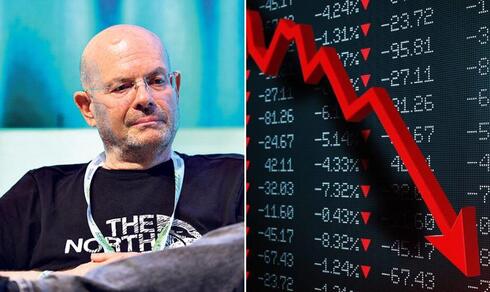
"It’s excellent that some of the air is coming out of the markets"
Yelin Lapidot co-CEO Yair Lapidot says years of exceptional gains have distorted investor expectations, while warning that the massive sums poured into AI infrastructure may not generate the returns needed to justify them.
The selloff on Wall Street intensified on Friday, with technology and semiconductor stocks bearing the brunt of the decline. The Nasdaq plunged 5.3%, taking its weekly losses to approximately 10%, while the S&P 500 fell 3.7% on Friday and lost 8.6% over the week. The S&P 500 was also more than 10% below its October 6 record high, placing it in correction territory, generally defined as a decline of at least 10% from a recent peak.
The downturn has raised questions about the sustainability of the enormous investments being made in artificial intelligence infrastructure. Technology and chip companies have been among the biggest beneficiaries of the AI boom, but investors are increasingly questioning whether spending on data centers, processors and supporting infrastructure will ultimately generate returns sufficient to justify its scale.
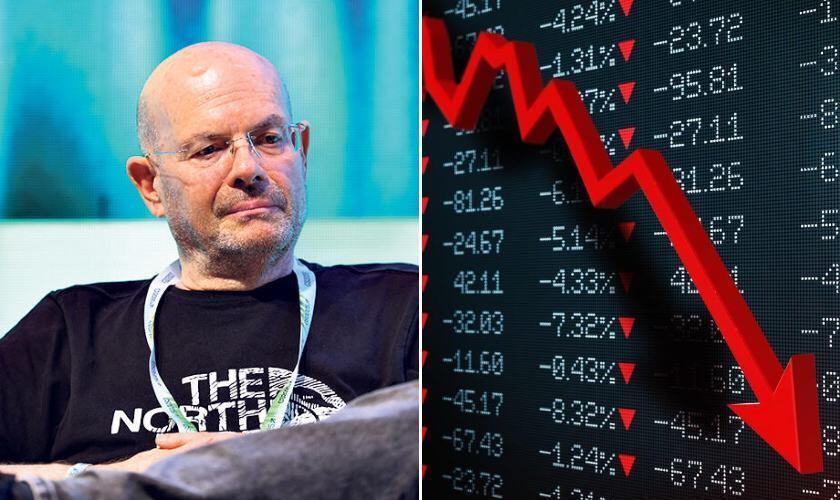
Unlike in previous years, when sharp market declines often prompted investors to buy the dip, concerns are now growing that the sector could face a prolonged period of weaker performance.
Yair Lapidot, founder and co-CEO of investment firm Yelin Lapidot, has been warning that the strong gains recorded by stock markets, particularly in Israel, were unlikely to continue indefinitely. Last December, he told Calcalist that "the Israeli market’s frenetic run concerns me." He now expects returns to remain relatively subdued in the coming years.
Lapidot argues that the recent market decline should be viewed partly as a correction to an unusually strong period of performance. "What has occurred in the markets over the past three years is an anomaly," he says. "In Israel, we generated nearly a decade’s worth of returns in just three years. The Israeli market climbed by more than 100%, whereas, based on long-term historical averages, one might expect an annual return of 8%-10%. Over the last three years, we’ve seen returns of nearly 30% annually, compounded. I’ve maintained all along that, under such conditions, we are essentially 'selling off' the future. This implies that, going forward, we will see lower returns."
Are you advising institutional investors to reduce their equity exposure?
"Not necessarily. Just because prices have risen too high, it doesn't mean they are bound to crash. It is quite possible that, instead of an average annual return of 8%-10%, we might see 5%-7% in the coming years. That doesn't mean one should flee the market. No one can accurately time when market corrections will begin or when they will end.
"What has happened over the last three years was unhealthy, as investors began to view such returns as the standard, increasing their equity exposure precisely after the market had already rallied. In my view, the fact that some of the air is now coming out of the markets is an excellent development."
Since the COVID-19 pandemic, investors have become accustomed to buying whenever markets fall sharply. Is this another opportunity to do so?
"First of all, what constitutes a 'sharp decline'? Recall what happened in 2008 and March 2020. We haven't reached that point yet. While certain individual stocks have dropped by double-digit percentages, some had previously surged so dramatically that they remain significantly higher than where they stood two or three years ago.
"On the other hand, when prices fall, it is certainly a good time to consider shifting toward stocks that have been hit disproportionately hard, even when such a decline wasn't necessarily justified."
Where do you see the main risk in the artificial intelligence sector?
"AI is a completely legitimate phenomenon, unlike the dot-com bubble of 2000. In this instance, we are dealing with massive corporations generating enormous sales and profits. Nvidia is the most extreme example. In just a few years, it has transformed from a company selling graphics cards to gamers into a powerhouse with hundreds of billions of dollars in sales and extraordinary profitability.
"However, investments in building server farms, covering processors, memory, electricity and cooling, are reaching trillions of dollars. The question is: what will the return on these investments be?"
Could Nvidia be affected if those investments fail to deliver the expected returns?
"Absolutely. If companies investing hundreds of billions of dollars discover that their returns are lower than expected, they will slow down their expansion. There are also bottlenecks regarding electricity and financing, alongside capital expenditures on a scale that companies like Google, Meta and Amazon have never encountered before.
"Once the pace of investment slows, Nvidia’s sales could potentially drop by tens of percent. This may not be happening immediately, but it could occur within the next year or two."
What is your advice to investors?
"I don’t believe one should flee the market. Every investor should maintain an equity allocation that suits their personal situation, rather than increasing it out of euphoria following a 100% gain over three years.
"I have always warned against using leverage on stocks or investing in leveraged financial instruments. These are essentially 'suicide' instruments, pure gambling. AI will continue to transform the world, but its pace of development and the returns on these massive investments have yet to be proven."