










Israel becomes seventh-largest arms exporter even as war rages
New data shows the Israeli defense industry gaining market share even as the country relies on foreign weapons imports.
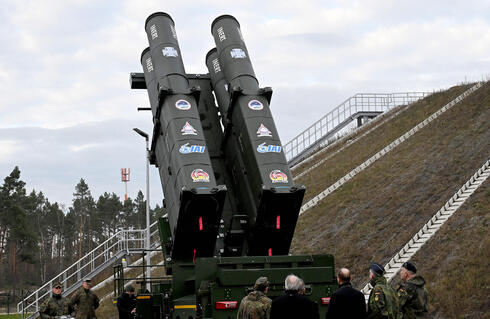
Despite being engaged in a multi-front conflict across the Middle East, Israel has increased its share of the global arms trade, according to new international data that highlights the country’s growing role as a supplier of advanced military technology.
A report released Monday by the Stockholm International Peace Research Institute (SIPRI) shows that Israel accounted for 4.4 percent of global arms exports between 2021 and 2025, up from 3.1 percent in the previous five-year period. The increase pushed Israel ahead of the United Kingdom for the first time, making it the seventh-largest arms exporter in the world.
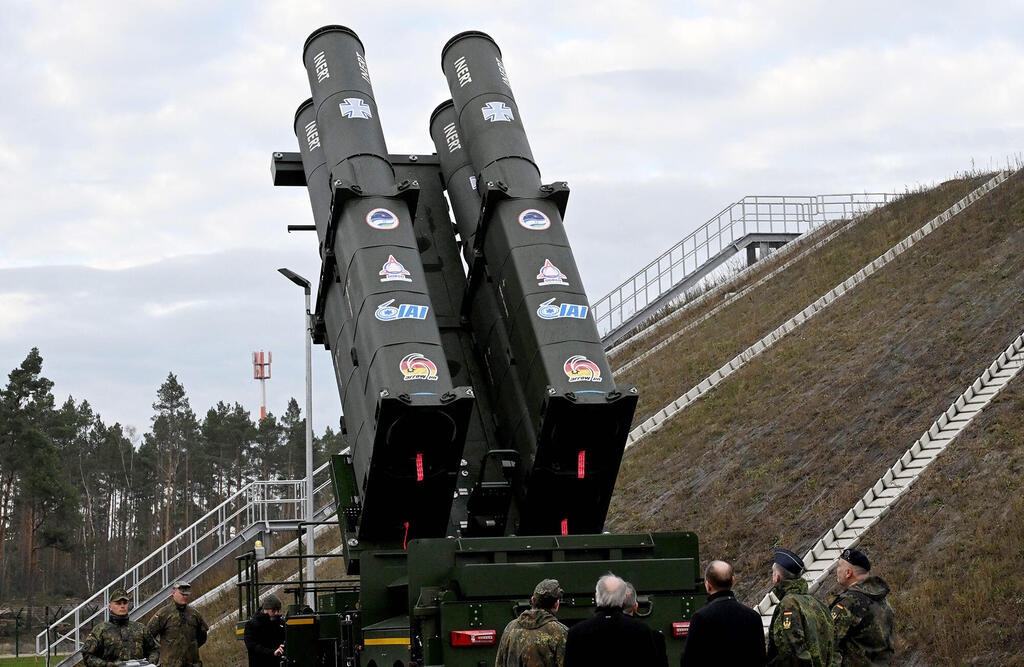
The shift comes during a period in which Israel’s military has conducted military operations in Gaza, Iran, Lebanon, Qatar, Syria and Yemen.
“Despite conducting the war in Gaza and attacks in Iran, Lebanon, Qatar, Syria and Yemen, Israel still managed to increase its share of global arms exports,” said Zain Hussain, a researcher with SIPRI’s Arms Transfers Programme.
The growth reflects the strong global demand for some of the systems in which Israel specializes, particularly air-defense technologies. Those systems have gained increased attention as governments reassess their security needs amid a rise in geopolitical tensions.
While Israel has strengthened its position as a supplier, it also remains dependent on foreign weapons for certain categories of military equipment. SIPRI data shows that Israel ranked as the 14th largest arms importer globally between 2021 and 2025, with imports rising 12 percent compared with the previous five-year period.
The United States remains by far Israel’s largest supplier, accounting for 68 percent of Israeli arms imports, followed by Germany with 31 percent.
The report places Israel’s growing export role within a wider transformation in the global arms market.
Between 2016-20 and 2021-25, the overall volume of major arms transferred between countries rose 9.2 percent, the largest increase recorded since the period between 2011 and 2015. Much of the growth was driven by Europe, where countries sharply increased military spending in response to security concerns about Russia.
European states more than tripled their arms imports, making the region the largest recipient of major weapons systems globally. Deliveries to Ukraine alone accounted for 9.7 percent of all international arms transfers during the period.
The surge also reinforced the dominant position of the United States in the global arms market. American arms exports rose 27 percent, giving the country 42 percent of global arms exports, up from 36 percent in the previous five-year period.
For the first time in two decades, the largest share of U.S. arms exports went to Europe rather than the Middle East.
“The USA has further cemented its dominance as an arms supplier, even in an increasingly multipolar world,” said Pieter Wezeman, a senior researcher with the SIPRI Arms Transfers Programme.



