










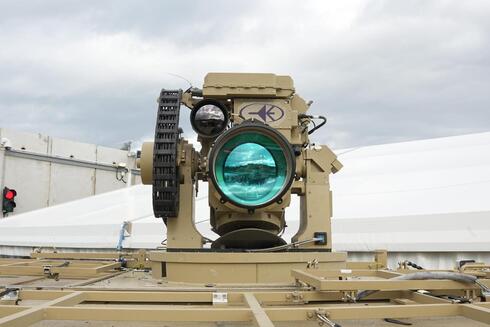
Iron Beam remains unused despite renewed drone threat from Iran and Lebanon
The laser interception system delivered to the IDF months ago has not yet been activated operationally during the current conflict.
The war between Israel and the United States on one side and Iran on the other, along with the opening of the Lebanese front last week, has brought back the threat of drones to the Israeli home front as well as to IDF bases and facilities.
Unlike previous rounds of fighting, Israel is currently pursuing a policy of ambiguity regarding the types of weapons used against it on the various fronts, the scale of their use, the methods used to intercept them, and the success rate of those interceptions. The IDF Spokesperson’s Unit is not updating the public about the number of launches toward Israel or the interception rates of missiles, rockets, and UAVs. The aim is to make it more difficult for the enemy to assess the inventory of interceptor missiles available to Israel.
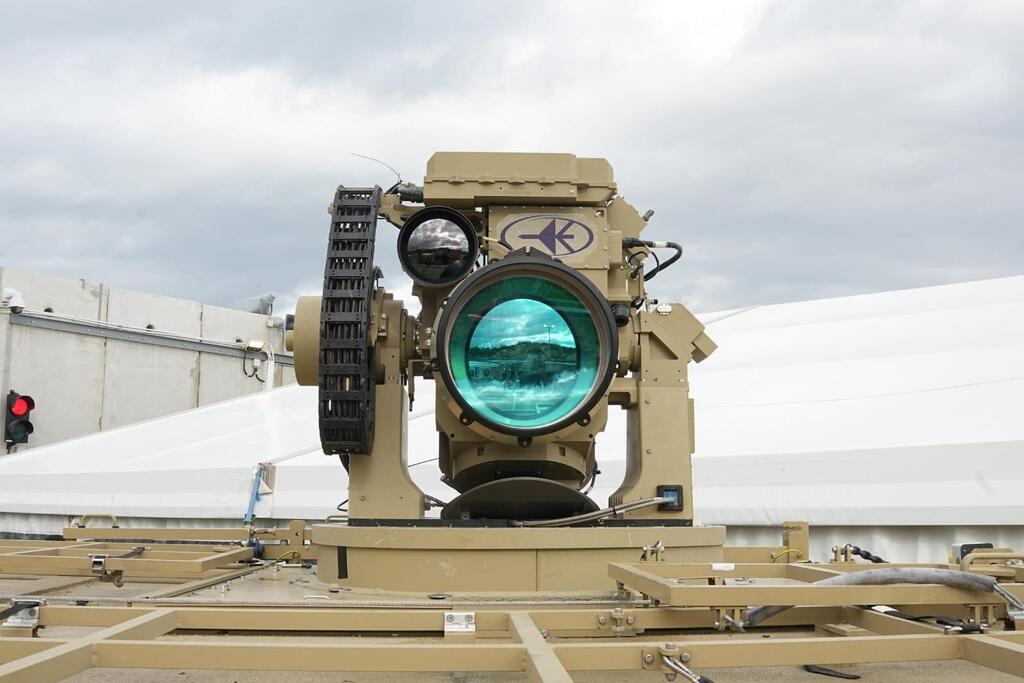
Unlike previous combat events, the IDF now has at its disposal the innovative air defense system based on a high-power laser, known as Iron Beam, which was delivered to the military more than two months ago. Developed by Rafael, the system is designed to intercept drones and rockets at ranges of up to ten kilometers at a minimal cost compared with the tens of thousands of shekels required for each interceptor missile used by the Iron Dome system.
However, as of this weekend, Calcalist has learned that the laser system has not yet been used operationally and has not intercepted any threats directed at Israel. Amid the fog of war surrounding interception policies within the defense establishment, officials have not explained the reasons for this, nor have they disclosed in which sectors the system is deployed or whether it is fully operational for intercepting aerial threats.
According to data from the Institute for National Security Studies (INSS), since the beginning of the war last Saturday Iran has launched about 600 ballistic missiles and more than 1,500 drones at 12 countries in the Middle East, most of them targeting the United Arab Emirates.
Israel says that, unlike its situation at the outbreak of the October 7 war, its air defense system has significantly improved its capabilities for dealing with drone threats. These improvements were already reflected in the previous confrontation with Iran about eight months ago, during which 99% of drone threats were intercepted using a combination of kinetic and electronic tools.



