










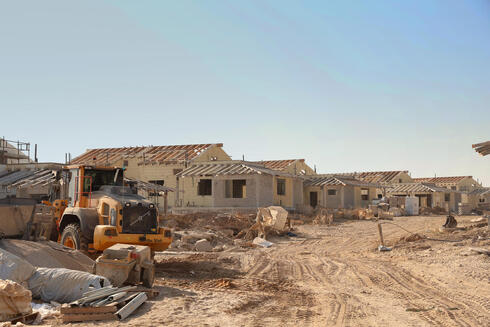
Four Gaza border kibbutzim are finally heading home, but the hardest part may come next
Holit, Kfar Aza, Be’eri and Nir Oz are moving toward a return to their communities as billions of shekels are being spent on rebuilding homes, infrastructure and the region’s economy.
By the end of 2027, the communities of the four kibbutzim most severely affected by the October 7 massacre — Holit, Kfar Aza, Nir Oz and Be’eri — will be in the process of returning to their homes. The return will mark the final chapter in the evacuation of residents from the Gaza border area, but it will not mark the end of their rehabilitation. The communities will still face a long process of physical and, especially, psychological recovery.
Some 2,600 residents of these kibbutzim currently live in temporary communities built while their homes are being rehabilitated. Some 947 Kfar Aza residents have moved to Shefayim and Ruhama, while about 1,080 Be’eri residents live in a temporary community in Hatzerim. Most Nir Oz residents are in Karmei Gat in Kiryat Gat, while Holit residents are living in a temporary community in Revivim.
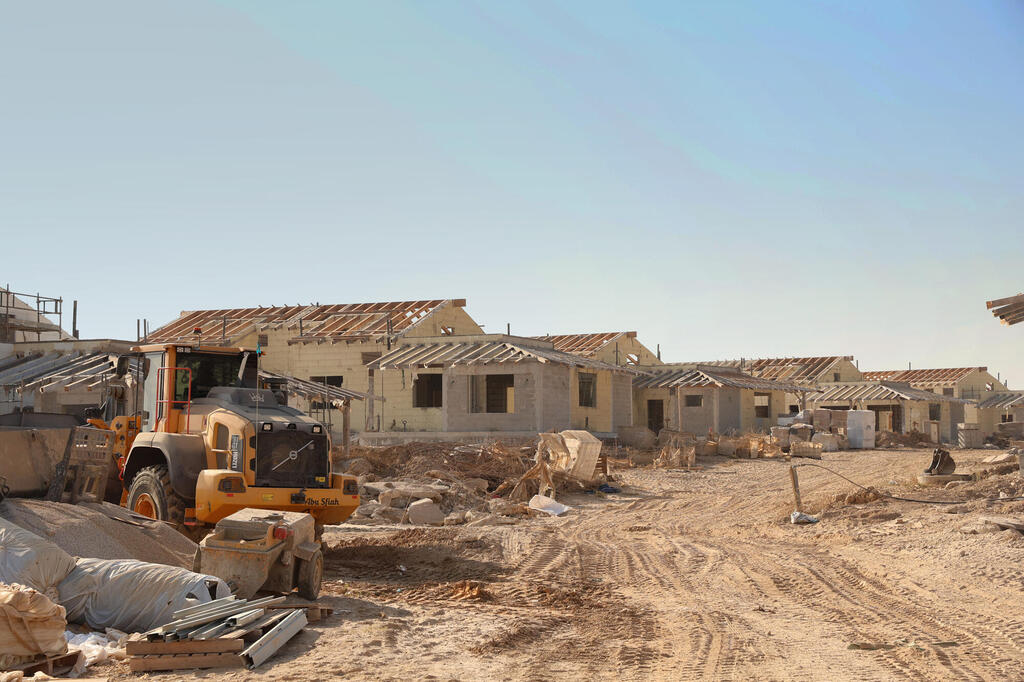
The Holit community began its return process in August this year, while Kfar Aza is expected to begin returning toward the end of September. Be’eri will begin its return process in December this year and is expected to complete it in July next year. Nir Oz residents are expected to begin their journey home at the end of 2027.
It is still an early stage, and it is not yet known how many residents will ultimately choose to return to the Gaza border area. The Tkuma Directorate allows residents to remain in their temporary communities for up to a year after the rehabilitation of their kibbutz has been completed.
Tkuma has invested NIS 1.7 billion in temporary housing for residents of the kibbutzim until they return home. In addition, the budget for the physical rehabilitation of buildings and infrastructure in the Gaza border communities stands at about NIS 1.5 billion.
Of that amount, NIS 473 million has been allocated to Be’eri’s rehabilitation plan, which includes extensive renovations of 350 residential and public buildings and the construction of 132 new homes. Nir Oz has been allocated NIS 232 million for a plan that includes, among other things, the construction of 95 new homes and public buildings, including a dining hall and a general store, as well as the renovation of 30 homes.
Kfar Aza has been allocated NIS 211 million, which will be used, among other things, to renovate 280 homes and rebuild 98. Holit’s rehabilitation budget stands at NIS 57 million, including funding for the extensive renovation of 110 homes.
The broader strategic plan led by the Tkuma Directorate has a budget of NIS 17 billion, about 80% of which is expected to be used by the end of this year. The figure includes the rehabilitation costs detailed above, as well as programs designed to encourage demographic and economic growth.
For example, this month Tkuma will invite communities in the region to submit proposals for income-generating energy projects, in which the state will invest NIS 115 million. Another NIS 180 million will be invested in income-generating projects in other fields. In addition, a call for proposals will be published for a NIS 70 million investment in student dormitories in the region.
Related articles:
- “Prior to October 7, closing Bazan was based on a fixed conception. Since then, it has become a populist obsession”
- Kibbutz Be’eri makes first major investment since October 7 with $35M renewable energy deal
- “Anyone raising two chickens calls Itself a therapeutic farm”: the unregulated market for PTSD treatments
By the end of 2025, Tkuma had invested NIS 625 million in agricultural projects. NIS 92 million was invested in tourism, including NIS 13 million to support 59 businesses in the sector. About NIS 1 billion was invested in education, including funding to rehabilitate damaged educational facilities.
The scale of the spending reflects the fact that rebuilding the communities is only one part of a much larger effort. The broader Tkuma program is intended not only to restore what was destroyed on October 7, but also to support the region’s economic and demographic recovery. The return home, therefore, is not the conclusion of the rehabilitation effort but the beginning of a new phase.



