










Just eight months old, cyber startup Novee raises $51.5 million in Seed and Series A funding
The company says traditional security testing can no longer keep pace with automated threats.
Cybersecurity company Novee has raised $51.5 million in Seed and Series A funding within four months, in rounds led by YL Ventures, Canaan Partners, and investor Oren Zeev through Zeev Ventures. The company develops an AI-agent–based platform designed to protect organizations using tools and methodologies traditionally associated with offensive cyber operations. Novee operates in a similar market to Tenzai, which recently raised $75 million.
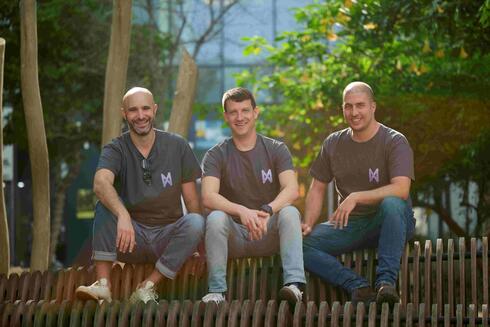
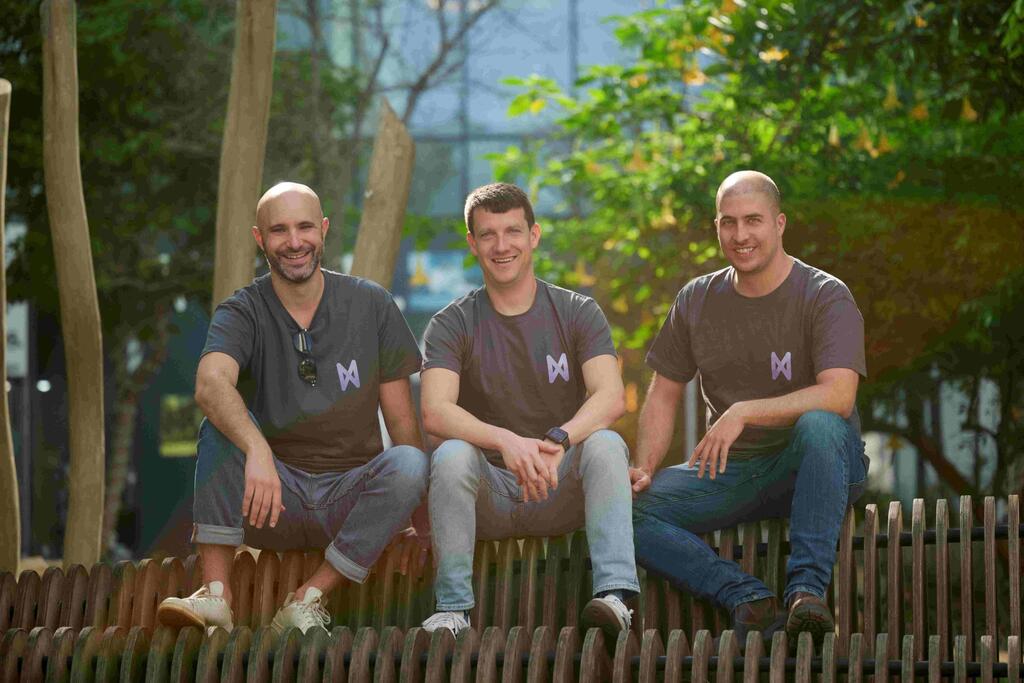
Novee was founded in May 2025 by Ido Geffen (CEO), Gon Chalamish (CPO), and Omer Ninburg (CTO), all senior cybersecurity executives and veterans of Unit 8200, the Talpiot program, and the Prime Minister’s Office, where they led offensive cyber operations. The company’s team includes professionals with extensive experience in national cyber defense, including the former head of Israel’s national Red Team, responsible for protecting critical systems such as Iron Dome, as well as the former leader of a cyber and AI team within a special unit of the Prime Minister’s Office.
According to the company, its platform is already in use by technology companies including K Health, HiBob, Reco, Cresta, Telit, and JB Poindexter. Novee currently employs 32 people across Israel and New York.
In an interview with Calcalist, Gefen said the speed of the fundraising reflected both market demand and the company’s technical approach. “I’ve been involved in several startups, including Orca and Oasis,” he said. “We raised our Seed round with YL Ventures and Canaan Partners in May, and within three to four months we closed a Series A.”
Gefen said the founders’ experience in uncovering security vulnerabilities, particularly in applications, led them to identify what he described as a persistent gap in the market. “Until now, this work has largely been done manually,” he said. “Automated tools don’t perform at a sufficiently high level, and many existing solutions fail in real-world conditions.”
According to Gefen, Novee trains its own proprietary model, enabling it to detect complex breaches embedded in an organization’s business logic. “We don’t just identify problems, we help solve them,” he said. “That combination is difficult to replicate. We are a cybersecurity company, but we are also very much an AI company.”
Gefen said the company is currently focused on execution rather than further fundraising. “We’re busy building the company,” he said. “We already have dozens of customers, and expanding that base is our main priority.” While Novee initially focused on application security, it is now expanding into network and cloud penetration testing. “We want to offer a comprehensive penetration-testing solution across the entire organization, similar in ambition to what Wiz has done in cloud security,” he said. Gefen added that the company is in the process of establishing a U.S. office, where it already has several sales staff.
The challenge Novee aims to address is rooted in a broader shift in the threat landscape. Attackers increasingly use AI to automate intelligence gathering, continuously scan systems, and exploit vulnerabilities at a pace that outstrips traditional defensive responses. Yet, despite continuous software development and deployment, penetration testing remains periodic, manual, or dependent on limited automation.
Novee’s platform seeks to close that gap by applying offensive cyber knowledge to continuous, AI-driven penetration testing, simulating the tactics and adaptability of real-world attackers in real time.



