










Bagira’s $1.7 billion IPO tests investor appetite for Israel’s defense boom
Combat simulator maker posts surging profits, but customer concentration and governance questions may complicate its market debut.
The offering that will test the appetite of institutional investors for defense companies is underway. Last Monday, Bagira Systems published its prospectus ahead of the offering of shares in the TASE. The company, which manufactures and provides services for combat and battle simulators, is showing high revenue growth and profitability. It also belongs to an industry that should enjoy increased demand in the coming years. Based on this assumption, the owners, the Mizrachi family, are seeking to issue it at a value of up to NIS 5 billion - an offering that should be one of the largest we have seen this year, second only to the Tidhar offering, which is expected to roll out in the coming months at a value of NIS 7 billion. Considering that initial offerings usually include an allocation to the public of 20-25% of the shares of the company being issued, if the requested value is met, the company will receive an inflow of more than NIS 1 billion.
Due to the size of the offering, it will be accompanied by two of the largest underwriters, IBI Underwriting and Leader. When the underwriters meet with the institutional investors who are expected to participate in the tender for the company's shares, they will point to its clear growth. According to the prospectus, Bagira ended 2025 with sales of NIS 270 million and a net profit of NIS 99 million. In 2024, sales were NIS 174 million and net profit was NIS 62 million. The company's order backlog at the end of 2025 was NIS 634 million, part of which stems from contracts for ongoing maintenance of its simulators until 2040.
A reading of the report data indicates that although the company's current profitability is high, it is far from guaranteed, and the local capital market, especially during periods of rising prices, has known companies that came to issue at their peak, with promises of continued growth that did not materialize. In addition, Bagira's regulations contain Ministry of Defense restrictions that constitute a kind of poison pill for foreign investors. Due to the nature of its activities, the regulations prohibit a "foreign entity" from holding more than 12% of the company without Ministry of Defense approval, which limits the company's attractiveness for acquisition by international entities.
Another trap lies in Bagira's service agreements, which pay management fees and various services to the Mizrachi family's Armaz Group, while Armaz provides it with marketing services in a European country for 7% of the net proceeds from sales agreements. In addition, Bagira suffers from extreme customer concentration. 58% of its revenue in 2025 came from the Israeli Ministry of Defense (compared to 29% of revenue in 2024). This dependence makes it very sensitive to changes in Israel's defense budget, procurement policy, and the IDF's priorities.
"There is no company that is growing at such a rate on the stock exchange that is not traded at a multiple of earnings of less than 50, so it was decided that we would try to issue at a value of up to five billion shekels. This is the reality today, due to the high demand for quality companies in the local market and the concentration of investments in the home estate. Prices are high and the Mizrachi family is aware of this environment," explained a source close to the company. To this must be added the natural appetite that institutional investors have for large, well-established companies, since billions of shekels flow into institutional funds every month in the form of deposits from the public. This appetite has grown in the past year in light of the conversion of pension and provident funds to investments in the local market and its prioritization over markets outside Israel.
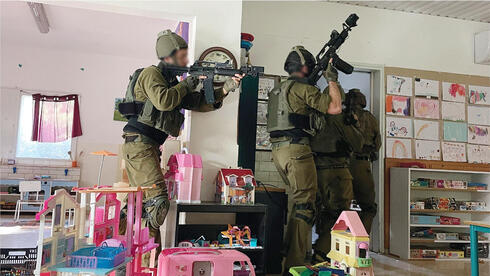
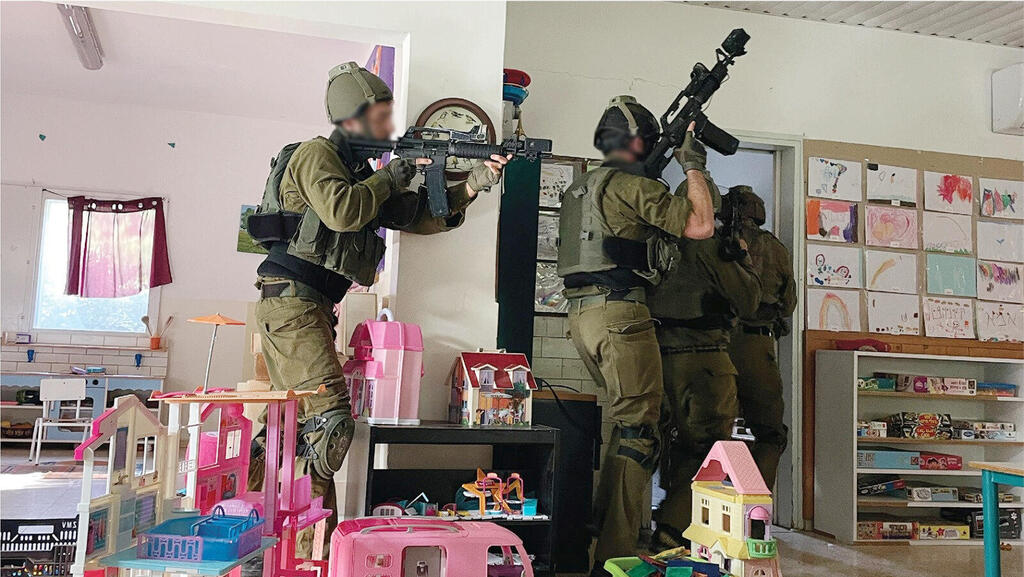
Bagira currently operates 50 training facilities, mainly in the south of the country, and employs about 400 employees who train IDF units. The simulators are built as giant screens, in front of which soldiers stand individually or in units, and allow preparation for battles in a variety of scenarios, including combat in built-up areas or in open areas. In addition, Bagira also provides mobile training equipment, which characterizes combat in open areas and allows the simulation of changing combat situations. In general, the company predicts that the simulator market will reach a value of $15 billion in 2026.
The need to demonstrate combat to combat soldiers in various arenas is leading to high demand for simulators that deal with the subject, and the increase in the armament of European countries is also expected to increase, according to the company's assessment, the demand for its products. Bagira has subsidiaries in the Czech Republic and Switzerland, although the company has decided that the subsidiary Bagira Switzerland will remain a private company and will not be part of the group. Two-thirds of the company's revenue, as mentioned, originates in Israel and the remaining third originates mainly in Europe.
Bagira Switzerland holds a contract agreement with Elbit. The agreement, which has been in place since 2016, was made as part of the development of a UAV trainer that Elbit markets to end customers in Europe. The cooperation between the parties is carried out by Bagira Switzerland, with payments made to Bagira Switzerland based on purchase orders. The proceeds are transferred to Bagira Systems, minus a commission received by Bagira Switzerland for the project that will not exceed 10% of the transaction value. The commission rate is currently estimated at 3% of the transaction value, amounting to NIS 3.5 million as of 2025. The company estimates that the cooperation is expected to end this year or next year.
According to the prospectus, in 2025, Bagira capitalized development costs (mainly wages and materials) of NIS 24 million, following new developments, alongside a current reduction of NIS 10 million. In other words, the company "borrowed" NIS 14 million in profit from the future, so that, net of the move, the profit is NIS 48 million. The capitalization was made based on the company's discretion, following "reaching a milestone" and not based on orders in the field. The company's revenues were particularly high in 2025 due to an increase in activity in Israel, but also due to revenues of NIS 103 million stemming from significant orders received from the Ministry of Defense, which include the renewal of the maintenance and operations framework agreement in May 2025. The orders and contract renewals were made against the backdrop of a year in which Israel fought on three different fronts, a relatively rare occurrence in IDF history.
Bagira's founder and chairman is Brigadier General (res.) Arieh Mizrachi, (50%), former chairman of IMI, former chief artillery officer and CEO of the Ministry of Construction and Housing. His son Yaron Mizrachi (25%) serves as CEO and his second son Sagi Mizrachi (25%) serves as Senior VP of Marketing. The group began operating in the field in the early 2000s under contracts to the Ministry of Defense for the operation and maintenance of simulation systems and training facilities deployed at IDF bases. Most of the revenue, 44%, comes from field training systems.
The annual cost of Arieh Mizrachi’s employment is 900,000 shekels for a 60% position and he will be entitled to 0.25% of the company's pre-tax profit, which will be limited to 2.7 million shekels. The cost of Yaron Mizrachi's salary is 1.2 million shekels per year, and he will be entitled to 2% of the annual pre-tax profit with a limit of 3.6 million shekels, and that of Sagi Mizrachi is 1 million shekels and he is entitled to 2% of the annual profit with a limit of 3 million shekels. So the family's annual salary cost ceiling in a profitable year will be 12.4 million shekels.



