










"The industrial revolution took 200 years, AI's is taking half a generation and that is a very big difference"
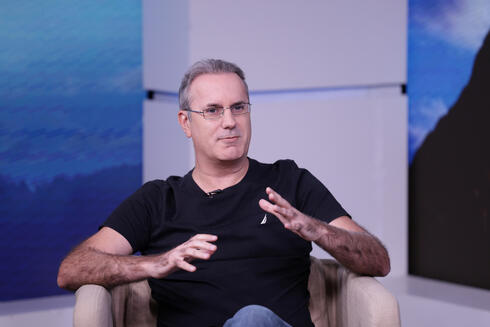
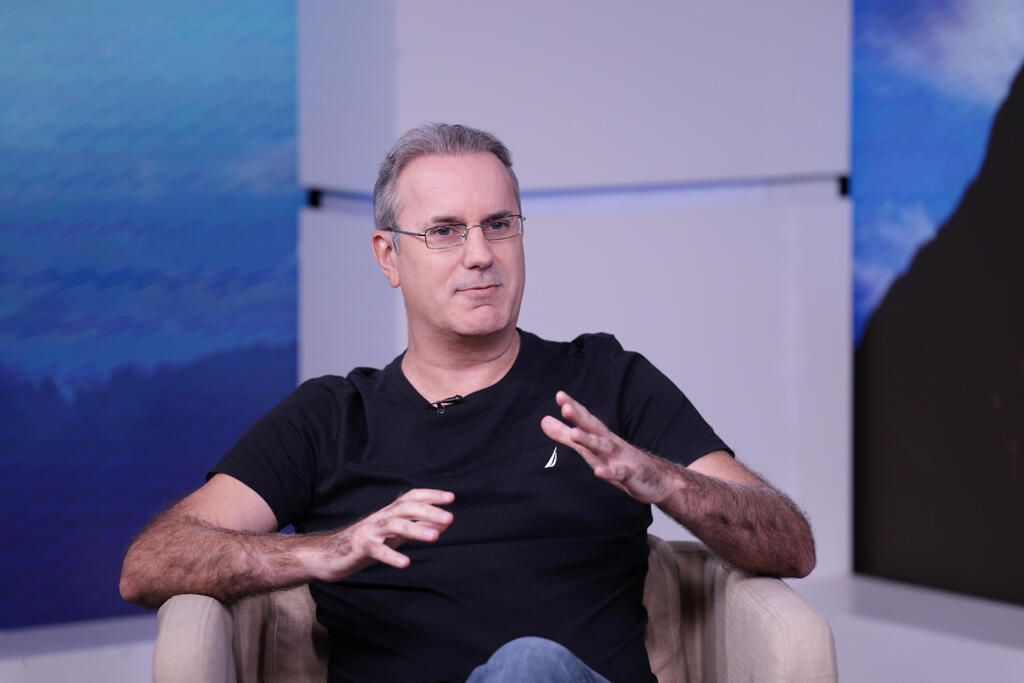
Arik Faingold, social entrepreneur and chairman of Commit and founder of Pentera and Autonomy AI, explains why the pace of artificial intelligence demands immediate adaptation from companies of every size.
As part of Calcalist and Commit's AI Week on implementing artificial intelligence technologies in businesses, Roee Bergman from Calcalist spoke with Arik Faingold, social entrepreneur, chairman of Commit AI, and founder of Pentera and Autonomy AI, about AI as a synonym for innovation in both new and established organizations.
Do you agree with the comparison between the Industrial Revolution and the AI Revolution?
“Yes and no. I agree that both are revolutions, but I disagree that they are similar in intensity. The Industrial Revolution began with the invention of the steam engine in 1702, and it took about 200 years for mechanized assembly lines to become common. The trigger for AI is either the Nvidia GPU invented in 1999 or, more accurately, Nvidia’s AI system DGX-1 in 2016, followed by the language model era - the LLM - in 2022. In 2025, we are in the year of AI agents, which allow us to introduce new assembly lines into processes that humans used to perform and significantly accelerate them. This is half a generation for a revolution compared to ten generations, and that is a very big difference.”
How do you successfully implement technology in organizations?
“For anyone who wants to start a startup now, the world has changed. Speed is key, and many opportunities have opened up. In the American market alone, there are $10 trillion in opportunities for AI agents, and we are currently only in the first billions. If I want to start a startup, the market size I’m targeting needs to be very large for it to matter. Many “must-have” opportunities have also emerged. Just as Check Point invented cyber security for the internet 30 years ago, today there must be solutions for cyber security in the world of AI.”
How do you implement AI in new companies?
“The entrepreneur must examine the product and how it uses AI as part of its core offering, especially if it is a software product. If the product is purely AI, then he must evaluate how strong his moat is. But the moat has to be backed by unique algorithms and unique data that the founder owns, combined with a deep understanding of the field he wants to solve.”
How would you integrate new AI agents into existing organizations, where the difficulty is greater?
“In existing organizations, it starts with education. Begin with AI workshops to lower the anxiety threshold among employees and managers. Teach them about the tools and make it clear they are here to help, not replace them. After creating understanding and a new organizational language, you need to foster entrepreneurial DNA. Ask department managers to identify unresolved pain points and show them how to start thinking about AI solutions. Present ideas to management monthly. Organizations must begin this process now.”
Maybe by the time they are implemented, they won’t be applicable?
“The pace is crazy and innovations are emerging constantly, but the first leap is the biggest one. Once an organization has made that leap, adoption of new technologies becomes easier. The integrations and data foundations are already there, so replacing or upgrading becomes much simpler.”
Some managers are worried that AI will make employees lazy?
“Organizations need to change how they measure employees and focus more on innovation, creativity, and thinking outside the box, not just finishing tasks and going home. The question should be how an employee creates new value for the organization and its customers. This is what organizations need to measure, not only quantitative output.”
Will there be a difference between employees who have creative thinking and those who don’t?
“Yes. An employee who cannot learn something new will face a problem. If you are curious, the world today is amazing. We need to train the muscle of curiosity and the ability to learn new things, how to change what we did yesterday and do it differently tomorrow, so that in the end we have more free time for more meaningful and enjoyable things. If we have an assistant who takes some of the gray work from us, we need to train ourselves to use that freed-up time for creativity and personal development.”
How do you perceive Israel's ecosystem and its position in the world?
“Our position is excellent because we are beginning to benefit from AI infrastructure. It’s true that we did not invest in AI infrastructure, just as we didn’t invest in fiber infrastructure 25 years ago. We are not strong in building infrastructure, but Israel’s strength lies in taking everyday problems and creating solutions that use technology built on top of existing infrastructure. This is what we did with the internet, and this is what we are seeing in AI. In my opinion, Israel will become a world leader in AI.”
In conclusion, what does an organization need in order to succeed in being innovative?
“Curiosity, courage to change, and interdisciplinary integration.”



