










“Super El Niño” could bring once-in-a-century floods to Israel, meteorologists warn
New study predicts extreme winter rainfall, hail, and hurricane-like systems threatening major urban centers.
Summer has just begun, but the Meteorological Service warns: the El Niño phenomenon affecting the Earth is expected to bring an especially rainy winter to Israel. Authorities are urged to prepare now for the risk of severe flooding along the coast and in the lowlands in the early autumn and winter months, as well as for snowstorms during the winter. The Meteorological Service has even published a map of “red zones” where particularly severe danger is expected. While Europe is experiencing an unprecedented heat wave, Israel is not expected to see a record-breaking summer. According to Dr. Amir Givati, General Director of the Meteorological Service, “Because of the unusual heat in Europe, we are receiving marine air rather than continental air, and the forecast for July-August is for a summer within the average range.”
El Niño is a natural climate phenomenon in which waters in the equatorial Pacific Ocean warm above average, disrupting wind and rainfall patterns and affecting weather around the world. It may cause droughts, heat waves, or even floods in various regions, leaving an imprint on Earth’s climatic and ecological systems for months.
Now, according to the latest reports, the world is once again under the influence of a strong El Niño, sometimes referred to as a “Super El Niño”, with expectations of a peak in the coming months. This could bring extreme heat in summer months worldwide, unusual rainfall patterns, and other extreme climate events that may also contribute to rising food prices. At the same time, global warming is intensifying the effects of the phenomenon, making the combination particularly concerning. According to Dr. Givati, “Long-term global warming is accelerating the intensity of El Niño events and enabling the development of a Super El Niño of a kind not previously measured on Earth.”
The Israel Meteorological Service is publishing for the first time a study examining the effects of extreme El Niño events on Israel’s weather, particularly rainfall amounts, rainfall intensity, and the probability of snowfall, while also explaining the mechanisms behind the expected impacts. The findings indicate a clear correlation between El Niño values recorded in past events and precipitation levels in Israel, as well as extreme weather events.
According to the Service’s assessment, an especially strong El Niño is expected to develop in the fall of 2026, increasing the likelihood of extreme climate events during Israel’s rainy season. From September to January, wind gusts of up to 150 km/h, hail with diameters of 5-7 cm, and tens of thousands of lightning strikes in a single event may occur along the coastal plain. The risk of flooding could include significant water accumulation reaching depths of several meters in urban areas, along with damage to infrastructure, agriculture, and severe impacts on the energy sector due to lightning strikes.
Areas particularly sensitive to short-term severe flooding include neighborhoods in Ashkelon; northern and central Ashdod; Yavne; neighborhoods in Rishon LeZion, especially in the eastern parts of the city; Ness Ziona, particularly low-lying areas such as Ha’atzmaut Street; all cities in the Dan Bloc, including the Ono Valley; Tel Aviv; Sharon-region cities with low-lying topography (Herzliya, Ra’anana, Hod Hasharon, Netanya); as well as neighborhoods in Haifa, Kiryat Shmona, and Nahariya. During winter, a once-in-a-century rainfall event may occur in these areas. The Meteorological Service will be able to identify such an event with exceptional potential 3-5 days in advance and provide more precise rainfall intensity forecasts within 24 hours before the event.
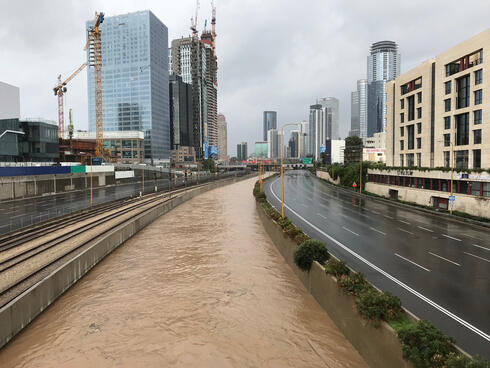
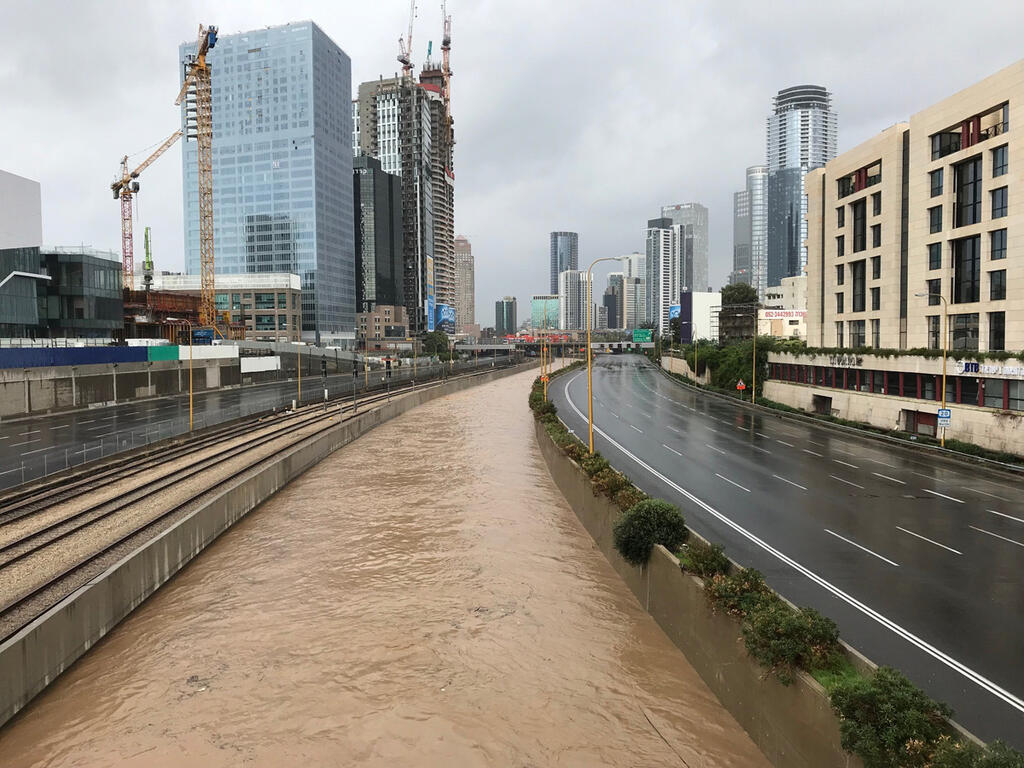
From November to January, exceptional heavy rainfall and flooding events are also expected in the lowlands and the central and northern mountain ranges. During this period, authorities may be required to close roads and block access routes to communities, including areas near military airfields. Particularly sensitive regions include communities downstream of the Shikma River basin (Western Negev, Gaza envelope), the Lachish River basin, including potential flooding in Kiryat Gat, Gan Yavne, and Ashdod due to rising water levels, and communities in the central and downstream sections of the Sorek River basin. The railway along the Ayalon River may also face unusual flooding. The ability to forecast such events in these areas is estimated at 5-7 days in advance, with more precise spatial intensity forecasts 1-3 days before onset.
At the beginning of winter, Israel may also experience a deep Mediterranean low-pressure system known as a “Medicane,” which has characteristics partially similar to those of a hurricane. This phenomenon is accompanied by strong winds, large amounts of rain (up to hundreds of millimeters in a short period), high seas, flooding, and inundations. It may affect residents of the central and southern coastal plain, the lowlands, and the northwestern Negev for 24-28 hours. Heavy rainfall, winds of 80-100 km/h (and locally up to 120 km/h), severe hail, and additional hazards may occur. Life-threatening flooding is expected in coastal cities, along with significant infrastructure damage.



