










Ondas expands into munitions with $205 million acquisition of Israeli Gate Technologies
The U.S. defense holding company is acquiring Gate and its Polish partner Bron as it expands beyond autonomous drones and robotics into electronic fuzing systems used across more than 90 weapon systems.
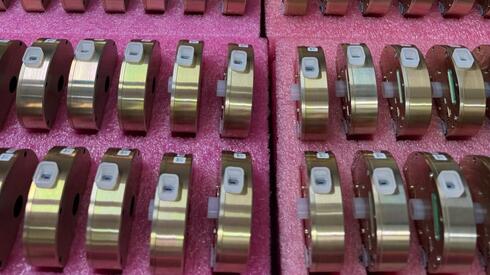
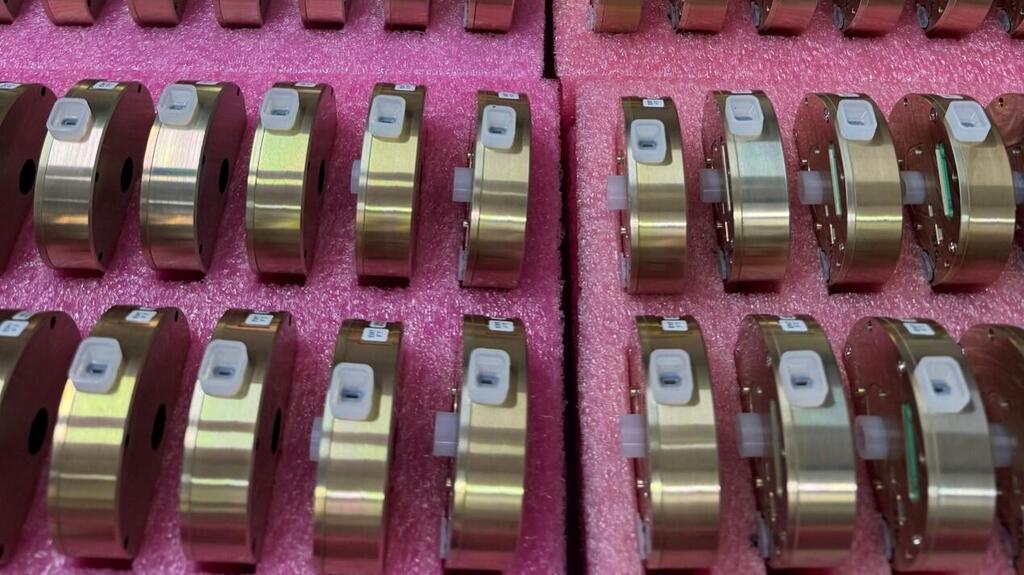
Ondas is continuing its acquisition blitz in the defense industry, gaining a foothold in the munitions fuzing sector. In a deal valued at approximately $205 million, the U.S.-based holding company is acquiring Israel’s Gate Technologies and its Polish manufacturing partner, Bron Technologies. Both companies specialize in developing and manufacturing electronic safe-and-arm devices and advanced electronic fuzing systems for munitions.
Gate’s products are integrated into more than 90 weapon systems, including missiles, rockets, UAVs and loitering munitions, helping ensure they remain in a safe state during storage, transportation, handling and launch and are armed only when predetermined mission and safety conditions are met. According to Ondas, the acquisition price could increase by up to an additional $185 million in performance-based earn-out payments tied to financial targets through 2028.
Under the terms of the deal, Ondas will pay $105 million in cash and $100 million in its own shares, plus a working capital adjustment. The earn-out can also be paid in cash or shares, at Ondas’s discretion.
While Ondas’s acquisition spree has previously focused primarily on companies operating in ground robotics and autonomous drones, the purchase of Gate and Bron marks a shift toward a critical component of the munitions value chain. The move comes as militaries rebuild stockpiles and production of missiles, rockets, loitering munitions and other precision-strike systems increases.
Electronic fuzing systems are particularly important for increasingly small and autonomous weapons, according to Ondas. Unlike traditional mechanical fuzes, electronic systems can be configured for different weapons and missions and can be integrated with more sophisticated weapon architectures. Gate’s RUBI family of electronic safe-and-arm devices has been developed in approximately 100 configurations for rockets, missiles, UAVs and other systems.
Ondas said the sector also faces a shortage of qualified production capacity, describing electronic safe-and-arm components as a bottleneck for the broader precision-strike supply chain. The company said Gate’s products have long qualification and integration cycles, creating barriers for potential competitors once the systems are designed into a weapon.
Bron is expected to provide Ondas with a NATO-based manufacturing operation in Europe, while Gate’s Israeli operations will continue to serve as part of the acquired business. Ondas said around 80% of Gate’s revenue is generated outside the Middle East. The company has also begun establishing U.S. engineering, integration, qualification and production capabilities, with U.S.-produced finished products and integrated systems expected in the first half of 2027.
The acquisition is expected to generate $65 million in revenue for Gate in 2026, rising to $180 million in 2028. Ondas expects the acquired business to generate more than $130 million in adjusted EBITDA over the three years through 2028.
“ESAD components are in tight supply today, and qualified production capacity is a bottleneck for the entire precision-strike supply chain. GATE has earned the trust of a broad base of defense OEMs and weapon programs around the world, and that customer base comes first. Ondas is committed to serving the entire market with low-cost, advanced fuzing capabilities, and we will invest in GATE's capacity, engineering and global reach so it can support more customers and more programs. Combined with GATE's attractive growth and margin profile, we expect this acquisition to generate high returns on invested capital for our shareholders,” OndasChairman and CEO Eric Brock said.
Since the beginning of 2026, Ondas has acquired approximately 10 defense companies and startups, primarily in Israel. Its portfolio comprises around 20 companies acquired since 2025, for a total consideration exceeding $2 billion.
Late last year, the company raised roughly $1 billion from an undisclosed investor whose identity it has refused to reveal, prompting an inquiry by Israel’s Ministry of Defense. The financing came against the backdrop of Ondas’s attempt to acquire mPrest, a company that develops command-and-control units for the Iron Dome air defense system and is consequently classified.
The Ministry of Defense has declined to disclose the findings of its review.
About a month and a half ago, Dadi Barnea was appointed Global Chairman and President of the company, just two months after concluding his tenure as head of the Mossad.
Ondas Israel is led by Oshri Lugassy, a former Chief Engineering Officer in the IDF and vice president of sales at Rafael. He is considered the driving force behind Ondas’s acquisition drive.
Alongside Lugassy, Ondas employs a number of other former senior Rafael officials, including CEO Yoav Har-Even, as well as R&D executives and former commanders from the Ministry of Defense’s R&D division.



