










Israel's attack-drone tender takes an unexpected turn as Ondas joins Kela and eyesAtop
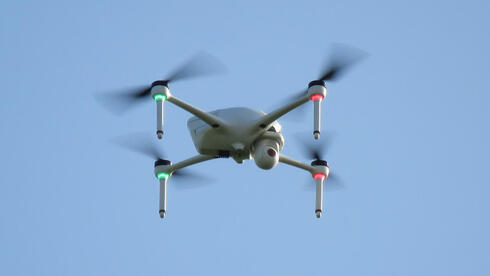
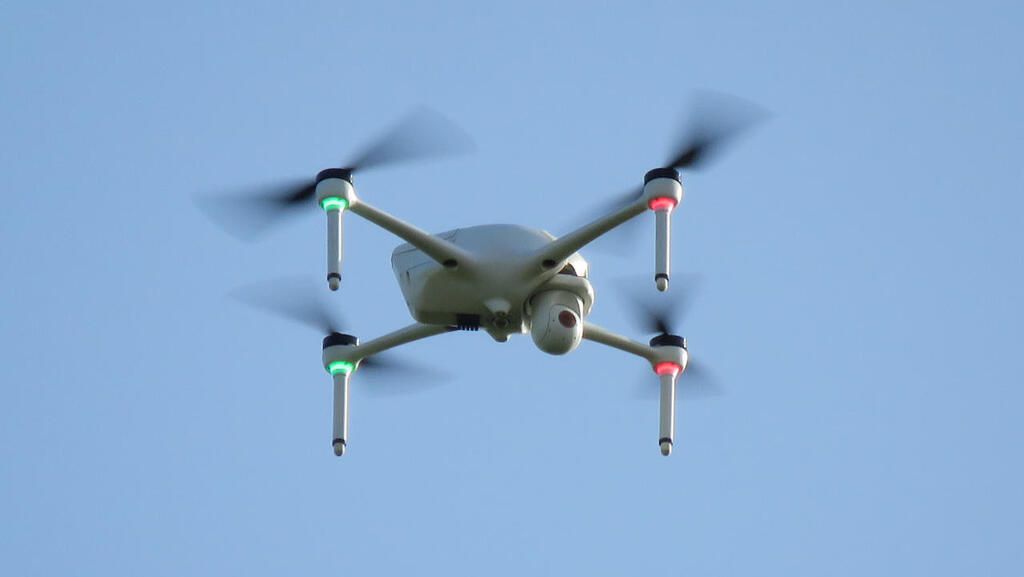
The Ministry of Defense has reopened its “Digital Bat” tender just weeks after naming Kela and eyesAtop as winners, adding Airobotics, an Ondas subsidiary, to a program expected to involve several thousand tactical attack drones.
Just a few weeks after defense technology companies Kela and eyesAtop won a tender to supply attack drones for IDF units, the Ministry of Defense has reopened the process and added a third supplier, Airobotics, which is part of the Ondas Group, Calcalist has learned.
The tender is part of a program known as "Digital Bat," through which the IDF intends to establish an attack-drone fleet based on several thousand tactical drones that are designed to be relatively inexpensive, advanced and capable of operating autonomously, including in swarms.
In the middle of last month, Kela and eyesAtop were announced as the winners of the tender and were initially expected to serve as the Ministry of Defense's exclusive suppliers for the program. Under the original arrangement, the two companies were to jointly lead the assembly, integration and operation of the system.
But just two weeks after the tender was awarded, Kela and eyesAtop learned that the scope of their contracts would be smaller than they had expected. The Ministry of Defense had reopened the process and added Airobotics to the Digital Bat program, despite the company having competed in the original tender and failed to win it.
The decision, an unusual move in the middle of a procurement process, has caused confusion among senior figures in Israel's defense industries and defense technology sector. Some have questioned the Ministry of Defense's considerations in adding Airobotics, particularly given its ownership by Ondas, a U.S.-listed defense technology company that has been rapidly expanding its presence in Israel.
In the defense industry, some officials argue that the ministry has effectively changed the rules after the game had already begun. They question what changed between the original tender decision and the subsequent addition of Airobotics that made it necessary to reopen the process.
Security sources, however, offered a different explanation. They said Kela and eyesAtop won based on the terms of the original tender, but that the Ministry of Defense retains the right to contract with additional suppliers. Future orders and options for the two original winners could also be affected by production rates and the IDF's satisfaction with the drones as their end user.
In practical terms, those sources acknowledged, the addition of Airobotics could reduce Kela and eyesAtop's share of the program.
The exact quantities and financial terms of the contracts under Digital Bat are classified. According to estimates, the overall value of the program could reach several hundred million shekels.
Sources in the defense establishment told Calcalist that the IDF attaches significant importance to the program and that adding Airobotics is intended to increase redundancy in production and supply and diversify the pool of suppliers. The argument is that relying on more than one manufacturer could reduce the risk of supply disruptions and allow the military to increase production more quickly if operational requirements change.
Earlier this week, Ondas announced that it had been selected for the Digital Bat program, describing the award as a multi-million-dollar strategic tender from the Ministry of Defense to develop and produce a new generation of low-cost tactical attack drones.
Ondas said the program is intended to provide frontline units with rapidly deployable aerial capabilities that can be adapted to changing operational environments. The company also said the development effort would cover the broader operational system, including the drone platform, autonomous capabilities, mission integration, system engineering and production readiness.
Eric Brock, Ondas' chairman and CEO, said the Ministry of Defense's selection reflected confidence in the company's engineering capabilities and its ability to translate changing battlefield requirements into scalable systems.
Ondas also pointed to a broader shift in military procurement toward inexpensive autonomous systems that can be produced and deployed in large numbers. The company compared Digital Bat with the U.S. Drone Dominance Program, a $1.1 billion initiative focused on rapidly deploying low-cost unmanned systems, including one-way attack drones.
The comparison highlights the logic behind Digital Bat. Rather than relying exclusively on a small number of expensive platforms, militaries are increasingly seeking systems that can be produced in large quantities and deployed closer to frontline units.
For Ondas, however, the addition of Airobotics to the program has significance beyond a single drone contract.
Ondas, which is incorporated in the United States and traded on Nasdaq, acquired Airobotics in 2023 in a stock transaction that valued the company at approximately $15 million. Airobotics founder Meir Kleiner subsequently became co-CEO of Ondas' Israeli operations alongside Oshri Lugassy, a former IDF chief engineering officer and Rafael executive.
Since then, Ondas has embarked on an aggressive acquisition campaign, acquiring a long list of defense and technology companies, many of them in Israel. The expansion has been financed in part by an investor whose identity the company has declined to disclose and who invested approximately $1 billion in Ondas toward the end of last year.
The company has also recruited a growing number of senior figures from Israel's defense establishment and defense industries. Its ranks include former Rafael CEO Yoav Har Even and former Rafael research and development executives.
Last week, former Mossad chief David Barnea joined Ondas as chairman and global president of Ondas Defense, just two months after leaving the Mossad. Calcalist reported the following day that Brig. Gen. (res.) Yehuda Almakias, the former head of the Research and Development Division at the Defense Ministry's Directorate of Defense Research and Development, is joining as vice president.
The appointments have underscored Ondas' ambitions to build not merely a collection of drone and robotics companies, but a broader defense technology group with deep connections to Israel's defense establishment.
At the same time, the Ministry of Defense has been reviewing another major Ondas transaction. The company is seeking to acquire control of mPrest, which develops command-and-control systems used by the Iron Dome air defense system. Rafael is currently a shareholder in mPrest, and the acquisition of shares held by the company's other shareholders would leave Rafael with a minority stake.
The Defense Ministry has delayed the transaction while reviewing it because of mPrest's sensitive activities. The ministry has declined to provide details about the status of the review.
Ondas declined to comment. Kela did not respond to a request for comment. The Ministry of Defense said: "The ministry does not comment on classified tender procedures."



