










Can Israel’s defense industries compete with Nvidia salaries?
Nvidia’s expansion in the north of Israel exposes long-standing constraints on government firms.
This is one of the most significant challenges that will confront Israel’s defense companies in the coming years, and it is not limited to countering increasingly advanced weapons, such as maneuverable missiles traveling at hypersonic speeds that are becoming ever harder to intercept.
At a time marked by intense development efforts for future weapons systems, the planned establishment of chip giant Nvidia’s new campus in Kiryat Tivon, expected to employ more than 10,000 people, could further complicate the defense industries’ ability to recruit and retain skilled workers. Nvidia currently employs about 5,000 people in Israel and is therefore embarking on an aggressive recruitment drive.
“There will be cannibalization between companies, and whoever can pay more will win these battles,” estimated a senior official in a government ministry. “Nvidia will open recruitment processes, offer salaries 40%-50% higher than those at Rafael, and the entire employment map in the north could change.”
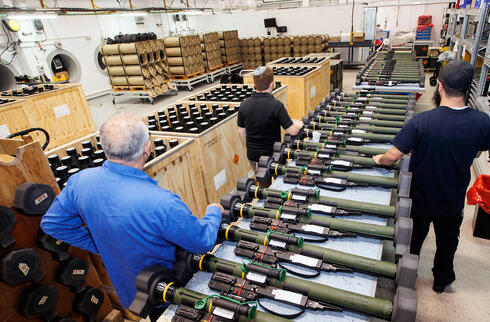
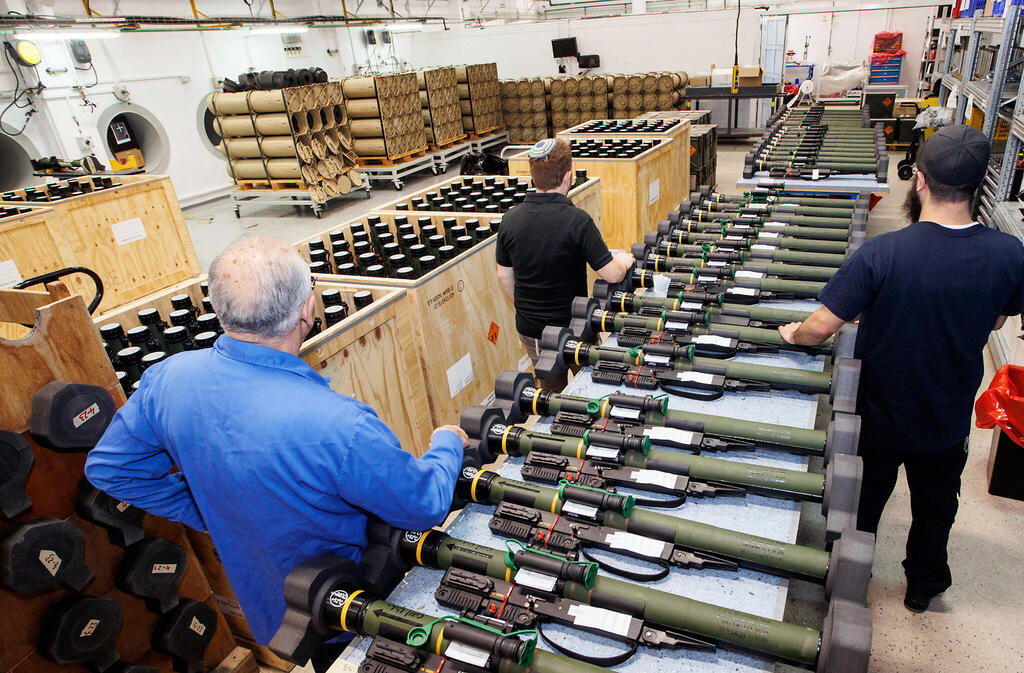
Rafael, a government-owned company and one of the largest employers in northern Israel, operates two main sites: the Leshem Institute near Karmiel and the David Institute near Haifa. Over the past two decades, its teams have developed some of the IDF’s most significant weapons systems, including Iron Dome, David’s Sling, the Iron Beam laser-based air defense system, and the Trophy active protection system for tanks and armored vehicles.
Rafael employs approximately 10,000 people, most of them in the north. Since the outbreak of the October 7 war, it has added about 3,000 employees, many of whom are working on future weapons systems. In the coming years, senior defense industry officials warn, such recruitment will become increasingly difficult, as the defense establishment places growing demands on companies to develop innovative and technologically advanced systems.
According to estimates, the average gross monthly salary of a highly valued engineer in the aerospace and defense sector is around 35,000 shekels ($11,200). In addition, companies sometimes rely on alternative engagement models, such as hiring talent as external consultants for a set number of days or hours per week. These arrangements are often used to bypass salary caps that limit direct employment relationships. For comparison, the average salary in Israel’s high-tech sector stood at approximately 31,000 shekels ($10,000) as of October 2024, according to the Central Bureau of Statistics.
“In a not-so-distant future, where Nvidia pays better than Rafael while operating in the same geographic area, Rafael will struggle,” warned a senior executive at one of the defense companies in a conversation with Calcalist. “It will be difficult to recruit talent and even harder to retain it. Nvidia’s emergence as a major force in the Israeli labor market requires a fundamental rethinking of the defense industries’ capabilities.”
He added: “It is unclear how many employees will continue working for a government defense company that cannot reward them competitively, relying instead on the idea that they are contributing to Israel’s security. These values differ from person to person and from generation to generation. We need to confront this reality now.”
These concerns surfaced during the Government Companies Authority’s annual conference this week, marking 50 years of activity. Much of the discussion focused on the government-owned defense companies, Israel Aerospace Industries (IAI), Rafael, and Tomer, which are experiencing what many describe as the strongest period in their history, driven by unprecedented demand for weapons in Israel and abroad.
“We must not be complacent,” said Rafael CEO Yoav Turgeman, responding to praise for the defense industries’ contributions during the prolonged war. “We have an outstanding technological workforce, but if there is one thing that worries me, it is the state of the education infrastructure. I fear we are responding too late to a decline in educational standards, and that poses a serious challenge for us.”
IAI CEO Boaz Levy echoed these concerns.
However, the pace of events, the continued preparations for a possible confrontation with Iran, the publication of the State Commission of Inquiry report on the submarine affair, and other developments, quickly pushed these warnings down the public agenda.
Meanwhile, Nvidia is quietly strengthening its position, deepening ties with academic institutions such as the Technion, and preparing for fierce competition over talent. “The crème de la crème of Israeli technology works in the defense industries, and there is no doubt that there will be attempts to lure people away,” said a senior employee at a large defense company. “With the current operational structure and compensation models, the future looks challenging.”
He added that the state will eventually have to make difficult decisions: whether to revise salary models for government companies, change their status through partial privatization, or significantly expand engineering training frameworks and science education in schools.
One proposed solution gaining traction is the flotation of government defense companies. The IPO of Israel Aerospace Industries has been discussed for years, and momentum has built recently, with the Finance and Defense Ministries reportedly aligned on issuing a minority stake at a valuation estimated at 80-100 billion shekels. Similar plans exist for Rafael, although its starting point is more complex, given its classified activities and the absence of a formal valuation.
Supporters of these IPOs see them as a way to improve the companies’ competitive position against deep-pocketed multinationals like Nvidia, allowing them to offer more attractive compensation while easing the constraints imposed by the Budget Foundations Law and oversight by the Ministry of Finance’s payroll supervisor.
Yet despite repeated declarations, time may be running out. As Israel heads toward an election period, any initiative to advance the IPOs of government defense companies is likely to stall, postponing decisions until the next government is formed, when priorities, once again, may change.
Nvidia CEO Jensen Huang offered a rare insight into the company’s operations in Israel at a press conference during CES 2026 earlier this month, emphasizing the central role the country plays in the world’s most valuable technology company. “Our team in Israel is incredible. They're hardworking, they're smart, they're dedicated, they care about the company, they care about their people, they care about the country,” Huang said in response to CTech's question. “Our turnover is incredibly low. You know, it’s probably one or two percent in Israel. People stay for a very long time. We have people in our Israel office who have been with the company for 20-25 years. This is quite an extraordinary thing. Our ability to attract great people is second to none, and our ability to retain them is absolutely world class.”



