





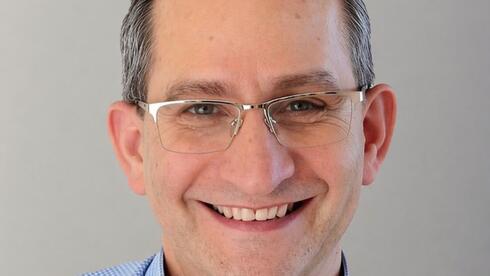




Intel VP: "Historically, if we were to miss milestones... we usually just gave exemptions. Saying no is a pretty powerful tool"
John Pitzer says the era of exemptions is over as Intel cuts low-end SKUs, flattens management layers, and enforces engineering-first discipline.
At a moment when Intel is fighting to regain standing in the global semiconductor race, Corporate Vice President of Corporate Planning and Investor Relations, John Pitzer, offered one of the most direct assessments yet of the company’s internal overhaul, an effort he repeatedly framed as cultural as much as technological.
Speaking at the UBS Global Technology and AI Conference this week, Pitzer stressed that Intel’s future depends on whether the company can rebuild its internal discipline. Execution, he said, will ultimately come down to "culture and incentive structures."
Pitzer described a company still unlearning bad habits. One of the most immediate shifts is the collapse of Intel’s historical bureaucracy. When new CEO Lip-Bu Tan arrived, he said, "we had 11 or 12 layers of management. We've now taken that down to 5 or 6."
Engineering has also been elevated directly into the C-suite. Pitzer noted that leadership now "has engineering sitting on his executive staff" and has instituted a new norm for customer interactions: "It's now mandated that whenever we have a customer conversation, there's an engineer there to talk with the customer."
The goal, he said, is an "engineering-focused customer-centric sort of culture with a lot of transparency."
“We’re Just Not Going to Accept Subpar Products”
Pitzer was blunt about the company’s new zero-tolerance approach to product underperformance. The most visible example is the decision to trim the roadmap for Diamond Rapids server chips. Tan, he said, made "proactive decisions to take some of the SKUs off of the road map, mainly at the low end, where he came to the determination along with Kevork, that we're just not competitive on cost and we're just not competitive on performance."
For Pitzer, the symbolism matters: "it's actually very healthy for him to do that because it sends a very strong signal internally that we're just not going to accept subpar products."
This marks a departure from the past. "Historically, if we were to miss milestones on new products, we usually just gave them exemptions," he said.
Now, "saying no is a pretty powerful tool."
The first server part fully shaped by this leadership’s philosophy, he noted, will likely be Coral Rapids.
Pitzer also detailed progress on Intel’s leading-edge manufacturing, acknowledging earlier instability. On the 18A process, the CEO "was probably more displeased by the fact that progress on the yields were very unpredictable, very haphazard."
Intel now sees steady improvement. "We are now in a position where we're seeing predictable improvement month-on-month, that's in line with what you would expect as an industry average."
He said the next node, 14A, is already outpacing the earlier one. "If you look at yield and performance today on 14A and compare it at a similar point in time on 18A, we are meaningfully ahead on the 14A node."
The company’s learning curve has been steep. As Pitzer put it, "we didn't know how to spell PDK until we were about halfway through Intel 18A development."
Intel is also steering its PC strategy toward profitability: "We're going to deemphasize the low end of the PC market... we're really going to focus on trying to optimize for revenue and profit share in the PC market and our tight capacity."
And the long-debated separation of Intel’s design and manufacturing units remains on the table. Pitzer confirmed that the company is laying groundwork. "We're clearly taking steps to create that optionality... We're moving that into its own legal entity."
But financial reality sets the pace. "Financially, pragmatically, it's probably not something we can do today... Intel Foundry has to get healthier financially."
Ultimately, he said, the decision will be value-driven: "If it's the right decision to create value to create more separation, I'm pretty confident that Lip-Bu, Dave and the Board will move in that direction."
First published: 10:29, 05.12.25



