










Ben Gurion’s breakdown was predictable. So why did no one stop it?
A labor dispute brought key airport operations to a halt after weeks of mounting delays and warnings over staffing and capacity. The sides have now called a truce, but the underlying problems remain.
Ben Gurion Airport did not collapse last week because of a surprise malfunction, an unexpected security incident or an unforeseen surge in demand. The date was known in advance, the congestion was expected and the numbers were on the table.
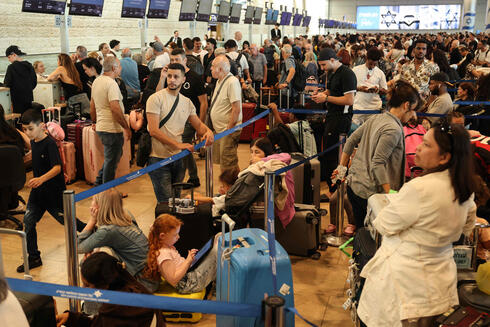
More than 106,000 passengers on about 620 flights were scheduled to pass through Israel’s only international airport on August 20. For weeks, Ben Gurion had struggled to cope with demand, with unusual delays, long lines, waits of up to three hours for baggage, a shortage of aircraft parking positions, staffing shortages and increasingly bizarre procedures, including passengers being left on planes for hours without air conditioning while crews waited for another departure window.
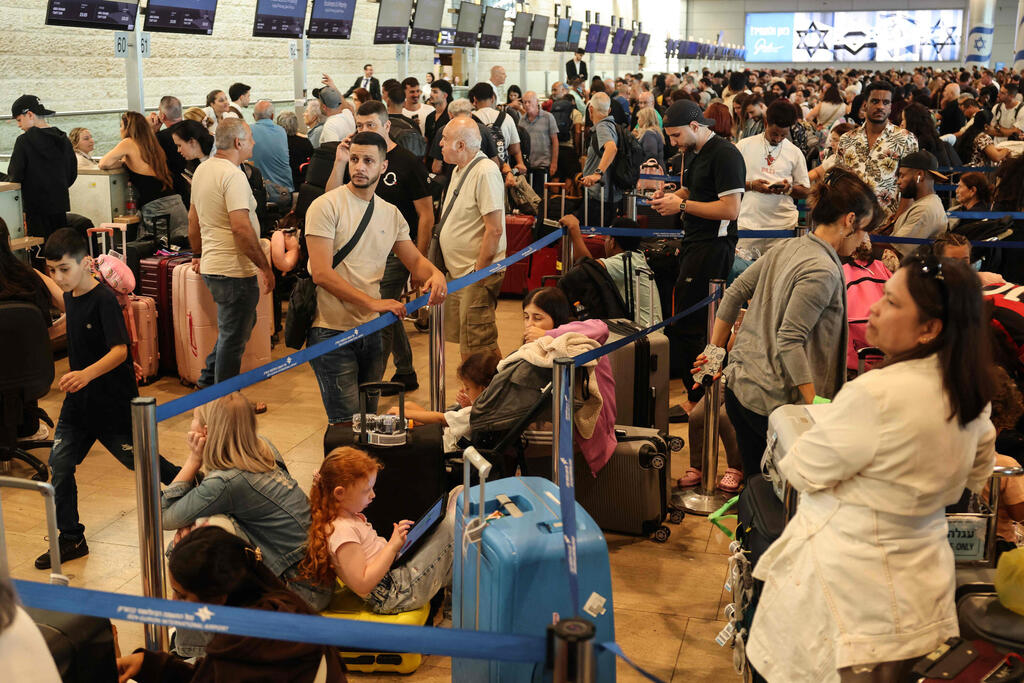
Then, on the busiest day, a labor dispute at the Israel Airports Authority (IAA) effectively brought key parts of the airport’s operations to a halt.
For roughly two and a half hours, luggage was not loaded, baggage handlers did not report for work, some landings were canceled and aircraft were diverted to airports in Europe. Tens of thousands of passengers paid the price.
The question is therefore no longer simply who was responsible for the work stoppage. It is how all the parties involved could have seen the crisis coming and still allowed it to happen.
At noon, one shift of IAA employees ended and the next shift did not arrive. There was no one to load luggage or operate passenger boarding bridges. A dispute over terminology quickly followed: Was it a strike or were employees simply adhering to their contractual working hours?
IAA management described the shutdown as “an extreme, intolerable, difficult and unnecessary step” that primarily harmed the public. It blamed workers’ union chairman Pinchas Idan, accusing him of exploiting the airport’s busiest days to pressure management.
Transportation Minister Miri Regev, who was on private leave in Marrakech, intervened on social media and said she had instructed IAA management to petition the Labor Court to force the committee to stop what she called a “thuggish and illegal strike.”
Prime Minister Benjamin Netanyahu, who had visited Ben Gurion the previous day and hugged Idan, also said the airport would remain open and called for Idan, a prominent Likud activist, to be expelled from the party.
The workers’ union sees the episode very differently.
For months, it says, it had warned the Transportation Ministry and IAA management about staffing shortages. In March, the union demanded additional manpower and permanent positions, arguing that temporary workers, including discharged soldiers and students, were unwilling to work the overtime and night shifts required during the summer, leaving much of the burden on permanent employees.
The workload has risen sharply. A cabin crew that would normally handle eight or nine aircraft per shift is handling 12 to 14 during the summer, with much of the work carried out in the heat of aircraft holds, where temperatures can reach 39 degrees Celsius.
The immediate dispute centers on overtime. The relevant shift is nine hours, but during the summer employees typically work an additional three hours of paid overtime. The shift that ended at noon on Thursday was expected to continue until 3 p.m. Instead, employees declined to work the additional three hours, creating the operational gap that brought much of the airport’s ground activity to a standstill.
The union insists this was not a strike but adherence to normal working arrangements.
That explanation does not, however, answer the obvious question: Why Thursday, August 20?
The timing came shortly after the Likud primaries and a day after Netanyahu and Regev visited the airport. Union members have openly said they were asked to keep their complaints quiet until after the primaries, arguing that the dispute should not be turned into a personal confrontation with Regev. A senior union member explicitly told colleagues to “talk to me after the primaries.”
The timing of the work stoppage therefore raises questions of its own, even if the underlying complaints about staffing had been building for months.
IAA management also bears responsibility for the broader crisis.
In recent weeks, IAA CEO Sharon Kedmi and Chairman Yiftah Ron-Tal repeatedly attributed Ben Gurion’s delays to European airspace restrictions and the presence of American refueling aircraft. Those factors undoubtedly contributed to the congestion, according to the authority, but they do not explain away the airport’s underlying infrastructure and staffing constraints.
Ben Gurion is operating with limited infrastructure, delayed development projects and a shortage of workers. IAA says it has been working aggressively to recruit staff. But the results have been mixed.
About 90 workers were recruited in July, yet relatively few were willing to work as baggage handlers during the hottest and busiest period of the year under the conditions offered to temporary employees. Earlier this week, IAA said another 20 handlers would be added. Fewer than 14 arrived, and only about eight remained.
The committee says the airport is actually short hundreds of workers. IAA disputes that claim.
The numbers provide a more complicated picture.
In August 2026, approximately 2.67 million passengers are expected to pass through Ben Gurion, compared with roughly 2.8 million in August 2019, a record month for Israeli aviation. Yet the sorting and handling division currently has 978 employees, compared with 976 in August 2019.
The difference is in the composition of the workforce. Permanent employees accounted for 42% of sorting and handling staff in 2026, compared with 32% in 2019.
The committee nevertheless says 400 to 500 additional workers are needed, with another 100 in reserve. It says service providers are working 220 to 260 hours a month, often in extreme heat and without adequate breaks.
IAA rejects the claim that there is a manpower shortage and argues that the recent chaos was primarily the result of the union’s decision to halt work.
But this is not the first time the same fault line has appeared.
In July 2025, similar disruptions took place after dozens of Ben Gurion employees were moved from full-time to part-time positions during the fighting with Iran. The union demanded that they be returned to full-time employment, arguing that about 200 workers were missing. Idan had already sent warnings to IAA and the Transportation Ministry.
That dispute was eventually resolved when IAA management restored the employees to full-time positions, and normal operations resumed.
This time, neither side backed down until the disruption had already taken its toll.
The cost is significant. The Finance Ministry estimates that Thursday’s disruptions will have an initial economic cost of NIS 25 million to NIS 30 million. The losses include passengers’ time, direct costs to airlines, operational expenses, lost revenue for IAA and airport operators, and disruptions to cargo, courier and supply-chain operations. Tourism and hotels are also expected to suffer.
The Finance Ministry has also highlighted a deeper structural vulnerability: Israel’s dependence on a single major international airport and the limited capacity of the country’s aviation infrastructure.
Among the measures it has proposed are advancing alternative airports at Ramat David and Ziklag, increasing Ben Gurion’s capacity, allowing greater private-sector participation in airport operations and implementing an efficiency plan at IAA.
For now, however, the immediate labor confrontation has been defused.
On Sunday morning, IAA management and the workers’ union met in an effort to calm tensions and restore normal operations. The sides agreed to end the sanctions and continue recruiting new employees.
They also agreed on an unusual short-term measure: IAA management and staff employees will join frontline shifts, primarily in the baggage system and queue management, to help clear the accumulated backlogs.
According to IAA, baggage, security and ground services have returned to full operational activity and are operating without sanctions. Management and the workers’ union will also work together to reduce the remaining loads and accelerate the return to normal operations.
The authority says preparations for the Tishrei holiday period are continuing as planned, including the recruitment of new employees under its existing preparation program.
That may prevent another immediate confrontation. It does not resolve the underlying dispute.
The airport remains dependent on a workforce whose size, composition and working conditions are being contested by management and employees, while passenger numbers continue to test the limits of its infrastructure.
The latest agreement therefore buys time. Whether it actually solves the problem will depend on what happens when the temporary calm ends.
The immediate task is to prevent another shutdown. The larger one is to decide whether Israel’s only international airport can continue operating on the assumption that every summer, every labor dispute and every external disruption will somehow resolve itself before the next peak arrives.
Thursday showed what happens when they do not.



