









Inside Playtika’s 15% workforce cut: From growth at all costs to lean, AI-driven teams
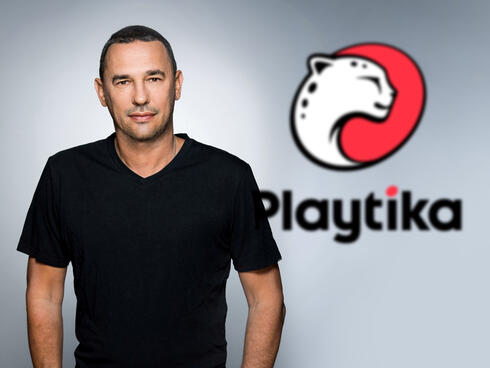
CEO Robert Antokol’s letter outlines a deeper reorganization beyond the layoffs.
About two months after Playtika’s planned 15% workforce reduction, affecting roughly 525 employees, was first revealed, a letter sent to staff by CEO Robert Antokol offers a broader and more detailed explanation of the move. What emerges is not merely a round of layoffs, but a strategic shift away from a model of “growth at all costs” toward a reorganization built around sharp portfolio segmentation, leaner teams supported by artificial intelligence, and a redefinition of compensation and career structures for remaining employees.
When the layoffs were first disclosed, public discussion focused largely on the headline figures, the scale of the cuts and their immediate impact on the labor market. Antokol’s internal letter, however, sheds light on a deeper transformation unfolding beneath the surface.
The layoffs are framed not as a one-off response to a market slowdown, but as part of a fundamental reassessment of how Playtika defines success, allocates resources, and structures its operations. The company is seeking to update its organizational DNA for a new competitive reality in which size alone is no longer a reliable driver of growth.
Seen in a broader context, Playtika’s move reflects structural changes across the global gaming industry. After a surge during the Covid period, the sector has entered a phase of slower growth and tightening margins. Development and marketing costs have risen sharply, competition for users’ attention and spending has intensified, and the mobile gaming market, where most large gaming companies operate, has become increasingly saturated. User acquisition costs are climbing, game life cycles are shortening, and producing a breakout hit has become both more expensive and riskier.
At the same time, revenue models have grown more fragile. Many games depend on a relatively small cohort of heavy spenders, increasing volatility and sensitivity to shifts in consumer behavior. The rapid adoption of AI-based tools is further reshaping the landscape, enabling smaller studios to develop, test, and launch games at lower cost, while forcing larger companies to reexamine team sizes, cost structures, and the rationale for long-term investments. The industry, in short, is moving from an era of rapid expansion to one focused on efficiency, value maximization, and risk management, calling into question organizational models built over the past decade.
One of the most significant changes outlined in Antokol’s letter is the abandonment of Playtika’s long-standing unified management approach. For years, the company allocated resources relatively evenly across studios and titles, assuming broad-based growth. The new strategy draws a much sharper distinction between operating units based on their role within the portfolio.
At one end are “maintenance and profit” units, primarily the company’s long-running social casino games. These are now treated as mature assets whose purpose is to deliver stable profitability over time, with an emphasis on value extraction and limited new investment. At the other end are designated “growth” units, studios or titles with a demonstrated growth trajectory, which will receive a disproportionate share of capital and talent. SuperPlay, Playtika’s major recent acquisition, is explicitly positioned as a strategic anchor and a key growth engine for the coming years.
Perhaps the clearest signal is directed at projects that fall between these categories. Games without a clear growth path or a defined economic contribution will no longer be sustained by incremental resource injections. In effect, Playtika is signaling that there is no longer room for ambiguity in its portfolio.
For employees, the reorganization goes beyond headcount reduction and operational streamlining. It also redefines the relationship between the company and its workforce. Antokol outlines what amounts to a new internal contract: a shift from large teams to leaner structures in which each employee carries broader responsibility and is expected to deliver higher productivity, alongside promises of clearer professional roles and improved compensation for those who remain.
The letter explicitly states that Playtika is moving from large teams to smaller, more efficient ones supported by AI and automation. AI is presented not as a supplementary tool, but as a force multiplier, one that allows human teams to shrink without sacrificing output, and in some cases to improve it. Tasks such as optimization, data analysis, and personalization, which once required sizable teams across product, analytics, and LiveOps, are increasingly being handled by automated, AI-driven systems.
This shift is also expected to flatten the organizational hierarchy, reducing middle management layers, shortening decision-making chains, and enabling faster, more focused execution. It is a structure better suited to an environment where speed, experimentation, and continuous adaptation are critical competitive advantages.



