









“It would have disappeared from the world”: How a Gaza envelope greenhouse became a symbol of renewal
Hinoman’s new owners see in the microscopic Mankai plant not tragedy, but a chance to build a global food-tech empire.
On October 9, 2023, just two days after the devastating Hamas assault on the Gaza Envelope, one resident of Kibbutz Be’eri had already returned home. His destination was the greenhouse where the Mankai plant is cultivated: a microscopic aquatic plant, no larger than a grain of couscous, considered the smallest plant in the world and a nutritional powerhouse thanks to its high levels of protein, iron, fiber, and vitamin B12.
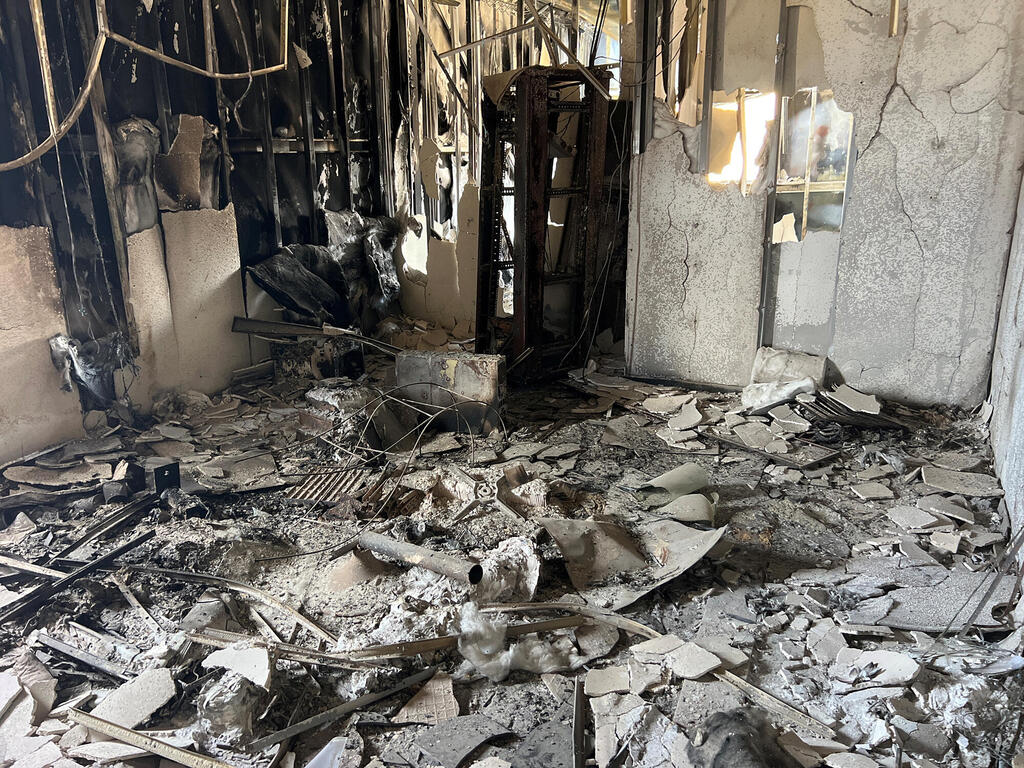
Some of the Be’eri greenhouses, spanning 70 dunams, had been vandalized and burned to the ground by Hamas’s Nukhba terrorists. But not all were destroyed. Israel is the only country in the world where Mankai is grown commercially, and because the plant must be harvested almost daily to maintain healthy growth, returning to the greenhouses so soon after the massacre was essential.
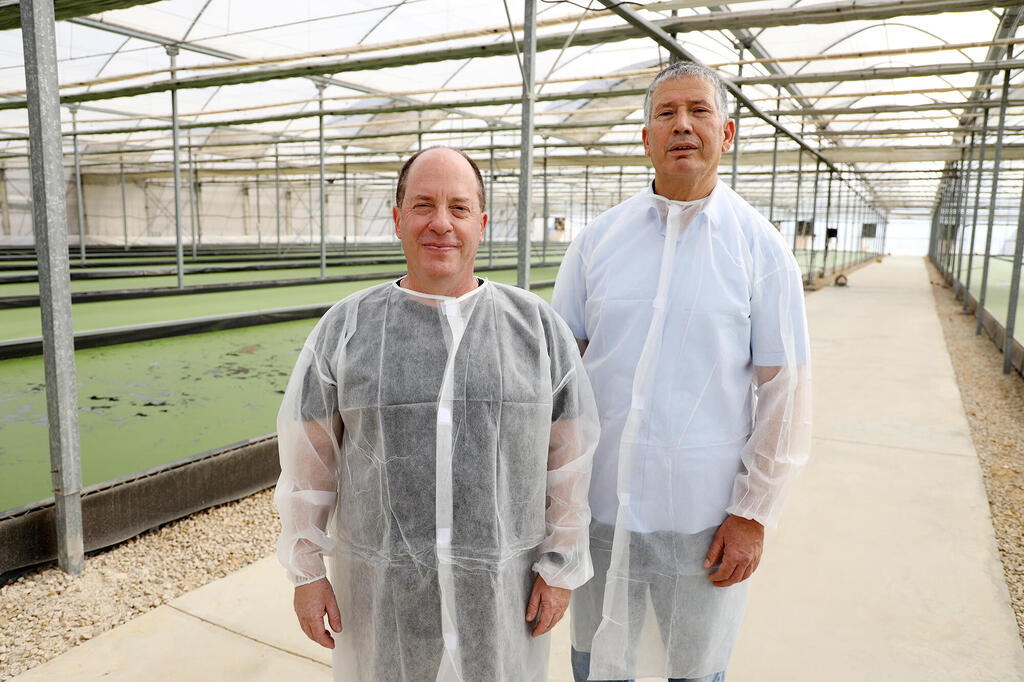
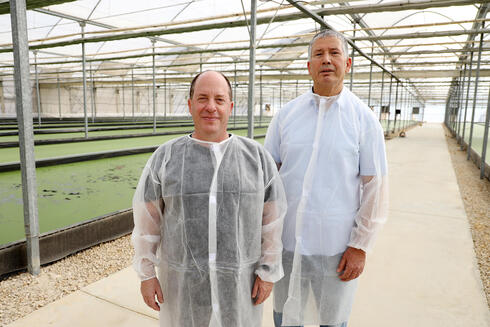
The Mankai plant is grown in Israel by Hinoman, a company now owned by a group of investors led by Shimon Ben-Hemo and Ofer Linchevski (74%), with Kibbutz Be’eri holding the remaining 26%. Ben-Hemo, the former CEO of Mekorot, and Linchevski, the former CEO of Israel Railways, are partners in the Europe Israel Fund, which forms investment groups to acquire companies such as Dan Transportation Group and Gadot Chemical, both purchased alongside ValueBase, which also holds a stake in Haifa Port.
They recently brought in Eyal Melis, former CEO of Tnuva, as a partner, and have ambitious plans for Hinoman, including a potential IPO on Wall Street. They do not disclose numbers, but the tone makes their scale clear: they are thinking in billions.
For Ben-Hemo and Linchevski, who specialize in infrastructure investments, the move into food tech was far from obvious. “An opportunity presented itself to us,” they told Calcalist in an interview. Hinoman had entered debt restructuring in January 2022, only three years after its founding, collapsing under a debt load of ₪170 million, including ₪28 million owed to Kibbutz Be’eri, which owns the land on which the greenhouses stand.
This was a sharp fall from earlier ambitions. In 2021, the company had dreamed of an IPO on the Tel Aviv Stock Exchange at a valuation of more than $100 million, amid the wave of IPOs that brought over 100 companies to market in just two years. Ultimately, after its collapse, Hinoman was sold under court supervision to the Ben-Hemo–Linchevski group for only ₪6 million. The company emerged debt-free, with a new mission: turning the plant into a globally distributed superfood.
“In the tender held by the court-appointed trustees,” they recalled, “major groups competed, including the Fortissimo fund, one of Israel’s largest private equity firms. We didn’t necessarily offer the highest price. But we found common ground with the kibbutz and made them a true partner, which was important to the receiver, because Be’eri had invested significant money.”
The group became Hinoman’s controlling shareholder just before October 7. “There’s no doubt the tragedy deepened our bond with the kibbutz,” they said. “The man who manages the Be’eri greenhouses was trapped in his home with his wife and three children for hours, holding the door shut against terrorists for 17 hours before escaping. He returned to the greenhouses days later with a paratrooper escort, because without daily care, the plants would have perished. This species is cultivated only here; if it had been lost, it might have disappeared from the world.”
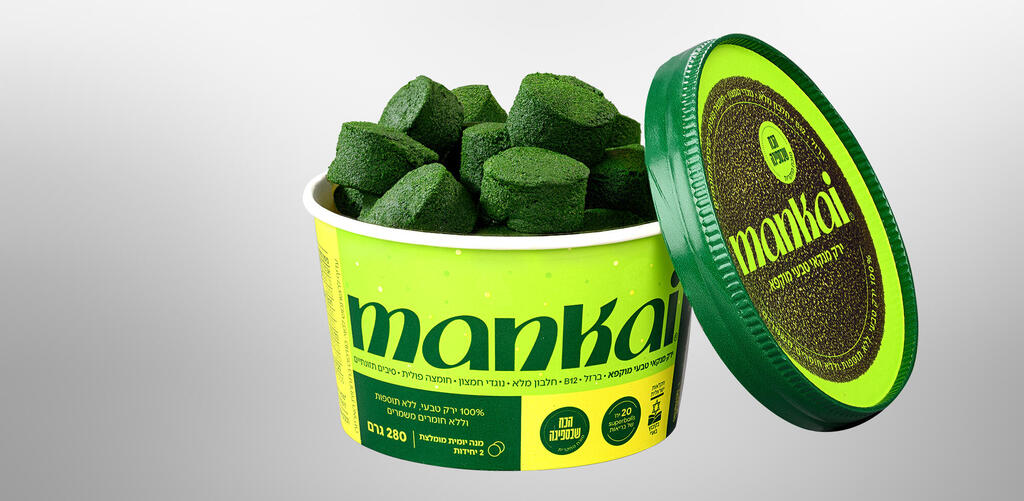
When asked about their motivation, given their infrastructure background, they explained: “We understand logistics, planning, complex systems, and financial management. Hinoman is actually an ideal fit. More than $65 million had already been invested by top global players such as Ajinomoto, the Japanese food giant; a Singaporean investment fund; and a major Indonesian noodle manufacturer investing in Israel for the first time. The company holds international patents and advanced technology. The Mankai plant has been consumed in Asia for centuries but was never cultivated commercially, it was easily contaminated. Turning it into a clean, uniform product required major technological breakthroughs, which Hinoman achieved.”
“Where the previous team struggled was in execution, the factory setup, logistics, and financial management. That’s where we bring value,” they said. “We know how to take a vision and make it work.”
Asked for a concrete example, they pointed to water management. “Water is critical for this crop. Shimon, as the former CEO of Mekorot, knows how to optimize water systems, use technology to reduce costs, and make operations more efficient, which can be transformative.”
The company’s immediate focus is on Israel, which serves as a pilot market. “We’re collaborating with local food producers, integrating Mankai into frozen foods, pasta, even popsicles. Once refined, we’ll expand internationally. We’re looking for strong partners in each market, local giants like Tnuva or Osem here, who understand regulation, consumer tastes, and distribution. That allows us to focus on production rather than retail,” they said.
They expect to receive European regulatory approval by the end of the year, opening key markets in Europe, the U.S., and Israel. “Mankai has only one producer in the world, us,” they emphasized. “The global superfood market is worth hundreds of billions, but most segments are crowded. Spirulina has 70,000 producers. Mankai has one.”
Looking ahead, an IPO is clearly on the horizon. “Yes, we’re thinking about Nasdaq,” they confirmed. “It will take time, we’re still negotiating with Ajinomoto, which could open a 120-million-person market in Japan. Once we’re established in several major markets, we’ll be ready for an IPO. But it’s a means to an end, for growth or an exit, not an end in itself.”
Asked whether they might consider a sale or merger, they said: “Of course. Any large food or distribution company is a potential buyer. There’s wide interest in what we’re doing.”
The two have a long professional history. Both began in the Finance Ministry, later working under Lev Leviev at Africa Israel before forming a business partnership. In 2019, alongside ValueBase, they acquired control of Dan Group for ₪1.26 billion. They also hold stakes in Haifa Port via the Gadot Group, whose largest shareholder is India’s Adani Group.



