










SanDisk’s second act: An AI boom, a $160 billion valuation, and a deep Israeli thread
Flash memory demand soars as the company bets on stability after decades of volatility.
For years, SanDisk was synonymous with the volatile economics of memory chips, a business defined as much by brutal downturns as by sudden surges. Now, in the midst of the artificial intelligence boom, the company is experiencing a dramatic resurgence that is reshaping both its financial profile and its strategic positioning.
SanDisk reported on Thursday revenue that more than tripled to $5.95 billion in the last quarter, far exceeding expectations. Profitability surged even more dramatically, with adjusted earnings of $23.41 per share, a sharp reversal from a loss a year earlier. The company now forecasts another strong quarter ahead, with revenues expected to reach as much as $8.25 billion and profits climbing further.
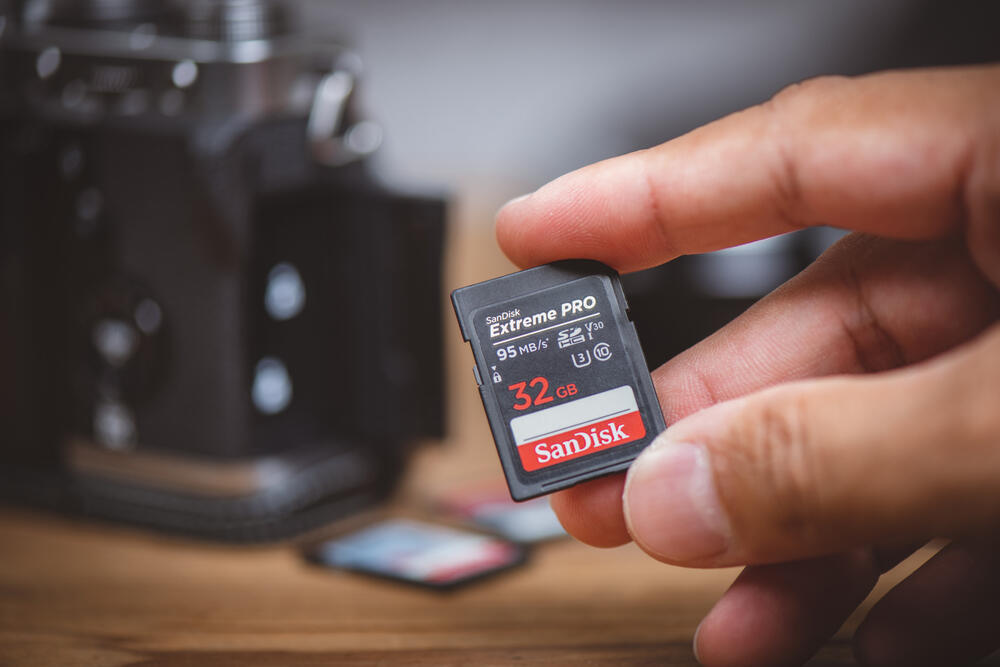
Behind the numbers lies a broader shift in demand. SanDisk, a leading producer of NAND storage memory, has become a late but powerful beneficiary of the AI wave. As artificial intelligence systems process increasingly large datasets, from legal documents to vast codebases, the need for high-capacity, reliable storage has intensified. What was once a cyclical commodity market is, at least for now, being buoyed by structural demand.
Investors appear convinced, at least for now. SanDisk’s shares have surged more than 360% this year and over 3,200% in the past 12 months, pushing its market value above $160 billion. The company has also announced a $6 billion share buyback, signaling confidence that the current momentum is not merely cyclical.
An Israeli Foundation
While the current rally is driven by AI demand and financial engineering, SanDisk’s roots tell a longer story, one that runs through Israel’s technology ecosystem.
The company was co-founded by Eli Harari, an Israeli-American entrepreneur who led it for 22 years until his retirement in 2010. Under his leadership, SanDisk expanded aggressively, including a pivotal acquisition in 2006 of M-Systems, founded by Dov Moran. The $1.6 billion deal brought into SanDisk the company that had pioneered the Disk on Key, an early and influential form of portable flash storage.
That acquisition left a lasting imprint. Today, SanDisk continues to operate research and development centers in Kfar Saba, Tefen and Omer, focused on flash memory technologies. These sites, described in company reports as core R&D hubs, remain integral to its technological base.
Hundreds of employees in Israel are part of the company’s ongoing operations, and the recent surge in SanDisk’s valuation is likely to be felt there as well.



