








“AI is bad for equality, the working class, and democracy”
Nobel laureate Daron Acemoglu argues that the rise of AI-led automation will concentrate wealth, reduce meaningful employment, and weaken the foundations of liberal democracy.
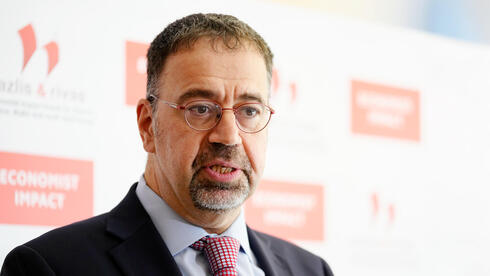
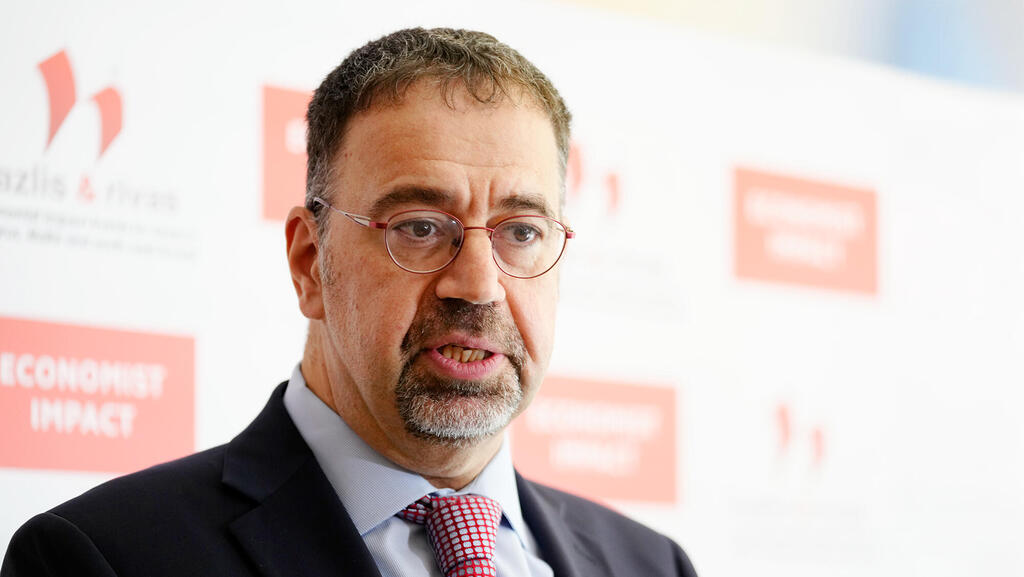
"We are now living in a very sad world. Almost everyone, including journalists, underestimates the risks and dangers that Trump poses to the United States and the entire world: the death of American democracy, the collapse of the world order, international wars, and the loss of control over artificial intelligence," Prof. Daron Acemoglu, the 2024 Nobel Prize in Economics laureate, summed up the global situation in an interview with Calcalist ahead of his participation in the annual conference of the Aaron Institute for Economic Policy at Reichman University at the end of the month.
According to Acemoglu, the liberal world order is giving way to a bipolar reality in which China is growing stronger and the United States is losing power. In a reality of war, soaring energy prices, and economic uncertainty, he also warns of a new growth model based on artificial intelligence (AI) that will deepen inequality, harm social cohesion, and potentially further undermine democratic rule. The solution, he says, lies not in the authoritarianism of Donald Trump or Benjamin Netanyahu, but in reinventing liberalism to refocus on the working class and the social foundations of democracy.
Let's start with an optimistic event for liberal democracies: Hungarian Prime Minister Viktor Orbán lost power last week after 16 years. Did that make you think that democracies might be stronger than you previously thought?
"The lessons from Hungary may be very limited for other countries. One thing that was unique about the Hungarian case is that Peter Magyar, who ran against Orbán, came from within his own party, and also spoke to voters about the same priorities as Orbán: immigration and nationalism. There was competition in the political system there, as Orbán’s party has shown. Orbán dismantled the institutions in Hungary quietly, and he doesn't exactly have the mechanisms of violence that, for example, Recep Tayyip Erdoğan or Trump have. In Turkey, everyone in the ruling party is mortally afraid of Erdoğan; no one within his party is capable of challenging him. Even people who were previously associated with the party are very wary of him when other opposition leaders are imprisoned. In the United States, every Republican who broke with Trump - senators, members of Congress, and others - received threats to their lives and the lives of their families and were attacked from all sides on social media. Orbán did not threaten to kill Magyar or even imprison him. It is also difficult to compare the Hungarian case to Israel because Netanyahu adopted a different strategy: he carried out a complete militarization of Israeli society. In other words, the Hungarian dynamic was different."
Let’s return to Netanyahu, whom you called “the founding father of right-wing populism” in a 2022 interview with Calcalist. Is the militarization of society that you believe he has carried out part of a political strategy to prevent an economic-social-civic agenda and a loss in the upcoming elections?
"Yes, Netanyahu is a very skilled politician. He has completely changed Israeli society. He has made any solution to the Palestinian problem impossible, except the one he wanted. The 'two-state' solution is now no longer possible, and Netanyahu never accepted it, of course. A one-state solution is also impossible. His desire all along was that the Palestinians would go to Jordan if they wanted to govern themselves, and if they stayed in Israel, they would receive second-class citizenship. In fact, he has managed to turn part of his vision of the absence of solutions into reality. Along the way, he has also divided and polarized Israeli society. He has also made corruption more acceptable. However, unlike Trump and Erdoğan, financial corruption is not as significant for Netanyahu. For him, it is more a matter of power and ideology."
Do you see the continued deterioration of our democracy as you have seen in previous years?
"Under Netanyahu, Israeli democracy has weakened greatly. At the same time, it has a deep problem at its core, which Netanyahu has only worsened: Israel had a strong legal system, a very free media, and relatively free elections, but it is a three-tier society, people of Palestinian-Arab origin who live in Israel are second-class citizens, a situation in which democracy finds it difficult to survive. Even worse, people in the West Bank and sometimes in Gaza, who are under direct Israeli military control, do not enjoy any rights at all and are subject to conditions that Israeli citizens do not face. This creates very great tensions for democracy. Netanyahu took advantage of this and also weakened other aspects of democracy. This war will only further weaken Israeli democracy."
And what about the world's largest democracy?
"American democracy is in a very difficult situation; it is weakening every day, and it may not survive."
So, is the international political regime no longer liberal, led by the United States?
"No. The world is already on the verge of a transition to a bipolar order, with China and the United States. Unfortunately, it is not becoming a multipolar world with Europe, because it has weakened in many areas, including its self-governance, nor a multipolar world in which developing countries have a voice. Now, China's prestige and soft power are on the rise. China has greatly improved its capabilities in engineering and technology and has also conducted international diplomacy much more effectively than the United States. The United States has largely eroded its soft power."
From the perspective of a Nobel Prize winner in economics, what does this change mean for the global economy?
“In the long term - economic problems. Not in the coming year, because the American economy has strengths. Artificial intelligence is still driving investment. There will be companies that are identified with Trump, many of them without any values at all, that will still receive contracts and a push from his administration. But the American economy will be hurt and at some point may lose its dynamism if Trump’s institutional agenda succeeds.”
There are quite a few people who see some of Trump’s moves as positive: he ended the war in Gaza and returned the hostages alive, something the Israeli leadership refused to do; he overthrew the world’s most corrupt dictatorship, Maduro’s Venezuela; and now he is trying to stop one of the most fanatical and dangerous regimes in the world. So is he promoting liberal values in his own way?
"Outside of Israel, I don't see it the way you describe it. The Iranian regime is indeed dangerous, but what Trump and Netanyahu have done will only destabilize the Middle East for decades. It hasn't brought the end of the regime in Iran any closer; it seems to be the opposite: it has only radicalized the Revolutionary Guards and the theocratic leadership. Moreover, it will lead to a negative chain reaction throughout the Middle East. And even if it strengthens Saudi Arabia and Israel temporarily, it is not necessarily an immediate recipe for peace in the Middle East. As for Maduro, the United States has the best special forces in the world and is capable of overthrowing such people. But again, Trump hasn't done anything truly meaningful in terms of bringing about a better regime in Venezuela. That's why I wouldn't be overly impressed by his achievements. On the contrary, the situation in Iran shows the weakness of his style: a complete lack of understanding of the key issues, combined with his choice of third-rate people to surround himself, who share the same ideology. Here's an example: every report by the State Department or the Defense Department in the United States estimated that Iran would close the Strait of Hormuz in the event of an attack, yet they still appeared completely unprepared for this scenario. They also failed to take into account that this event would affect the global economy for decades to come."
By the way, what alternatives did Trump and Netanyahu have in the context of Iran?
"There were certainly other options to prevent Iran from obtaining nuclear weapons. The JCPOA agreement (the 2015 Joint Comprehensive Plan of Action) that Netanyahu sabotaged was very effective. No other country was under supervision and control like Iran. Therefore, under the agreement that Trump and Netanyahu destroyed, the Middle East was much safer in terms of nuclear weapons. Saudi Arabia is also a regime to be feared in the context of nuclear weapons. This is a very complex situation, and the current leadership of the Republican Party understands very little of the dynamics there."
You talked about the effects of the war in Iran on the global economy, what are they?
"A surge in oil prices and an energy market that becomes very unstable. The increase in oil prices will lead to higher food prices. Many regimes around the world will become more fragile because they are already in a state of instability, especially in the developing world, where the fiscal situation is sensitive due to large budget deficits. These countries are not in a position to deal with very high energy and food prices. This event will greatly undermine global stability. The United States will also be affected by the increase in oil prices, even though it is not a net importer of energy."
So do you currently see a future scenario of stagflation?
"I would go for an 'uncertainty' scenario. The American economy has already been driven by artificial intelligence. In fact, almost all of last year's growth is related to artificial intelligence. It is not clear whether this will harm the economy, but it is certainly clear that it creates a lot of vulnerability. The economy can continue to grow with higher inflation, but a recession could also occur, although I would not bet on such a scenario."
You referred to artificial intelligence, one of the areas in which you specialize. Is an economy driven by artificial intelligence good or bad?
"It is bad, because dependence on one sector is problematic in itself. It is even worse when it is a sector that is itself unstable, and one could even argue that it is based on a bubble and an unsustainable growth model. Things are especially complicated when it is clear that the use of artificial intelligence has created hype that is already harming its normal and healthy development and its adoption."
So is there a kind of new economic model here that will ultimately harm employment?
“Under the banner of AGI (Artificial General Intelligence), systems for widespread automation are being developed that will reduce employment in the long term. It will not cause mass unemployment in the near future, but this model will increase inequality and reduce the number of meaningful jobs. My conclusion is that this development is bad for equality, bad for the working class, bad for democracy, and bad for social cohesion."
Your diagnosis is more apocalyptic than ever. What is the prognosis? How do we get out of this mess?
"The solution appears in my next book, 'What Happened to Liberal Democracy?' Liberal democracy and liberalism need to reinvent themselves. Trump is not a singular phenomenon, but a symptom of the failure of liberal forces in the world, in the United States, in Europe, in Hungary, in Turkey, and in Israel. These forces need to be renewed. I call it ‘working-class liberalism,’ one that is more focused on the economic interests of workers and their values.”
So if I understand correctly, the situation will get worse before it gets better?
“We are on the wrong track. The tragedy is that right-wing authoritarianism, like that of Trump, Netanyahu, and Erdogan, is harmful to everyone. It offers no real solutions. It is not really an alternative to liberal democracy. It is not that if liberal democracy fails, then we can simply live under successful authoritarianism and in harmony. That belief is completely wrong. We are living in a very sad world right now. Almost everyone, including journalists, underestimates the risks and dangers that Trump poses to the United States and to the world at large.”



