









“Monday handled the layoffs in the best possible way”: Entrée Capital’s Avi Eyal defends AI-driven restructuring
The investor behind monday.com discusses the company’s controversial cuts, the changing nature of software jobs and why he remains optimistic about Israel’s tech industry.
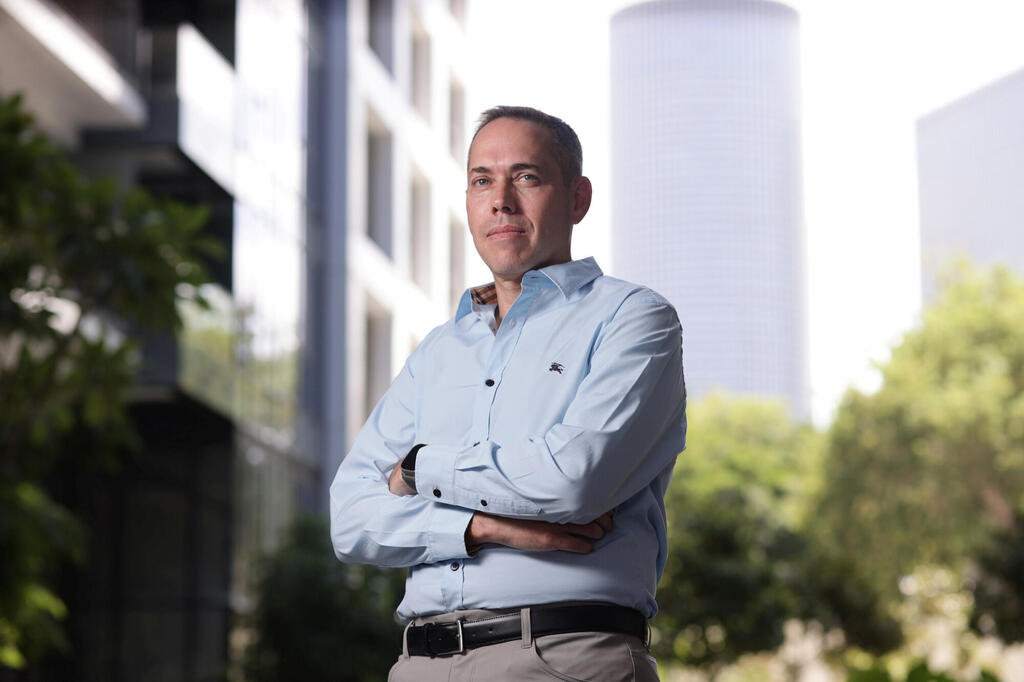
Avi Eyal, co-founder of Entrée Capital, which manages $1.5 billion and counts monday.com as its largest and most successful investment, generating more than $1 billion in returns for the fund, found himself at the center of a storm this week alongside the company.
The controversy erupted after monday.com sought shareholder approval to more than double the annual compensation package of co-CEOs Roy Mann and Eran Zinman to $14 million. The proposal came only days after the company announced layoffs affecting 620 employees, including 350 in Israel.
Eyal, who serves as a director at monday.com, spoke with Calcalist about the criticism facing the company, the impact of artificial intelligence on the technology industry, the state of Israeli high-tech and his concerns about Israel’s international standing.
Avi, you are a director at monday.com and one of the people who supported both the layoffs and the CEO pay increase. Where did you go wrong?
“I cannot comment on the compensation issue, which is subject to a shareholder vote, due to legal restrictions.
“If monday had not made these changes, it would have been ignoring the new reality. It is true that we waited relatively long before implementing the cuts, but that is because we have always operated with fewer employees relative to revenue compared with our competitors.
“Letting go of 20% of employees is not an easy decision, and we did not rush into it. But when you see a software company like Airtable, which last raised money at an $11 billion valuation and is now being sold for $1.3 billion because it failed to adapt to the AI era, you understand that monday’s management is making the right moves.
“The decision to move aggressively into AI puts us in a position to compete in this market. Nobody is happy about layoffs, but this is something we needed to do in order to win and remain relevant. I believe the layoffs were handled in the best possible way.”
Monday.com’s stock has fallen 40% since the beginning of the year. Investors do not appear convinced that the company has overcome the AI threat to its business model.
“I completely believe in monday’s future. The company has been reinventing itself over the past year. The market still does not see it because it is confused. It looks at everything through the lens of Anthropic and OpenAI, and if you are not there, people assume you are irrelevant.
“But monday is a company with more than $1 billion in revenue. It has happy customers, new AI-agent products and a product that has been completely rebuilt. The product is simply incredible. It is now in an optimal position to win in the market, and success depends on executing the vision. I believe we will win.”
Monday is not the only high-tech company cutting jobs. Are these layoffs a genuine result of AI adoption and the strong shekel, or are companies using AI as an excuse to reduce their workforce?
“There are certainly leftovers from 2021, but the type of workers companies need today has also changed.
“It is not that fewer programmers are needed. In fact, there is greater demand for FDEs, forward deployed engineers who sit with customers and help them adopt AI technologies. They are still programmers, but they are doing different things.
“There are layoffs, and there will be significant layoffs, because as high-tech companies become more AI-driven, some roles are no longer required.
“But the reason is more AI and less the shekel-dollar exchange rate. I would not fire an experienced employee who is paid in shekels today and replace them with someone less experienced in Poland or Romania. In that situation, you lose six months of productivity while the new employees learn the specific business.”
What about the Finance Ministry’s plan to support high-tech companies affected by the stronger shekel?
“It is very difficult to subsidize companies. Why should we help high-tech companies but not other exporters? What about companies exporting oranges, for example? Producing food in Israel is also critical for the country’s survival.
“I think it is better to incentivize activities that build capabilities. Look at Israel’s quantum program, for example, where hundreds of millions of shekels have been allocated to develop and strengthen a market that has not yet matured. That is strategically important and could turn Israel, which is already advanced in this field, into one of the world’s leading countries.”
“A government change will bring a change in sentiment”
What is the broader state of Israeli high-tech? Do you feel the decline in the number of new startups being founded?
“Yes. There are fewer new startups for two reasons: large companies are absorbing talent, and there is political uncertainty in Israel. People who want to build companies are waiting for more stable times.
“You do not feel it because fundraising rounds have become larger and are concentrated among fewer companies.”
After the elections, could that change?
“Yes. I believe that if there is a change in government, there will also be a change in sentiment throughout the ecosystem.
“I once told you that 120 members of Knesset should go home. If we do not show responsibility from the top, we cannot expect responsibility from the public. We have created a culture where everyone thinks only about themselves.
“It does not matter whether it is Netanyahu or Yair Lapid. Everyone is responsible and everyone must show responsibility and behave like adults.”
When Eyal refers to the past, he is referring to a 2023 interview with Calcalist that attracted significant attention after he warned that he saw similarities between Israel’s situation and South Africa during the apartheid era.
At the time, Eyal said Israel was not an apartheid state and would not become one, but warned against becoming trapped in a prolonged internal conflict.
In your previous interview, you spoke about recognizing signs similar to South Africa. Since then, the situation has worsened. How do you see it today?
“I said that I recognized a problem in that we were becoming what is called a ‘pariah.’ I said that one day there could be sanctions against us, and today we are already experiencing both quiet sanctions and explicit sanctions.”
Isn’t this a temporary phenomenon connected to the war?
“No. I think we will be dealing with this for at least another decade.
“We have always been hated and we will always be hated. I assume that Israel will continue to face hostility in the world, and therefore we need to act with knowledge and wisdom to minimize the damage from these sanctions.
“This is our reality, but despite everything, we will succeed.”
You are still considered one of Israel’s most successful investors. How does this reality affect startups? Are companies leaving Israel? Are you investing less in Israeli companies?
“Many more companies are establishing their parent companies in the U.S. Everyone wants a backup plan.
“It is not necessarily about taxes or whether they can raise money as an Israeli company. But show me a Jew without a Plan B, it is in our DNA to protect ourselves.
“Why do so many Jews have homes in Israel? Because we understand the need for security.
“But our investors continue to surprise me positively with their long-term perspective. They understand that Israel has unique innovation. They also saw that those who needed to serve in the reserves returned, and those who needed to relocate to the U.S. did so.
“They understand that Israel remains the fourth most important technology market in the world after San Francisco, Boston and New York.”
What has changed in your investment strategy over the past three years?
“After the war, I became much more involved in security-related activities, and today I invest more in defense tech.
“Even when the war in Ukraine began, I traveled there and learned a lot. It is unfortunate that Israel does not cooperate with Ukraine more. The government is still afraid of Russia, which is no longer relevant in Syria but is supplying weapons to Iran.
“There is a major transformation taking place in defense. We are seeing huge progress in robotics, and Ukraine demonstrates that. Some of these technologies already existed but were kept quiet because companies did not want to reveal their capabilities.”
The challenge is generating venture returns from defense companies. The market is still dominated by giant defense companies that could acquire startups before they become large businesses.
“That is true. The chances of creating a giant defense company in Israel are relatively small.
“Many startups have what I call ‘cool’ products, but they are very narrow and specific, such as a suicide drone. Most defense purchases are still made by the large companies.
“Therefore, many startups will probably be acquired by old or new giants such as Anduril or Palantir.
“The open question is whether today’s valuation levels will generate the returns the venture capital industry expects. For example, XTEND is going public at a valuation of $1.5 billion, but we will see where it trades six months after the IPO.
“I am looking for investments in large platforms, not niche products.”
So ultimately, are you optimistic or pessimistic about Israeli high-tech and Israel?
“I am a realist.
“We have enormous challenges. Both Judaism and Israel are going through a very difficult period.
“But look at the young people, the new generation. They have no fear. They do not know what failure is. They simply build.
“That is the foundation of this country.”



