










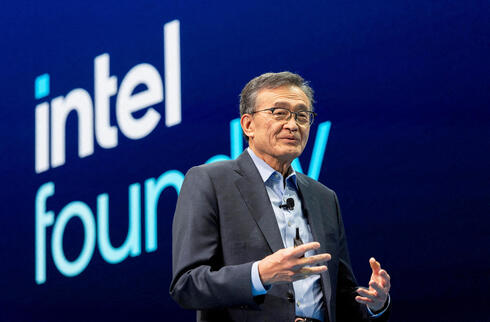
“Intel is a fundamentally different company today,” says CEO Lip-Bu Tan as shares surge on upbeat forecast
Strong demand for AI processors and improving execution lift Intel’s outlook, as Tan argues CPUs are regaining a central role in the AI era.
Intel’s latest earnings beat expectations, but the more consequential message from CEO Lip-Bu Tan was not about the quarter, it was about rewriting the hierarchy of artificial intelligence.
“For the last few years, the story around high-performance computing was almost exclusively about GPU,” Tan said. “In recent months, we have seen clear signs that the CPU is reinserting itself as the indispensable foundation of the AI era.”
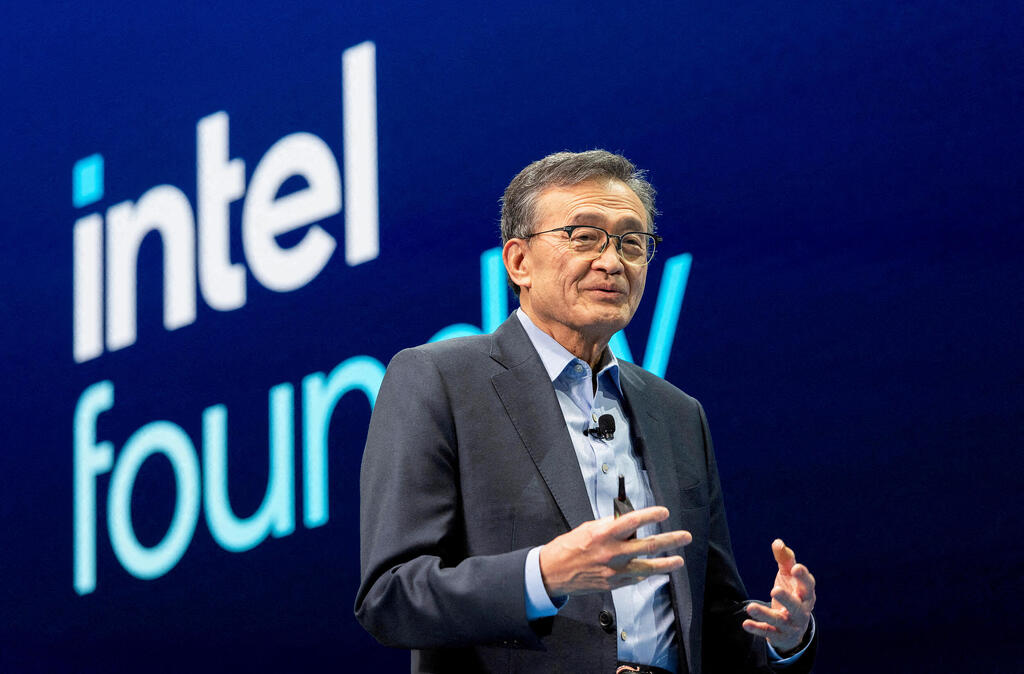
That claim, delivered as Intel reported stronger-than-expected revenue and issued an upbeat forecast, cuts against the dominant narrative that has defined the industry’s AI boom.
Instead, Tan is arguing that the center of gravity is shifting.
“CPU now serves as the orchestration layer and critical control plane for the entire AI stack,” he said. “This is not just our wishful thinking… it is evident in the demand profile for our products.”
Intel’s financial results reflect a company benefiting from surging demand tied to AI infrastructure. First-quarter revenue reached $13.58 billion, while second-quarter guidance came in well above Wall Street expectations, sending shares 20% higher in extended trading, adding around $65 billion to its market value and extending its 81% rebound so far this year.
But Tan framed the moment less as a cyclical rebound and more as a structural turning point.
“A year ago, the conversation about Intel was about whether we could survive,” he said. “Today, it’s about how quickly we can add manufacturing capacity and scale our supply to meet enormous demand for our products.”
He added: “This is a fundamentally different company today, and we still have a lot of work ahead.”
The contrast underscores both progress and pressure. Demand is now outpacing supply across much of Intel’s business, particularly in data center processors, an enviable position, but one that raises execution risks if the company fails to deliver.
At the heart of Intel’s strategy is a bet that the AI boom is entering a new phase.
“Artificial intelligence is now moving into the real world towards a more distributed inference and reinforced learning workloads like agentic, physical AI and robots and edge AI,” Tan said.
That transition, from training large models to deploying them, changes the underlying compute requirements. GPUs remain essential, but Intel argues they are no longer sufficient on their own.
“The backbone of AI computing in production remain a CPU anchored architecture,” Tan said. “That is good news for the x86 ecosystem. It is great news for Intel.”
The shift is already visible in customer behavior. According to Tan, companies are deploying CPUs alongside accelerators in increasing ratios as AI systems become more complex and distributed.
“Customers are deploying server CPUs along accelerators in the ratio that is moving back towards CPU,” he said.
Despite the bullish tone, Intel’s leadership repeatedly returned to a more immediate constraint: supply.
“Even as we improve factory output, demand continues to run ahead of supply for all our businesses, especially for Xeon server CPUs,” Tan said. “We are maximizing and optimizing our factory output to meet customer needs. It is our top priority.”
That focus reflects a broader shift in how the company is being run.
“We have taken and continue to take deliberate steps to rebuild Intel into a more competitive and more profitable company,” Tan said. “Our cultural transformation is well underway, and we are embracing our roots as data-driven, paranoid and engineering-centric company.”
The emphasis on discipline, execution, yields, and customer alignment, marks a departure from the strategic missteps that left Intel lagging in earlier phases of the AI boom.
Intel’s turnaround also hinges on its manufacturing ambitions, particularly its push to build a competitive foundry business.
“The accelerating deployment of AI infrastructure creates a meaningful opportunity for us as we continue to build our external foundry business,” Tan said, while cautioning that “this will be a long journey for us.”
Part of that effort includes partnerships with major technology players, including collaborations tied to Elon Musk’s semiconductor initiatives.
Tan framed such moves as both strategic and necessary.
“Global semiconductor supply is not keeping pace with the rapid acceleration in demand,” he said. “We are excited to explore innovative ways… to improve manufacturing efficiency.”
Still, the foundry business remains lossmaking, and its success depends on attracting external customers at scale, something that has yet to fully materialize.
Intel’s recovery narrative is gaining credibility, supported by stronger financial performance and a more coherent strategy. Yet the company’s future hinges on whether it can translate demand into sustained growth.
Tan himself offered a measured conclusion.
“I remain firmly convinced of and focused on the opportunity ahead for Intel,” he said.



